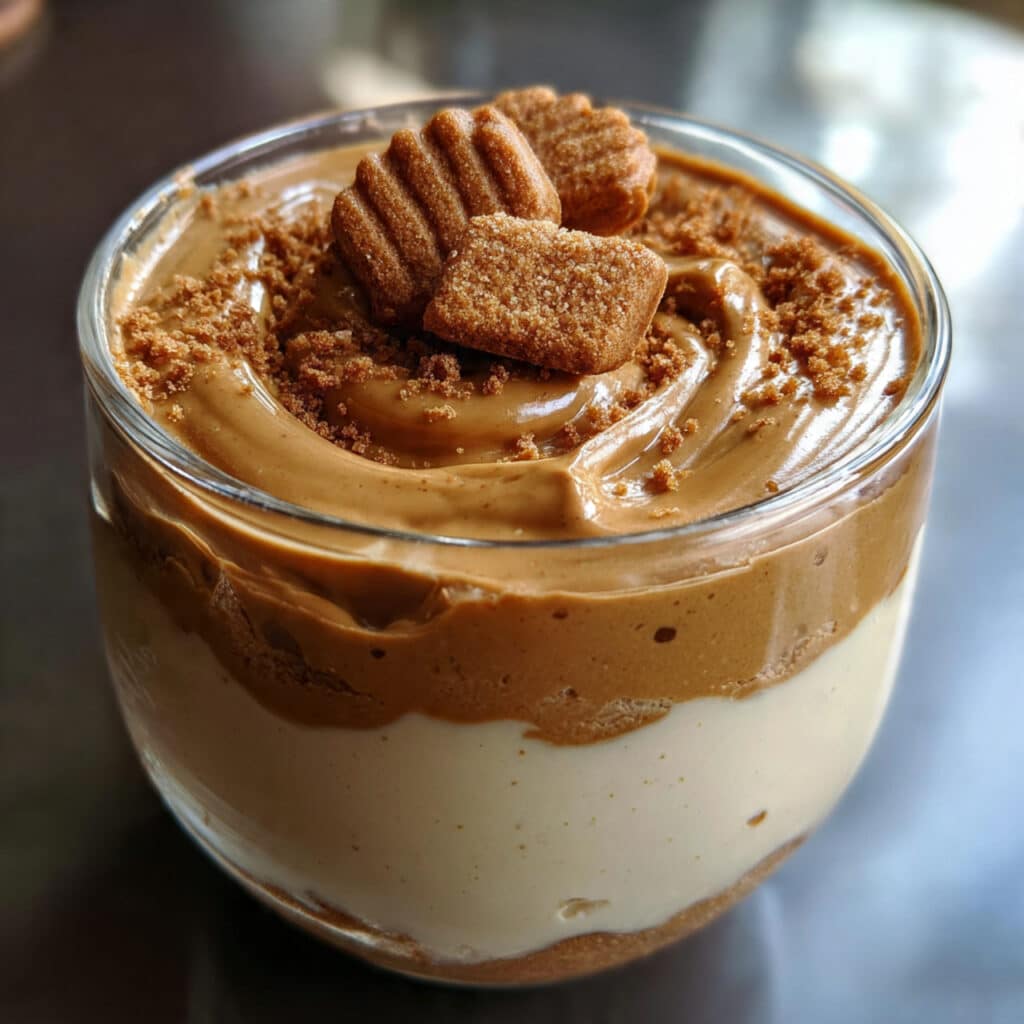
Biscoff Pudding is pure comfort in a bowl. Silky smooth, full of that warm cookie butter flavor, and SO easy you won’t believe it! This pudding comes together in about 15 minutes on the stove with just a handful of simple ingredients. Trust me, once you try this irresistible dessert, you’ll be making it on repeat for family dinners, potlucks, and late-night cravings alike!
Why You’ll Love This Recipe
- So Quick & Simple – Ready in 15 minutes with ingredients you probably already have!
- Biscoff Magic – That signature spiced cookie butter flavor in every creamy spoonful
- No Eggs Needed – Uses cornstarch instead, so no tempering or worrying about scrambling
- Make-Ahead Friendly – Perfect for meal prep or entertaining
Creamy Biscoff Pudding
- Total Time: 2 hours 15 minutes (plus chilling)
- Yield: 4 individual ramekins
Description
This easy Biscoff pudding recipe creates a smooth, creamy dessert with warm spiced cookie butter flavor. Made with simple pantry ingredients and ready in 15 minutes of active cooking time plus chilling, it’s perfect for weeknight treats or special occasions.
Ingredients
For the Pudding:
- 1/2 cup (120g) Biscoff spread (creamy, not crunchy)
- 2 1/4 cups (540ml) whole milk
- 1/4 cup (30g) cornstarch
- 1/4 cup (50g) brown sugar
- 1/4 tsp ground cinnamon (optional but SO good!)
- 1/8 tsp salt
- 1 tsp vanilla extract
- 1 tbsp unsalted butter
For Topping (Optional):
- Crushed Biscoff cookies
- Whipped cream
- Extra drizzle of warmed Biscoff spread
Instructions
In a medium saucepan OFF the heat, whisk together your cornstarch, brown sugar, salt, and cinnamon until completely combined. Now slowly pour in the milk while whisking constantly – I like to add about half a cup at a time.
Place your saucepan over medium heat and stir continuously. I switch between my whisk and a silicone spatula here – the whisk keeps it smooth while the spatula gets into those corners where the mixture thickens first. After 6-8 minutes, your pudding should coat the back of a spoon.
Remove from heat and IMMEDIATELY add your Biscoff spread, vanilla, and butter all at once. Whisk until completely smooth – don’t rush this part! That extra minute of stirring really pays off with a silky-smooth texture.
Divide the hot pudding evenly into individual ramekins or serving glasses. Let them cool at room temperature for 10 minutes, then press plastic wrap directly onto the surface of each one (this prevents that weird skin from forming).
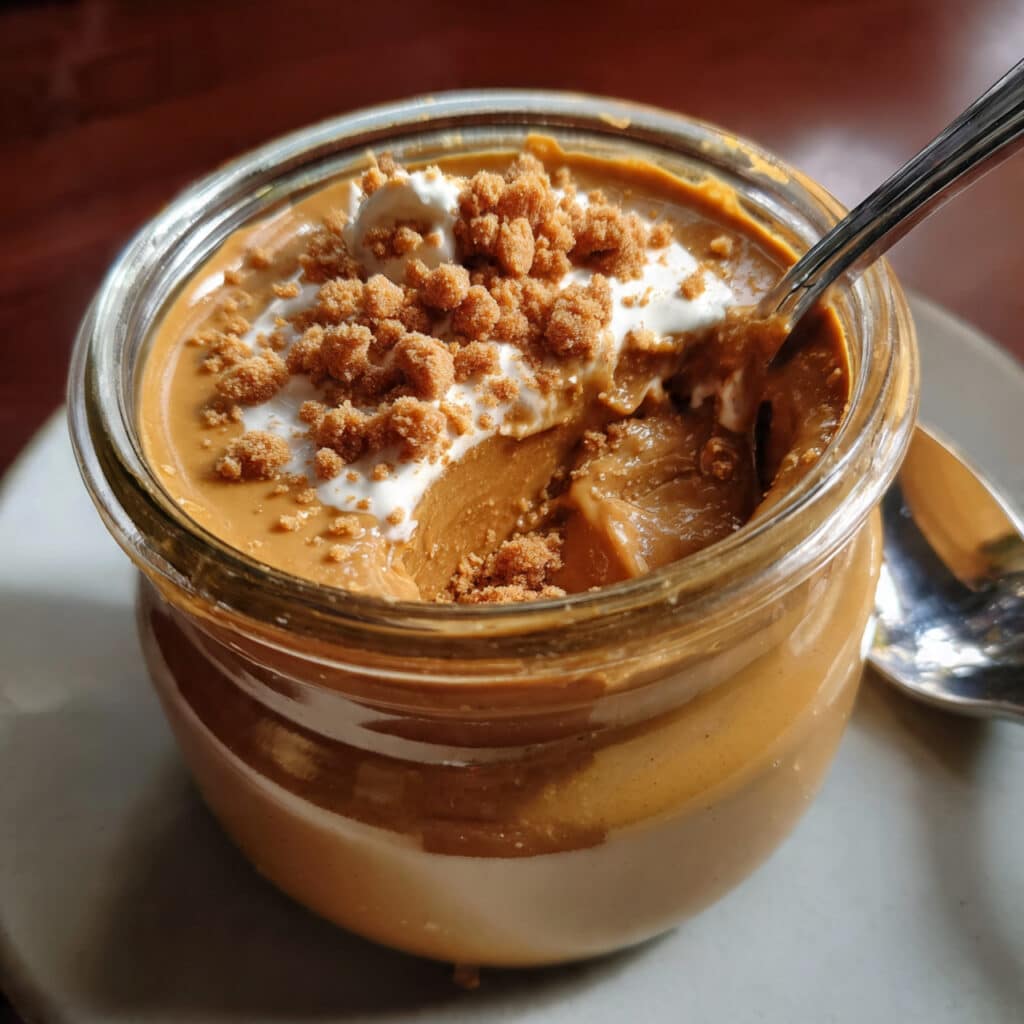
Once fully chilled, your pudding should be softly set – it’ll spoon easily but hold its shape beautifully. Serve it plain or topped with crushed Biscoff cookies, whipped cream, or a drizzle of warmed cookie butter!
Notes
The Whisk-Spatula Switch – Use both! Whisk for smoothness, spatula for getting into corners
Test for Doneness – Dip a spoon in, turn it over, and run your finger through the coating. If the line stays clear, you’re good!
Avoid These Mistakes:
Don’t add Biscoff when the mixture is too cool (streaky pudding!)
Don’t skip the 10-minute room temp rest before chilling (helps it set properly)
Don’t rush the stirring after adding the Biscoff (lumps!)
- Prep Time: 5 minutes
- Cook Time: 10 minutes
- Category: Dessert
- Cuisine: American
Ingredient List
For the Pudding:
- 1/2 cup (120g) Biscoff spread (creamy, not crunchy)
- 2 1/4 cups (540ml) whole milk
- 1/4 cup (30g) cornstarch
- 1/4 cup (50g) brown sugar
- 1/4 tsp ground cinnamon (optional but SO good!)
- 1/8 tsp salt
- 1 tsp vanilla extract
- 1 tbsp unsalted butter
For Topping (Optional):
- Crushed Biscoff cookies
- Whipped cream
- Extra drizzle of warmed Biscoff spread
Note: You can swap in Speculoos spread if you can’t find Biscoff, just make sure it’s the smooth version!
Why These Ingredients Work
Let me walk you through why each ingredient plays such an important role in making this pudding PERFECT:
Biscoff Spread is the star of the show here! I always use the creamy version because it melts beautifully into the base without leaving any chunks. That caramelized cookie flavor with hints of warm spice is what makes this pudding so addictive.
Cornstarch is your thickening agent, and honestly? It’s way easier than using eggs. No tempering, no risk of scrambling – just smooth, velvety pudding every time. Flour would make it taste chalky, so stick with cornstarch!
Brown Sugar adds a lovely molasses-y sweetness that echoes those Biscoff cookies. I tested this with white sugar once and it just felt… flat. Brown sugar brings the warmth!
Cinnamon (even though it’s optional) deepens that spiced flavor SO much. Just 1/4 teaspoon makes a big difference!
Vanilla and Butter finish everything off with richness and that silky mouthfeel you want in pudding. Don’t skip that tablespoon of butter – it’s the secret to making it feel extra luxurious.
Essential Tools and Equipment
- Medium saucepan – For cooking the pudding base
- Whisk – To keep everything smooth and lump-free
- Rubber spatula – Perfect for scraping down the sides
- Individual ramekins or serving glasses – For that pretty presentation
- Plastic wrap – To prevent a skin from forming while it chills
How To Make Biscoff Pudding
Step 1: Make the Base
In a medium saucepan OFF the heat, whisk together your cornstarch, brown sugar, salt, and cinnamon until completely combined. Now slowly pour in the milk while whisking constantly – I like to add about half a cup at a time.
Step 2: Cook the Pudding
Place your saucepan over medium heat and stir continuously. I switch between my whisk and a silicone spatula here – the whisk keeps it smooth while the spatula gets into those corners where the mixture thickens first. After 6-8 minutes, your pudding should coat the back of a spoon.
Step 3: Stir in the Flavor
Remove from heat and IMMEDIATELY add your Biscoff spread, vanilla, and butter all at once. Whisk until completely smooth – don’t rush this part! That extra minute of stirring really pays off with a silky-smooth texture.
Step 4: Chill and Set
Divide the hot pudding evenly into individual ramekins or serving glasses. Let them cool at room temperature for 10 minutes, then press plastic wrap directly onto the surface of each one (this prevents that weird skin from forming).
Step 5: Serve and Enjoy!
Once fully chilled, your pudding should be softly set – it’ll spoon easily but hold its shape beautifully. Serve it plain or topped with crushed Biscoff cookies, whipped cream, or a drizzle of warmed cookie butter!
You Must Know
CRITICAL: Add the Biscoff spread while the base is still HOT! If you wait until it cools, the spread won’t melt properly and you’ll get streaks or even graininess. The perfect moment is right after you remove it from the heat.
Timing Matters: Don’t overcook or undercook! If your pudding coats the back of a spoon and holds a line when you swipe your finger through it, you’re done. Rubbery pudding means overcooked, and runny pudding means it needs more time.
Personal Secret: I always press the plastic wrap RIGHT onto the surface of the pudding. That skin that forms when you don’t? It totally changes the texture and not in a good way!
Pro Tips & Cooking Hacks
- Start Cold – Whisk your dry ingredients together BEFORE adding any liquid for the smoothest texture
- Watch Your Heat – Medium heat is key! Too high and you’ll scorch the bottom
- The Whisk-Spatula Switch – Use both! Whisk for smoothness, spatula for getting into corners
- Test for Doneness – Dip a spoon in, turn it over, and run your finger through the coating. If the line stays clear, you’re good!
- Avoid These Mistakes:
- Don’t add Biscoff when the mixture is too cool (streaky pudding!)
- Don’t skip the 10-minute room temp rest before chilling (helps it set properly)
- Don’t rush the stirring after adding the Biscoff (lumps!)
Flavor Variations & Suggestions
Want to switch things up? Here are some fun twists:
Chocolate Biscoff Pudding: Add 2 tablespoons of unsweetened cocoa powder with your dry ingredients. Rich and decadent!
Peanut Butter Twist: Use 1/4 cup Biscoff spread and 1/4 cup creamy peanut butter. Amazing flavor combo!
Extra Spiced: Bump up the cinnamon to 1/2 teaspoon and add a tiny pinch of nutmeg for a more pronounced spice flavor.
Banana Biscoff: Layer with sliced bananas and vanilla wafers for a Biscoff-style banana pudding!
Make-Ahead Options
This pudding is PERFECT for making ahead! Here’s how:
Up to 3 Days Before: Make the whole thing, chill it, and keep it covered in the fridge. The flavor actually develops and gets even better after 24 hours!
Day-Of Assembly: If you’re making individual servings for a party, prep the pudding 1-2 days ahead, then add toppings like crushed cookies and whipped cream right before serving so they stay crispy and fresh.
Storage: Keep covered and refrigerated for up to 4 days. I don’t recommend freezing this – the texture changes too much.
Recipe Notes & Baker’s Tips
- Creamy vs. Crunchy Biscoff: ALWAYS use creamy! The crunchy version has cookie bits that won’t melt smoothly and will mess with your texture.
- Milk Temperature: Cold milk is best to start with – it gives you more control as the mixture heats up.
- Straining Option: For an ultra-smooth pudding (perfect for fancy occasions), you can strain it through a fine-mesh sieve before portioning.
- Serving Temperature: Best served cold! If it’s been in the fridge overnight and feels too firm, just stir it gently before serving.
Serving Suggestions
This Biscoff pudding is delicious on its own, but here are some ways to make it even MORE special:
- Layered Parfaits – Alternate pudding with whipped cream and crushed cookies in clear glasses
- Pie Filling – Pour into a graham cracker crust and chill for an easy no-bake pie
- Trifle Base – Layer with pound cake cubes, whipped cream, and fresh berries
- Breakfast Twist – Swirl into overnight oats or Greek yogurt (yes, really!)
- Ice Cream Topping – Warm it slightly and drizzle over vanilla ice cream
Pair it with a cup of coffee or hot chocolate for the ultimate cozy dessert experience!
How to Store Your Biscoff Pudding
Room Temperature: Only for up to 2 hours after cooking (while it’s cooling before refrigeration)
Refrigerator: Store covered in an airtight container or with plastic wrap pressed to the surface for up to 4 days
Freezer: I don’t recommend freezing this pudding – the texture becomes grainy when thawed
Reheating: Not necessary! This pudding is meant to be served cold. If you want a warm version, gentle warming on low heat while stirring constantly can work, but it won’t have that same pudding consistency.
Allergy Information
Common Allergens:
- Contains dairy (milk and butter)
- Contains Biscoff cookies (wheat-based)
Substitution Suggestions:
- Dairy-Free: Use full-fat coconut milk or oat milk instead of regular milk, and dairy-free butter. The texture will be slightly different but still delicious!
- Gluten-Free: This recipe uses Biscoff spread which contains wheat. You could try using a gluten-free cookie butter alternative, though the flavor will differ.
- Vegan: Use plant-based milk, vegan butter, and make sure your Biscoff spread doesn’t contain any hidden dairy (some varieties do!)
Questions I Get Asked A Lot
Can I use crunchy Biscoff spread instead of creamy?
I really don’t recommend it! The cookie bits in the crunchy version won’t melt into the pudding properly and you’ll end up with an uneven texture. Stick with creamy for that silky-smooth result!
My pudding turned out grainy – what went wrong?
This usually happens if the Biscoff spread was added when the mixture had already cooled too much. Make sure to add it immediately after removing from heat while everything is still hot!
Can I make this pudding without the cinnamon?
Absolutely! The cinnamon is optional. Your pudding will still be delicious with just the Biscoff flavor, though I think that little bit of extra spice really makes it special.
How do I know when my pudding has cooked long enough?
The pudding should coat the back of a spoon thickly. When you run your finger through the coating, it should leave a clean line that doesn’t run back together. That’s your sign it’s done!
💬 Tried this recipe? Leave a comment and rating below! I’d love to hear how your Biscoff pudding turned out!