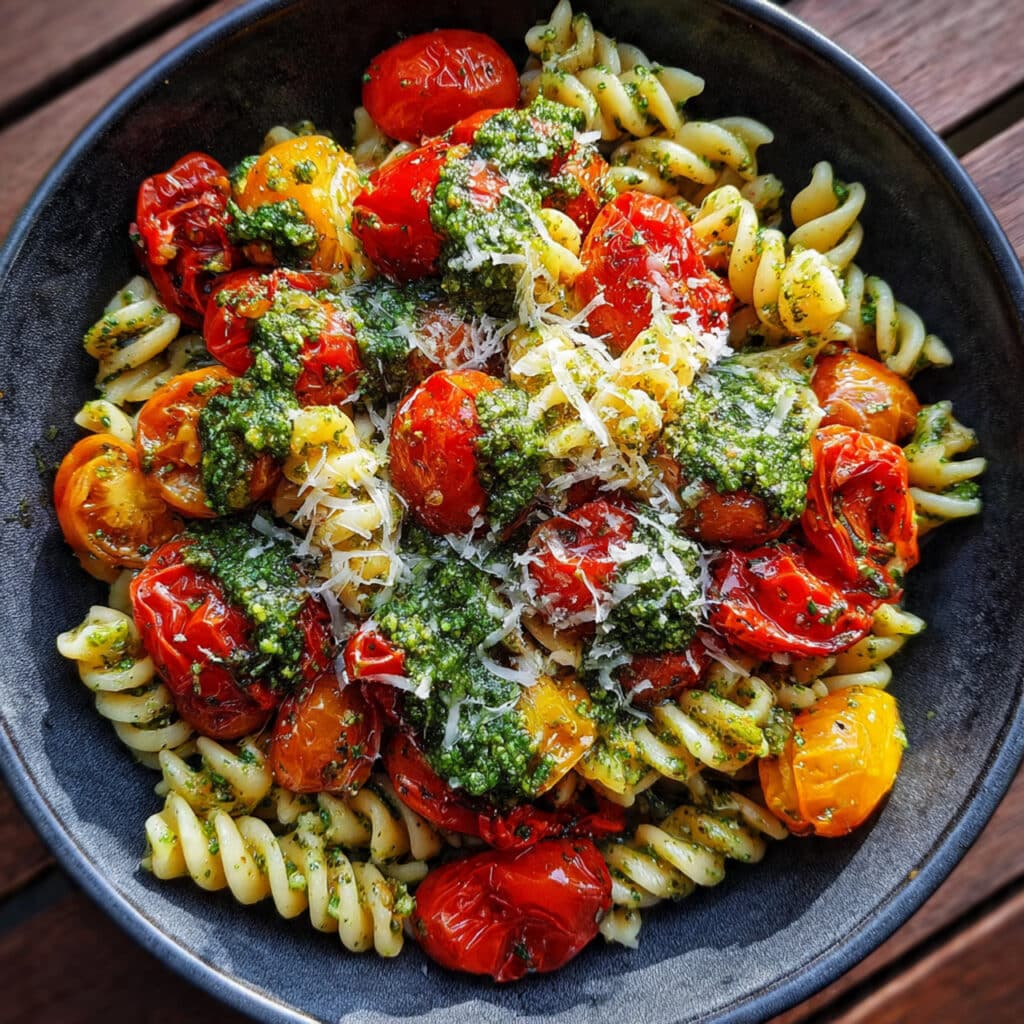
Roasted Tomatoes Pesto Pasta is a vibrant, flavor-packed dish that brings together sweet, caramelized cherry tomatoes with bright, herbaceous homemade pesto. It’s simple enough for a weeknight dinner but elegant enough to serve to guests, and every bite is bursting with fresh, Italian inspired flavor!
Why You’ll Love This Recipe
This pasta is pure magic! The roasted tomatoes become sweet and jammy in the oven, releasing their juices to create the most incredible sauce when tossed with fresh basil pesto. It’s the kind of dish that looks impressive but comes together in about 30 minutes. Plus, it tastes amazing warm, at room temperature, or even cold the next day. This has become my go-to when I want something that feels special without spending hours in the kitchen. The colors alone will make you smile!
Print
Roasted Tomatoes Pesto Pasta
- Total Time: 30 minutes
Description
Easy Roasted Tomatoes Pesto Pasta recipe with sweet caramelized cherry tomatoes and fresh basil pesto. Ready in 30 minutes! Perfect weeknight dinner that’s vegetarian, flavorful, and impressive enough for guests.
Ingredients
Roasted Tomatoes
- 1½–2 pounds cherry or grape tomatoes
- 2–3 tablespoons olive oil
- ½ teaspoon salt
- ¼ teaspoon black pepper
- Optional: 1–2 teaspoons minced garlic
- Optional: pinch of red pepper flakes
Pesto Sauce
- 2 cups fresh basil leaves (packed)
- ⅓–½ cup grated Parmesan cheese
- ⅓ cup pine nuts (or walnuts)
- 1–2 cloves garlic
- ½ cup olive oil (adjust to reach desired consistency)
- Salt and pepper, to taste
- Optional: lemon zest and juice for brightness
Pasta
- 12–16 ounces pasta (penne, fusilli, rigatoni, or your favorite)
- Salt for pasta water
Optional Toppings
- Extra grated Parmesan
- Fresh basil leaves
- Toasted pine nuts or walnuts
- Crushed red pepper flakes
- Drizzle of good olive oil
Instructions
Preheat your oven to 400°F (200°C). Line a large baking sheet with parchment paper if you want easier cleanup, though it’s not essential. Rinse your cherry tomatoes and pat them dry
Spread the tomatoes in a single layer on your baking sheet. Drizzle generously with 2–3 tablespoons of olive oil, then sprinkle with salt and black pepper.
Pop the tomatoes in the oven and roast for 18–22 minutes. You’re looking for them to be soft, blistered, and bursting with juices. Some will pop and caramelize a bit—that’s perfect! They should look jammy but not dried out.
While the tomatoes roast, make your pesto. In your food processor, combine the basil leaves, Parmesan cheese, pine nuts (or walnuts), and garlic cloves. Pulse several times to break everything down into small pieces. With the processor running, slowly drizzle in the olive oil through the feed tube.
Stop and scrape down the sides as needed. Keep processing until smooth and creamy—you want it spreadable but not runny. Taste and add salt, pepper, and optional lemon zest and juice. Trust me, that little squeeze of lemon makes it POP!
Bring a large pot of water to a rolling boil. Add enough salt so it tastes like the sea—this is your only chance to season the pasta itself! Add your pasta and cook according to package directions until al dente (still has a little bite). Before draining, scoop out about ½ cup of that starchy pasta water
Here’s where the magic happens! In a large bowl (or return the pasta to the warm pot off the heat), toss the hot drained pasta with your fresh pesto. Start with most of it and add more to taste. Now gently fold in those gorgeous roasted tomatoes along with ALL their pan juices—that’s where so much flavor lives!
The tomatoes will break down slightly and create an incredible sauce. If the pasta seems dry or the pesto isn’t coating well, add a splash or two of that reserved pasta water. It’ll help everything come together beautifully.
Transfer to your serving bowl or individual plates. Top with extra Parmesan, fresh basil leaves, toasted nuts, and a drizzle of your best olive oil.
Notes
- Toast your pine nuts before making pesto for even deeper flavor—just watch them carefully, they burn fast!
- Save the pesto-making for last if you want the brightest color and flavor, but I usually make it while tomatoes roast to save time.
- Use the best olive oil you have for finishing. It makes a noticeable difference.
- Let the pasta water work for you—add it gradually, a tablespoon at a time, until you reach the perfect creamy consistency.
- Prep Time: 10 minutes
- Cook Time: 20 minutes
- Category: Main Dish
- Method: Roasting
- Cuisine: Italian
Ingredient List
Roasted Tomatoes
- 1½–2 pounds cherry or grape tomatoes
- 2–3 tablespoons olive oil
- ½ teaspoon salt
- ¼ teaspoon black pepper
- Optional: 1–2 teaspoons minced garlic
- Optional: pinch of red pepper flakes
Pesto Sauce
- 2 cups fresh basil leaves (packed)
- ⅓–½ cup grated Parmesan cheese
- ⅓ cup pine nuts (or walnuts)
- 1–2 cloves garlic
- ½ cup olive oil (adjust to reach desired consistency)
- Salt and pepper, to taste
- Optional: lemon zest and juice for brightness
Pasta
- 12–16 ounces pasta (penne, fusilli, rigatoni, or your favorite)
- Salt for pasta water
Optional Toppings
- Extra grated Parmesan
- Fresh basil leaves
- Toasted pine nuts or walnuts
- Crushed red pepper flakes
- Drizzle of good olive oil
Substitution Notes:
- Pine nuts too pricey? Walnuts work beautifully and add a slightly earthier flavor.
- No fresh basil? You can use 2 tablespoons store-bought pesto per serving in a pinch, though homemade is truly special.
- Dairy-free? Use nutritional yeast instead of Parmesan for a cheesy flavor.
- Gluten-free? Just swap in your favorite gluten-free pasta!
Why These Ingredients Work
Cherry or grape tomatoes are perfect for roasting because they’re naturally sweet and hold their shape while releasing juices that coat the pasta. Olive oil helps caramelize the tomatoes and carries their flavor throughout the dish.
Fresh basil is the star of pesto—its bright, peppery-sweet flavor is irreplaceable.
Pine nuts add creaminess and a subtle buttery taste when blended, while Parmesan brings salty, umami depth. Garlic in both the tomatoes and pesto creates layers of flavor.
The pasta cooking water is liquid gold—its starch helps bind everything together into a silky, cohesive sauce!
Essential Tools and Equipment
- Large rimmed baking sheet
- Food processor or high-powered blender
- Large pot for pasta
- Colander
- Large serving bowl or the pasta pot
- Measuring cups and spoons
- Wooden spoon or tongs for tossing
How To Make Roasted Tomatoes Pesto Pasta
Step 1: Preheat and Prep
Preheat your oven to 400°F (200°C). Line a large baking sheet with parchment paper if you want easier cleanup, though it’s not essential. Rinse your cherry tomatoes and pat them dry
Step 2: Season the Tomatoes
Spread the tomatoes in a single layer on your baking sheet. Drizzle generously with 2–3 tablespoons of olive oil, then sprinkle with salt and black pepper.
Step 3: Roast Until Blistered
Pop the tomatoes in the oven and roast for 18–22 minutes. You’re looking for them to be soft, blistered, and bursting with juices. Some will pop and caramelize a bit—that’s perfect! They should look jammy but not dried out.
Step 4: Make the Pesto
While the tomatoes roast, make your pesto. In your food processor, combine the basil leaves, Parmesan cheese, pine nuts (or walnuts), and garlic cloves. Pulse several times to break everything down into small pieces. With the processor running, slowly drizzle in the olive oil through the feed tube.
Stop and scrape down the sides as needed. Keep processing until smooth and creamy—you want it spreadable but not runny. Taste and add salt, pepper, and optional lemon zest and juice. Trust me, that little squeeze of lemon makes it POP!
Step 5: Cook the Pasta
Bring a large pot of water to a rolling boil. Add enough salt so it tastes like the sea—this is your only chance to season the pasta itself! Add your pasta and cook according to package directions until al dente (still has a little bite). Before draining, scoop out about ½ cup of that starchy pasta water
Step 6: Combine Everything
Here’s where the magic happens! In a large bowl (or return the pasta to the warm pot off the heat), toss the hot drained pasta with your fresh pesto. Start with most of it and add more to taste. Now gently fold in those gorgeous roasted tomatoes along with ALL their pan juices—that’s where so much flavor lives!
The tomatoes will break down slightly and create an incredible sauce. If the pasta seems dry or the pesto isn’t coating well, add a splash or two of that reserved pasta water. It’ll help everything come together beautifully.
Step 7: Serve Immediately
Transfer to your serving bowl or individual plates. Top with extra Parmesan, fresh basil leaves, toasted nuts, and a drizzle of your best olive oil.
You Must Know
The pasta water is ESSENTIAL. That starchy liquid helps emulsify the pesto and tomato juices into a cohesive sauce. Don’t skip reserving it! Also, add pesto off the heat—high heat can dull its bright, fresh flavor and turn it brown. Mix it with the warm (not boiling hot) pasta for the best results.
Personal Secret: I always make extra pesto and freeze it in ice cube trays. Pop out a cube or two whenever I need a quick flavor boost for pasta, sandwiches, or even eggs.
Pro Tips & Cooking Hacks
- Don’t overcrowd the baking sheet when roasting tomatoes. They need space to caramelize, not steam. Use two sheets if needed.
- Toast your pine nuts before making pesto for even deeper flavor—just watch them carefully, they burn fast!
- Save the pesto-making for last if you want the brightest color and flavor, but I usually make it while tomatoes roast to save time.
- Use the best olive oil you have for finishing. It makes a noticeable difference.
- Let the pasta water work for you—add it gradually, a tablespoon at a time, until you reach the perfect creamy consistency.
Common Mistakes to Avoid:
- Rinsing the pasta after draining (it washes away the starch!)
- Making pesto too far in advance (it can oxidize and brown)
- Using pre-grated Parmesan (freshly grated melts and blends so much better)
Flavor Variations / Suggestions
Add Protein:
- Toss in grilled chicken, shrimp, or Italian sausage
- White beans make it heartier and vegetarian-friendly
- Crispy chickpeas add crunch and protein
Veggie Boost:
- Add baby spinach or arugula—it wilts right into the warm pasta
- Roasted red peppers alongside the tomatoes
- Zucchini or asparagus cut into bite-sized pieces
Different Pesto Styles:
- Sun-dried tomato pesto instead of basil for deeper, richer flavor
- Kale pesto for an earthier twist
- Arugula pesto for a peppery kick
Make It Creamy:
- Stir in a few tablespoons of heavy cream or mascarpone
- Add a dollop of ricotta on top of each serving
Make-Ahead Options
Pesto: Make up to 3 days ahead and store in an airtight container in the fridge with a thin layer of olive oil on top to prevent browning. You can also freeze pesto for up to 3 months.
Roasted Tomatoes: Roast up to 2 days ahead and refrigerate. Rewarm gently before tossing with pasta.
Full Assembly: This dish is best enjoyed fresh, but you can prep all components separately and combine just before serving. The pasta itself doesn’t hold well made ahead—it absorbs the sauce and gets dry.
Freezing: I don’t recommend freezing the assembled dish, but you can freeze the pesto and roasted tomatoes separately.
Recipe Notes & Baker’s Tips
- Al dente is key! Slightly undercooked pasta will finish cooking when tossed with the hot tomatoes and will have a better texture.
- Pasta shape matters. Choose shapes with nooks and crannies (like fusilli, penne, or rigatoni) that catch all that gorgeous pesto and tomato goodness.
- Fresh basil is non-negotiable for pesto. Dried won’t give you the same vibrant flavor.
- Room temperature serving is totally acceptable! This pasta is actually delicious served warm or at room temperature, making it perfect for potlucks or picnics.
Serving Suggestions
This pasta is stunning on its own, but here are some ideas to round out the meal:
- Crusty garlic bread for soaking up every last bit of sauce
- Simple arugula salad with lemon vinaigrette
- Burrata placed in the center of the pasta for an ultra-luxe presentation
- Grilled vegetables on the side
- Chilled white wine—a crisp Pinot Grigio or Sauvignon Blanc is perfect!
Serve family-style in a large bowl and let everyone help themselves. Garnish with fresh basil sprigs and have extra Parmesan and red pepper flakes on the table.
How to Store Your Roasted Tomatoes Pesto Pasta
Refrigerator: Store leftovers in an airtight container for up to 3 days. The pasta will absorb some sauce, so add a splash of olive oil or a little extra pesto when reheating.
Reheating: Warm gently in a skillet over medium-low heat with a splash of water or broth to loosen. You can also microwave in 30-second intervals, stirring between. Add a drizzle of fresh olive oil to refresh.
Freezer: Not recommended for the assembled dish. Pesto and roasted tomatoes can be frozen separately for up to 3 months.
Room Temperature: If serving at a gathering, this pasta can sit at room temperature for up to 2 hours.
Allergy Information
Contains:
- Dairy (Parmesan cheese)
- Tree nuts (pine nuts or walnuts)
- Gluten (pasta)
Substitutions for Common Allergens:
- Dairy-Free: Use nutritional yeast instead of Parmesan, or try a vegan Parmesan alternative
- Nut-Free: Replace pine nuts with sunflower seeds or pepitas (pumpkin seeds)
- Gluten-Free: Use your favorite gluten-free pasta (chickpea or lentil pasta work great!)
Always check labels if you have severe allergies, as cross-contamination can occur in manufacturing.
Questions I Get Asked A Lot
Can I use store-bought pesto instead of homemade?
Absolutely! While homemade pesto is truly special, a good-quality store-bought pesto works in a pinch. You’ll need about ½ cup or so, depending on how saucy you like your pasta. Just taste and adjust—add a squeeze of lemon and some extra Parmesan to brighten it up!
My pesto turned brown—what happened?
Pesto oxidizes when exposed to air, which causes browning. It’s still safe to eat but doesn’t look as pretty. To prevent this, store it with a thin layer of olive oil on top and press plastic wrap directly onto the surface. For the brightest color, make it fresh and serve immediately. A squeeze of lemon juice also helps slow oxidation.
Can I use regular tomatoes instead of cherry tomatoes?
You can, but cherry or grape tomatoes work best because they roast quickly and stay jammy. If using regular tomatoes, cut them into wedges and increase roasting time to 25–30 minutes. They’ll release more liquid, which is fine—just toss it all with the pasta!
Why is my pasta dry even after adding pesto?
You probably need more pasta cooking water! Add it a tablespoon at a time and toss well. The starch in the water helps create a creamy, clingy sauce. Also make sure you’re using enough pesto—start with ½ cup and add more to taste.
Can I make this ahead for a party?
You can prep the components separately, but I recommend assembling just before serving for the best texture and flavor. If you must make it ahead, undercook the pasta slightly, toss everything together, and store in the fridge. Reheat gently with extra pasta water or olive oil to refresh.
💬 Tried this recipe? Leave a comment and rating below! I’d love to hear how it turned out for you! Did you make any fun variations?