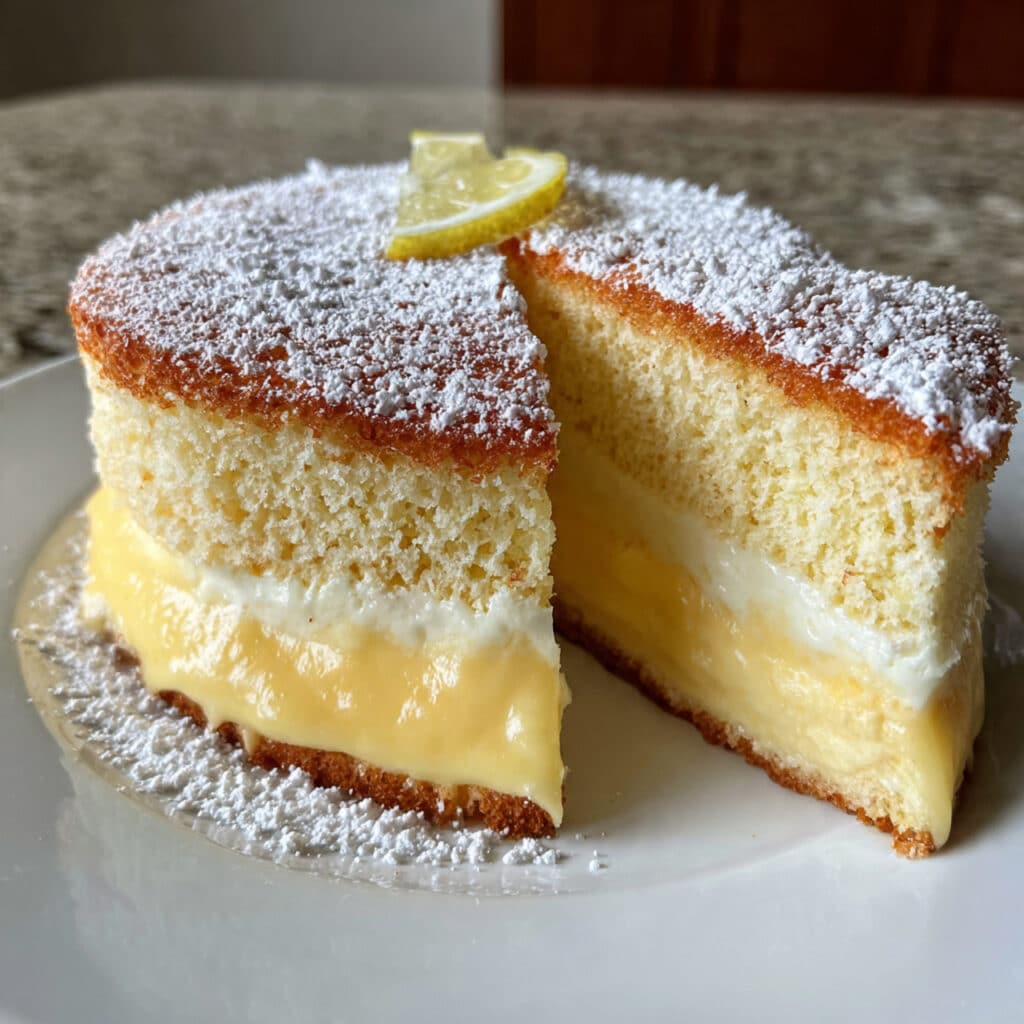
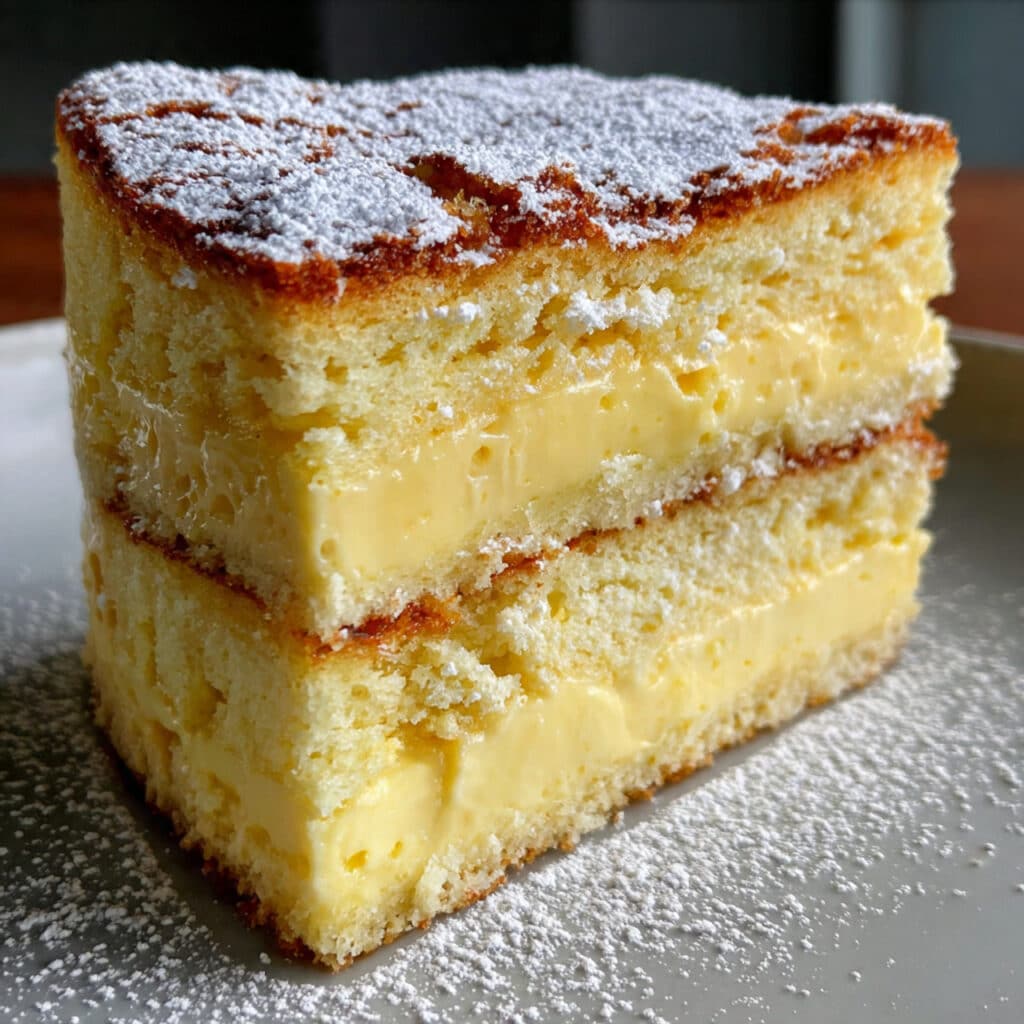
Lemon Custard Cake is a magical dessert where one simple batter separates into three beautiful layers as it bakes. A fluffy sponge on top, a creamy lemon custard in the middle, and a tender cake base. Made with fresh lemon juice, eggs, and basic pantry staples. Perfect for spring gatherings, Easter celebrations, or any time you’re craving something bright and refreshing!
Why You’ll Love This Recipe
Dreamy dessert with a bright citrus flavor that melts in your mouth. As it bakes, it forms soft layers with a tender cake on top and a creamy lemon custard underneath. Perfectly sweet and tangy, it’s an elegant yet easy treat for any occasion.
Print
Lemon Custard Cake
- Total Time: 1 hour 5 minutes (plus cooling time)
- Yield: 1 (8×8-inch) cake
Description
This magical Lemon Custard Cake bakes into three perfect layers from one simple batter! Fluffy sponge top, creamy custard center, and tender base. Easy recipe with fresh lemon flavor!
Ingredients
For the Cake:
- 4 large eggs, separated
- ¾ cup granulated sugar
- ½ cup unsalted butter, melted and slightly cooled
- 1 teaspoon vanilla extract
- ¾ cup all-purpose flour
- ¼ cup fresh lemon juice
- Zest of 2 lemons
- 1¾ cups milk, lukewarm
- Powdered sugar, for dusting
Optional Add-Ins:
- Fresh berries for serving
- Lemon glaze instead of powdered sugar
- Pinch of salt if using unsalted butter
Instructions
Preheat your oven to 325°F (163°C). Line your 8×8-inch baking dish with parchment paper, letting it hang over the sides a bit (this makes removal so easy later!). Give it a light spray or brush with butter.
In a clean, completely dry bowl, beat your egg whites until stiff peaks form. This takes about 3–4 minutes with an electric mixer. You’ll know they’re ready when you can turn the bowl upside down and nothing moves!
In another bowl, beat the egg yolks and sugar together until the mixture is pale and creamy — about 2–3 minutes. It should look like sunshine and nearly double in volume.
Mix in your melted (but slightly cooled) butter and vanilla extract until everything is smooth and combined. The butter shouldn’t be hot or it’ll scramble the eggs!
Add the flour and mix until just combined. Don’t overmix here — we want tender cake, not tough cake!
Stir in the fresh lemon juice and lemon zest. Your kitchen is going to smell AMAZING right about now. The batter might look a little curdled from the acid in the lemon juice — that’s totally normal!
Slowly mix in the lukewarm milk until the batter is smooth. Yes, it’s going to be VERY thin — like crepe batter thin. Don’t panic! This is exactly what we want for those magical layers to form.
Here’s the crucial part: gently fold the whipped egg whites into the thin batter by hand using a spatula. Use a folding motion — scoop from the bottom and fold over the top. You’ll see some white streaks and small lumps, and that’s perfectly fine! Those lumps actually help create the distinct layers.
Pour the batter into your prepared pan and slide it into the oven. Bake for 40–60 minutes, until the top is lightly golden and the center has a slight jiggle when you gently shake the pan.
I usually let mine sit for at least 2 hours at room temperature, or I pop it in the fridge for an hour. Once cooled, dust generously with powdered sugar, slice, and prepare for compliments!
Notes
- Lukewarm Milk is Key: Warm your milk for about 20–30 seconds in the microwave. It should feel just barely warm to the touch — not hot, not cold.
- Clean Slices Every Time: Wipe your knife with a damp cloth between each slice for picture-perfect servings.
- Check for Doneness: The top should be golden and spring back when lightly touched. A toothpick inserted will have moist crumbs but shouldn’t be wet with raw batter.
- Avoid Common Mistakes: Don’t skip the parchment paper, don’t use cold milk, and whatever you do, don’t open the oven door in the first 30 minutes of baking!
- Prep Time: 15 minutes
- Cook Time: 50 minutes
- Category: Dessert
- Method: Baking
- Cuisine: European-inspired
Ingredient List
For the Cake:
- 4 large eggs, separated
- ¾ cup granulated sugar
- ½ cup unsalted butter, melted and slightly cooled
- 1 teaspoon vanilla extract
- ¾ cup all-purpose flour
- ¼ cup fresh lemon juice
- Zest of 2 lemons
- 1¾ cups milk, lukewarm
- Powdered sugar, for dusting
Optional Add-Ins:
- Fresh berries for serving
- Lemon glaze instead of powdered sugar
- Pinch of salt if using unsalted butter
Substitution Notes:
- Butter: You can use salted butter if that’s what you have — just skip adding extra salt.
- Milk: Whole milk works best, but 2% will work in a pinch. Don’t use skim — you need that richness!
- Lemon juice: Fresh is best! Bottled lemon juice just doesn’t have the same bright flavor.
- Sugar: Stick with granulated for the batter, but you can skip the powdered sugar dusting if you prefer a lemon glaze.
Why These Ingredients Work
Let me walk you through the science behind this magical cake:
Egg whites whipped to stiff peaks create the airy sponge layer that floats to the top during baking. They’re essentially doing all the heavy lifting!
Egg yolks add richness and help create that silky custard layer in the middle. They’re the heart of this dessert.
Lukewarm milk is crucial — it keeps the batter fluid enough to separate into layers. Cold milk would seize up the melted butter, and hot milk would cook the eggs. Temperature matters here!
Fresh lemon juice and zest deliver that bright, tangy flavor that makes this cake irresistible. The zest adds extra lemon punch and those gorgeous flecks throughout.
Melted butter adds moisture and richness while keeping the texture tender. It also helps the layers separate properly.
Flour provides just enough structure for the cake and base layers without making it heavy or dense.
Essential Tools and Equipment
Here’s what you’ll need to make this beauty:
- 8×8-inch baking dish — This size is perfect for achieving those three distinct layers
- Parchment paper — Makes cleanup a breeze and helps you lift the cake out cleanly
- Two mixing bowls — One for egg whites, one for everything else
- Electric mixer or whisk — For beating those egg whites to stiff peaks (I use my hand mixer)
- Measuring cups and spoons — Accuracy matters in baking!
- Zester or microplane — For getting that beautiful lemon zest
- Spatula — For gently folding in the egg whites
How To Make Lemon Custard Cake
Step 1: Preheat and Prep Your Pan
Preheat your oven to 325°F (163°C). Line your 8×8-inch baking dish with parchment paper, letting it hang over the sides a bit (this makes removal so easy later!). Give it a light spray or brush with butter.
Step 2: Whip Those Egg Whites
In a clean, completely dry bowl, beat your egg whites until stiff peaks form. This takes about 3–4 minutes with an electric mixer. You’ll know they’re ready when you can turn the bowl upside down and nothing moves!
Step 3: Make the Base Batter
In another bowl, beat the egg yolks and sugar together until the mixture is pale and creamy — about 2–3 minutes. It should look like sunshine and nearly double in volume.
Step 4: Add Butter and Vanilla
Mix in your melted (but slightly cooled) butter and vanilla extract until everything is smooth and combined. The butter shouldn’t be hot or it’ll scramble the eggs!
Step 5: Incorporate the Flour
Add the flour and mix until just combined. Don’t overmix here — we want tender cake, not tough cake!
Step 6: Add the Lemon
Stir in the fresh lemon juice and lemon zest. Your kitchen is going to smell AMAZING right about now. The batter might look a little curdled from the acid in the lemon juice — that’s totally normal!
Step 7: Pour in the Milk
Slowly mix in the lukewarm milk until the batter is smooth. Yes, it’s going to be VERY thin — like crepe batter thin. Don’t panic! This is exactly what we want for those magical layers to form.
Step 8: Fold in the Egg Whites
Here’s the crucial part: gently fold the whipped egg whites into the thin batter by hand using a spatula. Use a folding motion — scoop from the bottom and fold over the top. You’ll see some white streaks and small lumps, and that’s perfectly fine! Those lumps actually help create the distinct layers.
Step 9: Bake
Pour the batter into your prepared pan and slide it into the oven. Bake for 40–60 minutes, until the top is lightly golden and the center has a slight jiggle when you gently shake the pan.
Step 10: Cool and Serve
I usually let mine sit for at least 2 hours at room temperature, or I pop it in the fridge for an hour. Once cooled, dust generously with powdered sugar, slice, and prepare for compliments!
You Must Know
Room Temperature Matters: Make sure your eggs are at room temperature before you start. Cold eggs won’t whip as well and can cause the butter to seize.
Don’t Overmix After Adding Egg Whites: This is the number one mistake I see! Once you fold in those fluffy egg whites, stop mixing as soon as you don’t see any huge white streaks. Small lumps are fine and actually help create the layers.
The Jiggle Test: Your cake should still have a slight jiggle in the center when you take it out. As it cools, that custard layer will set perfectly. If you bake until it’s completely firm, you’ll lose that magical creamy center.
Personal Secret: I always make this the night before I need it. Not only does it give the flavors time to meld, but it also chills completely, making it easier to get clean, beautiful slices.
Pro Tips & Cooking Hacks
- Use Fresh Lemon Juice: I cannot stress this enough. Fresh-squeezed lemon juice makes all the difference. Bottled juice tastes flat and artificial in comparison.
- Lukewarm Milk is Key: Warm your milk for about 20–30 seconds in the microwave. It should feel just barely warm to the touch — not hot, not cold.
- Clean Slices Every Time: Wipe your knife with a damp cloth between each slice for picture-perfect servings.
- Check for Doneness: The top should be golden and spring back when lightly touched. A toothpick inserted will have moist crumbs but shouldn’t be wet with raw batter.
- Avoid Common Mistakes: Don’t skip the parchment paper, don’t use cold milk, and whatever you do, don’t open the oven door in the first 30 minutes of baking!
Flavor Variations & Suggestions
While I adore the classic lemon version, here are some fun twists:
Lemon Blueberry: Fold ½ cup fresh blueberries into the batter before adding the egg whites.
Meyer Lemon: Swap regular lemons for Meyer lemons for a sweeter, more floral flavor.
Lemon Lime: Use half lemon juice and half lime juice for a citrus twist.
Orange Custard Cake: Replace lemon juice and zest with orange for a different citrus experience.
Add a Glaze: Instead of powdered sugar, drizzle with a lemon glaze (powdered sugar + lemon juice + zest).
Lavender Lemon: Add ½ teaspoon culinary lavender to the batter for an elegant, sophisticated flavor.
Make-Ahead Options
This cake is actually BETTER when made ahead! Here’s how:
Day Before: Make the entire cake, let it cool completely, cover tightly with plastic wrap, and refrigerate. The flavors deepen and the layers set beautifully.
Morning Of: If serving for dinner, make it in the morning and refrigerate until ready to serve.
Freezing: I don’t recommend freezing this cake. The custard layer doesn’t freeze well and can become watery when thawed.
Storage Before Serving: Keep it covered in the refrigerator for up to 24 hours before serving. Dust with powdered sugar just before presenting.
Recipe Notes & Baker’s Tips
- The Three-Layer Magic: As the cake bakes, the egg whites float to the top creating the sponge, the batter settles at the bottom creating the cake layer, and the middle becomes that dreamy custard. It’s science and magic combined!
- Serving Temperature: This cake is delicious both chilled and at room temperature. I prefer it cold from the fridge on a hot day, but slightly cool (not cold) brings out more flavor.
- Why 325°F? The lower temperature ensures gentle, even baking so the layers can form properly. A higher temp would set the batter too quickly.
- Pan Size Matters: Stick with 8×8-inch. A 9×9 will make the layers too thin; smaller will make it too thick and require longer baking.
Serving Suggestions
This Lemon Custard Cake is versatile and pairs beautifully with:
- Fresh Berries: Raspberries, blueberries, or sliced strawberries add gorgeous color and extra freshness
- Whipped Cream: A dollop of barely sweetened whipped cream is perfection
- Vanilla Ice Cream: For an extra indulgent dessert
- Mint Garnish: A small sprig of fresh mint adds an elegant touch
- Extra Lemon Zest: A light sprinkle over the powdered sugar makes it extra pretty
- Afternoon Tea: This is perfect alongside coffee or tea for a sophisticated afternoon treat
- After Dinner: Serve as a light, refreshing end to a heavy meal
How to Store Your Lemon Custard Cake
Room Temperature: This cake contains dairy and eggs, so I don’t recommend leaving it out for more than 2 hours after baking.
Refrigerator: Cover tightly with plastic wrap or store in an airtight container. Keeps beautifully for 3–4 days. The custard layer may firm up slightly when cold, which I actually love!
Freezer: Not recommended. The custard layer doesn’t freeze well and can become separated and watery when thawed.
Reheating: Enjoy cold or at room temperature. If you prefer it slightly warm, let individual slices sit at room temperature for 20–30 minutes. Don’t microwave — it can make the custard layer weep.
Allergy Information
Contains:
- Eggs (main ingredient)
- Dairy (milk and butter)
- Gluten (all-purpose flour)
Substitution Ideas:
- Dairy-Free: Use plant-based butter and your favorite non-dairy milk (oat or almond work well). The texture may be slightly different.
- Gluten-Free: Replace all-purpose flour with a 1:1 gluten-free baking flour blend. The texture will be similar but may be slightly denser.
- Egg-Free: Unfortunately, eggs are essential to this recipe’s magic. There’s no good substitute that will create the three-layer effect.
Questions I Get Asked A Lot
Why didn’t my cake separate into three layers?
This usually happens if the egg whites weren’t whipped enough or were overmixed into the batter. Make sure you whip to stiff peaks and fold gently — those lumps help create the layers! Also check that your milk was lukewarm, not cold.
Can I use a different size pan?
I really recommend sticking with 8×8-inch for the best results. A 9×9 will work but your layers will be thinner. Anything larger and you won’t get that gorgeous custard center. If you only have a 9×13, I’d suggest doubling the recipe.
My custard layer is too thin — what happened?
This usually means the cake was overbaked. Remember, it should still have a slight jiggle when you remove it from the oven. The custard continues to set as it cools. Next time, check it at 40 minutes and watch closely.
Can I make this with bottled lemon juice?
You technically can, but I really don’t recommend it. Fresh lemon juice has a brightness and flavor that bottled just can’t match. Since lemon is the star here, using fresh makes a huge difference!
Do I have to use powdered sugar on top?
Not at all! The powdered sugar is just for looks and a touch of extra sweetness. You could use a lemon glaze, skip it entirely, or just garnish with fresh berries. The cake is delicious either way.
Help! My top layer is browning too quickly!
If your top is browning before the center is set, tent it loosely with aluminum foil for the last 15–20 minutes of baking. This protects the top while the inside finishes cooking.
💬 Tried this recipe? Leave a comment and rating below! I’d love to hear how your Lemon Custard Cake turned out! Did you try any variations? What did your family think?