Thai grilled chicken is smoky, sweet, tangy, and packed with irresistible flavor thanks to a simple marinade of soy sauce, lime juice, garlic, ginger, and a touch of sweetness. Inspired by unforgettable street food aromas, this recipe delivers that perfect balance of caramelized char and bright citrus right from your own grill.
Love More Recipes? Try My Honey BBQ Chicken Rice or this Honey Garlic Chicken Breast next.
Why You’ll Love This Recipe
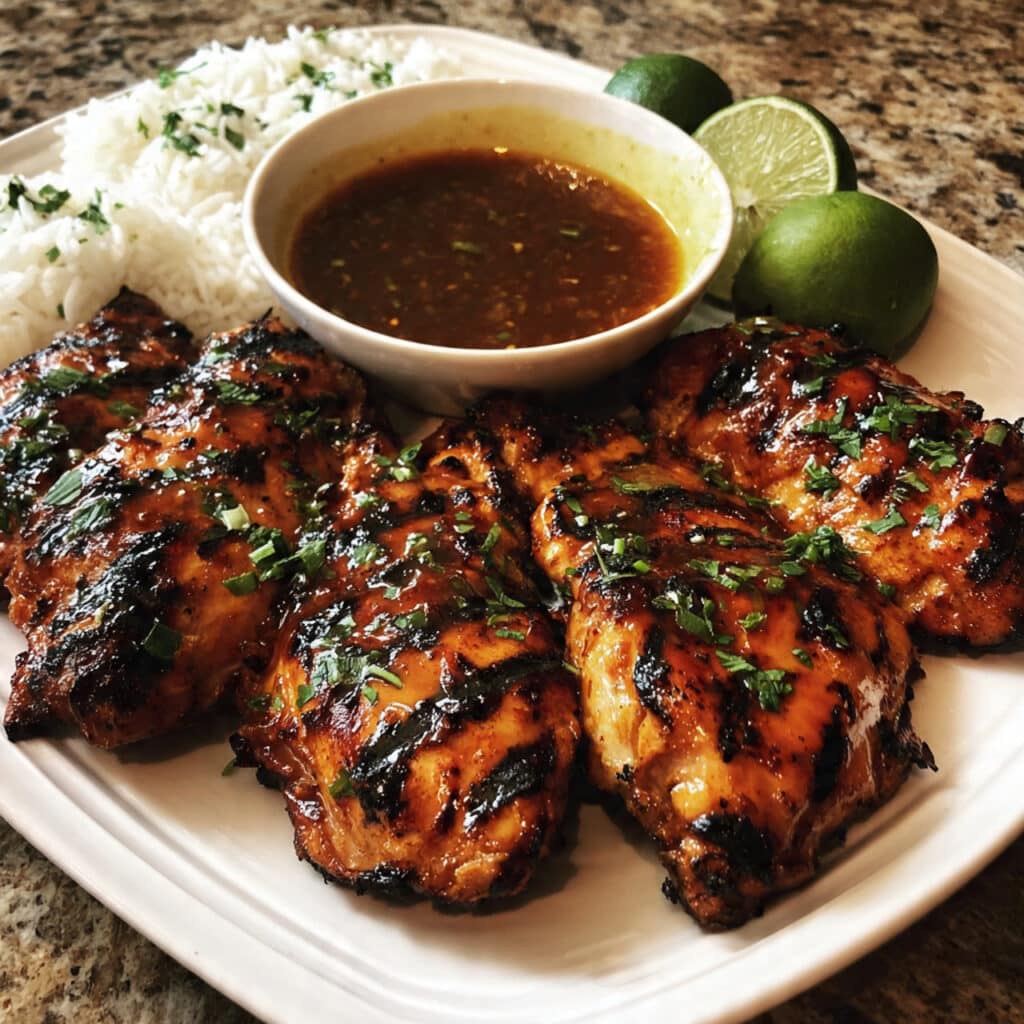
This smoky, sweet, and tangy chicken is packed with bold flavor from a simple soy, lime, garlic, and ginger marinade. It grills up juicy with perfectly caramelized edges that taste just like your favorite street food bite. Easy enough for weeknights and flavorful enough for gatherings, this is a recipe you’ll make again and again.
Print
Thai Grilled Chicken
- Total Time: 31 minutes
- Yield: 4 pieces of chicken
Description
Thai Grilled Chicken features tender, juicy chicken marinated in a bold combination of soy sauce, fresh lime juice, garlic, ginger, and brown sugar, then grilled to perfection with beautiful caramelized char marks. This easy recipe brings authentic Thai flavors to your backyard grill with minimal prep and maximum flavor.
Ingredients
For the Chicken:
- 4 chicken thighs or chicken breasts (boneless, skinless)
- Salt, to taste
- Black pepper, to taste
For the Marinade:
- 3 tablespoons olive oil or neutral oil
- ¼ cup soy sauce (or tamari for gluten-free)
- 3 tablespoons lime juice (fresh squeezed from about 2 limes)
- 2 tablespoons brown sugar or honey
- 4 cloves garlic, minced
- 1 tablespoon fresh ginger, minced
- 1 tablespoon fish sauce (optional, for extra umami)
- ½ teaspoon chili flakes or 1 fresh chili, minced (optional, for heat)
Optional Garnish:
- Fresh cilantro or Thai basil
- Lime wedges
- Sliced green onions
Instructions
In a medium mixing bowl, whisk together the oil, soy sauce, lime juice, brown sugar (or honey), minced garlic, and minced ginger until the sugar dissolves and everything is well combined.
Pat your chicken pieces dry with paper towels (this helps the marinade stick better). Season both sides generously with salt and black pepper—don’t be shy!
Place the chicken in a shallow dish or a large resealable bag. Pour the marinade over the chicken, making sure every piece is well coated.
Seal the bag or cover the dish, and pop it in the refrigerator for at least 30 minutes. For the most flavorful results, marinate for 2–4 hours, or even overnight if you’re planning ahead!
About 10 minutes before you’re ready to cook, preheat your grill to medium-high heat (around 400°F).
If you’re using a gas grill, turn all burners to medium-high. For charcoal, wait until the coals are glowing and covered with white ash.
Lightly oil the grill grates using a paper towel dipped in oil and held with tongs—this prevents sticking and gives you those beautiful grill marks!
Remove the chicken from the marinade, letting any excess drip off (but don’t wipe it completely dry—you want some of that flavor!).
Place the chicken pieces on the hot grill, being careful not to overcrowd them. Cook for 6–8 minutes on the first side without moving them—this is how you get those gorgeous char marks!
Flip the chicken and cook for another 6–8 minutes on the other side. The exact time will depend on the thickness of your chicken.
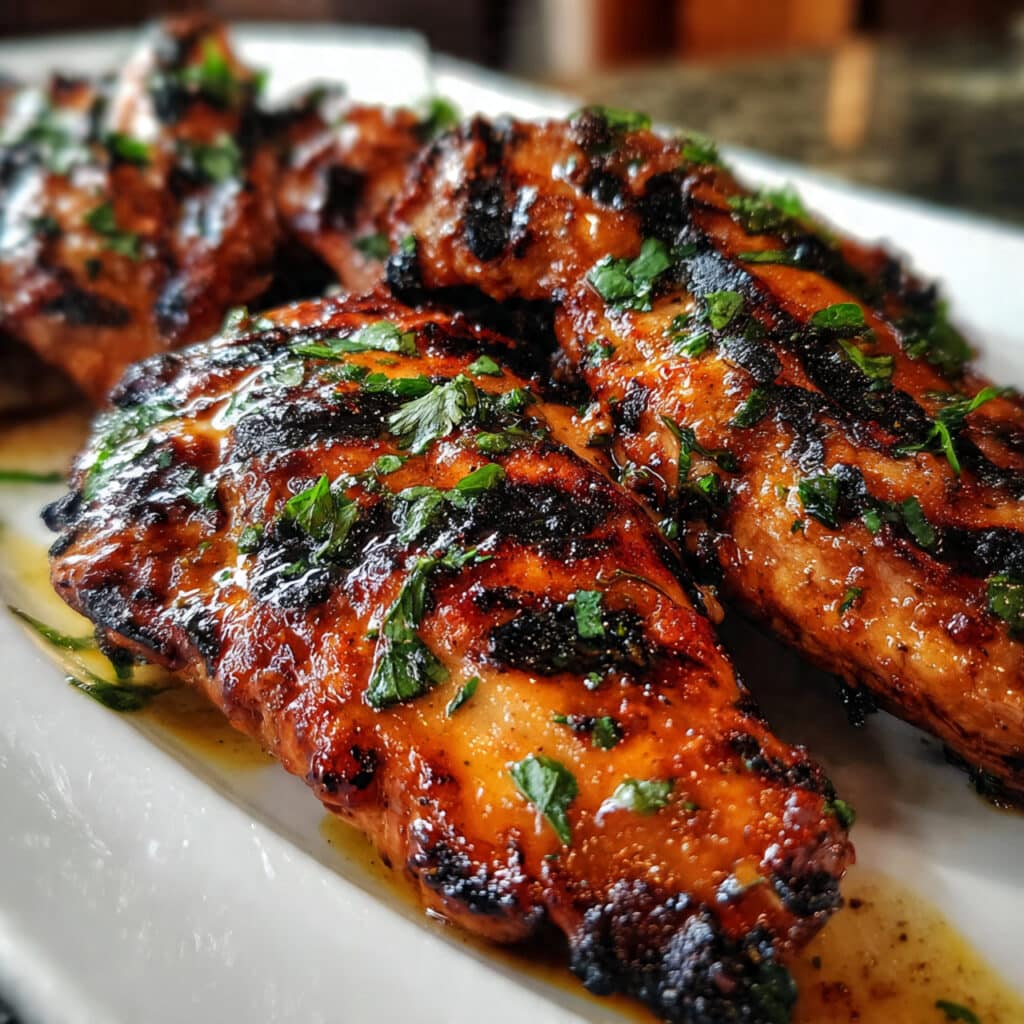
You’re looking for an internal temperature of 165°F when measured with a meat thermometer in the thickest part. The chicken should have beautiful caramelized grill marks and look slightly charred in spots—that’s where all the flavor lives!
This step is crucial, so don’t skip it! Transfer the chicken to a clean plate or cutting board and let it rest for 5 minutes.
This allows the juices to redistribute throughout the meat, ensuring every bite is juicy and tender.
While it rests, get your garnishes ready—chop some fresh cilantro, slice those limes, and cut some green onions.
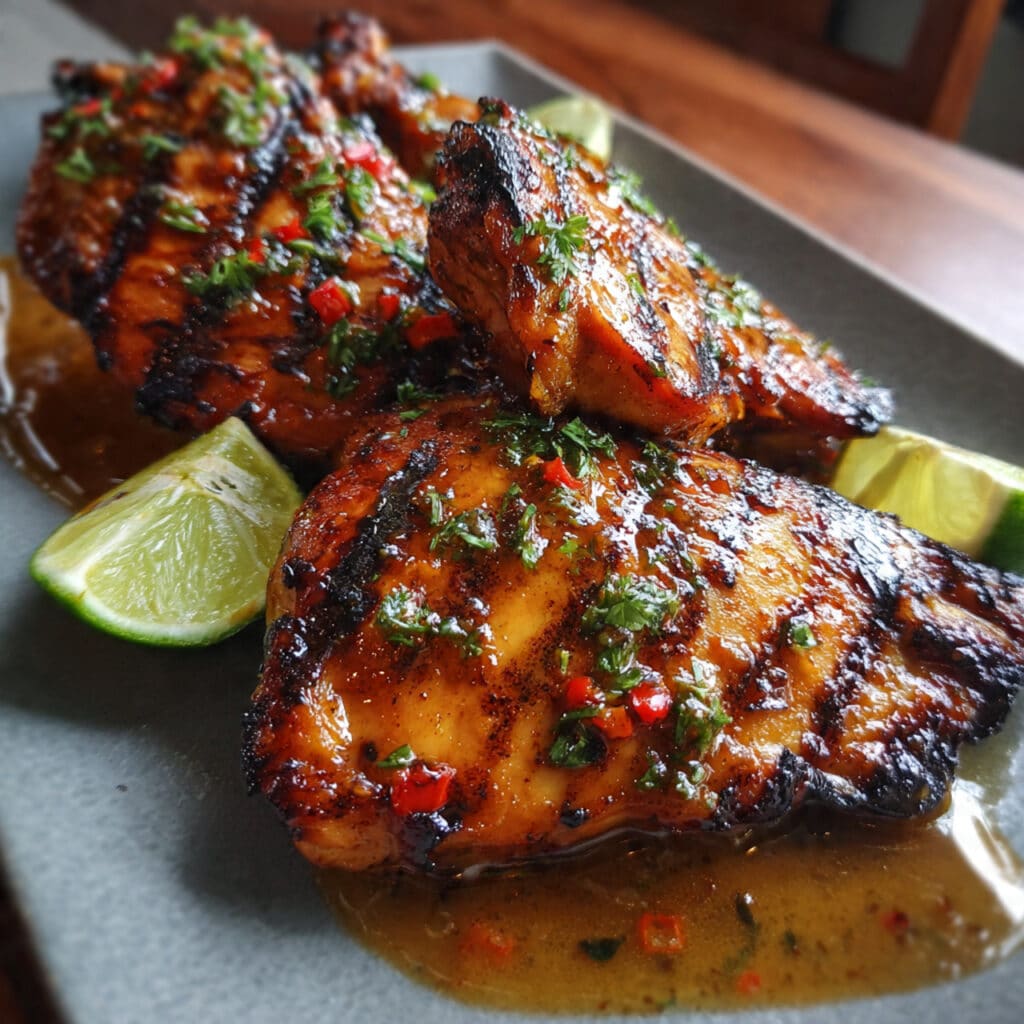
After resting, slice the chicken if desired, or serve it whole. Garnish generously with cilantro, lime wedges, and green onions, and get ready for some seriously happy taste buds!
Notes
Temperature is everything! Invest in a good instant-read thermometer if you don’t have one.
Chicken thighs are forgiving (they stay juicy even if slightly overcooked), but chicken breasts can dry out quickly. Pull them off the grill right at 165°F, and carryover cooking will do the rest.
Create a two-zone fire. If you’re using a charcoal grill, push all the coals to one side. This gives you a hot zone for searing and a cooler zone where you can move the chicken if it’s browning too quickly.
It’s your insurance policy against burnt-on-the-outside, raw-on-the-inside chicken!
Pound it out. If you’re using chicken breasts, they often have a thick end and a thin end. Use a meat mallet to pound them to an even thickness (about ¾ inch).
This ensures everything cooks evenly, and you won’t end up with dry edges and undercooked centers.
- Prep Time: 15 minutes
- Cook Time: 16 minutes
- Category: Main Dish
- Method: Grilling
- Cuisine: Thai
Ingredient List
For the Chicken:
- 4 chicken thighs or chicken breasts (boneless, skinless)
- Salt, to taste
- Black pepper, to taste
For the Marinade:
- 3 tablespoons olive oil or neutral oil
- ¼ cup soy sauce (or tamari for gluten-free)
- 3 tablespoons lime juice (fresh squeezed from about 2 limes)
- 2 tablespoons brown sugar or honey
- 4 cloves garlic, minced
- 1 tablespoon fresh ginger, minced
- 1 tablespoon fish sauce (optional, for extra umami)
- ½ teaspoon chili flakes or 1 fresh chili, minced (optional, for heat)
Optional Garnish:
- Fresh cilantro or Thai basil
- Lime wedges
- Sliced green onions
Friendly Notes:
- Chicken choice: I prefer thighs for their juiciness, but breasts work beautifully too!
- Soy sauce swap: Use tamari or coconut aminos for gluten-free options.
- Sugar substitute: Maple syrup works in a pinch, though it gives a slightly different flavor.
- No fish sauce? No problem! It adds depth, but the chicken is still delicious without it.
Why These Ingredients Work
Let me break down the magic behind this marinade!
The soy sauce brings that essential salty, umami base that makes everything savory and rich. Lime juice is your brightness—it cuts through the richness and adds that signature Thai tanginess that makes your taste buds dance.
Brown sugar or honey might seem unexpected, but trust me on this! It balances the salty and sour elements while helping create that gorgeous caramelized char on the grill.
The garlic and ginger are the aromatic powerhouses—they infuse the chicken with warmth and depth that screams “Thai cuisine!”
Fish sauce is my secret weapon for authentic flavor. Just a splash adds this incredible savory depth that you can’t quite put your finger on, but you know something special is happening.
If you like heat, those chili flakes bring the fire without overwhelming the other flavors.
The oil helps the marinade cling to the chicken and keeps everything moist during grilling. It also helps prevent sticking—nobody wants to leave half their dinner on the grill grates!
Essential Tools and Equipment
You won’t need anything fancy for this recipe, which is part of why I love it so much! Here’s what to grab:
- Mixing bowl for whisking the marinade
- Whisk or fork for combining ingredients
- Shallow dish or resealable plastic bag for marinating
- Grill (outdoor gas or charcoal) or a grill pan for stovetop cooking
- Tongs for flipping the chicken
- Meat thermometer (highly recommended for perfect doneness!)
- Cutting board and sharp knife for prep
- Paper towels for patting chicken dry
How To Make Thai Grilled Chicken
Step 1: Prepare the Marinade
In a medium mixing bowl, whisk together the oil, soy sauce, lime juice, brown sugar (or honey), minced garlic, and minced ginger until the sugar dissolves and everything is well combined.
Step 2: Season and Marinate the Chicken
Pat your chicken pieces dry with paper towels (this helps the marinade stick better). Season both sides generously with salt and black pepper—don’t be shy!
Place the chicken in a shallow dish or a large resealable bag. Pour the marinade over the chicken, making sure every piece is well coated.
Seal the bag or cover the dish, and pop it in the refrigerator for at least 30 minutes. For the most flavorful results, marinate for 2–4 hours, or even overnight if you’re planning ahead!
Step 3: Preheat Your Grill
About 10 minutes before you’re ready to cook, preheat your grill to medium-high heat (around 400°F).
If you’re using a gas grill, turn all burners to medium-high. For charcoal, wait until the coals are glowing and covered with white ash.
Lightly oil the grill grates using a paper towel dipped in oil and held with tongs—this prevents sticking and gives you those beautiful grill marks!
Step 4: Grill the Chicken
Remove the chicken from the marinade, letting any excess drip off (but don’t wipe it completely dry—you want some of that flavor!).
Place the chicken pieces on the hot grill, being careful not to overcrowd them. Cook for 6–8 minutes on the first side without moving them—this is how you get those gorgeous char marks!
Flip the chicken and cook for another 6–8 minutes on the other side. The exact time will depend on the thickness of your chicken.
You’re looking for an internal temperature of 165°F when measured with a meat thermometer in the thickest part. The chicken should have beautiful caramelized grill marks and look slightly charred in spots—that’s where all the flavor lives!
Step 5: Rest and Serve
This step is crucial, so don’t skip it! Transfer the chicken to a clean plate or cutting board and let it rest for 5 minutes.
This allows the juices to redistribute throughout the meat, ensuring every bite is juicy and tender.
While it rests, get your garnishes ready—chop some fresh cilantro, slice those limes, and cut some green onions.
After resting, slice the chicken if desired, or serve it whole. Garnish generously with cilantro, lime wedges, and green onions, and get ready for some seriously happy taste buds!
You Must Know
Marinating time matters! While 30 minutes is the minimum, the chicken truly shines when you give it 2–4 hours to soak up all those flavors.
The lime juice helps tenderize the meat while the other ingredients work their way into every fiber. If you’re really pressed for time, even 15 minutes is better than nothing, but plan ahead when you can!
Don’t skip the resting time. I know it’s tempting to dig in right away (that aroma is calling your name!), but giving the chicken 5 minutes to rest makes an enormous difference.
Cut into it too soon and all those precious juices will run out onto the plate instead of staying in the meat where they belong.
Personal Secret: I always reserve about 2 tablespoons of fresh marinade (before it touches the raw chicken) in a small bowl. After the chicken comes off the grill, I brush this fresh marinade over the hot chicken for an extra burst of bright flavor.
Pro Tips & Cooking Hacks
Temperature is everything! Invest in a good instant-read thermometer if you don’t have one.
Chicken thighs are forgiving (they stay juicy even if slightly overcooked), but chicken breasts can dry out quickly. Pull them off the grill right at 165°F, and carryover cooking will do the rest.
Create a two-zone fire. If you’re using a charcoal grill, push all the coals to one side. This gives you a hot zone for searing and a cooler zone where you can move the chicken if it’s browning too quickly.
It’s your insurance policy against burnt-on-the-outside, raw-on-the-inside chicken!
Pound it out. If you’re using chicken breasts, they often have a thick end and a thin end. Use a meat mallet to pound them to an even thickness (about ¾ inch).
This ensures everything cooks evenly, and you won’t end up with dry edges and undercooked centers.
Common mistake to avoid: Don’t use the leftover marinade from the raw chicken as a sauce without cooking it first.
If you want to use it as a glaze, bring it to a full boil in a small saucepan for at least 2 minutes to kill any bacteria. Or better yet, use my trick of reserving some fresh marinade before adding the chicken!
Indoor option: No grill? No problem! Use a grill pan on your stovetop over medium-high heat, or broil the chicken in your oven on the top rack for 6–8 minutes per side.
You might not get the exact same smoky flavor, but it’ll still be delicious!
Flavor Variations & Suggestions
Spicy Thai Grilled Chicken: Double the chili flakes or add a tablespoon of sriracha to the marinade. You can also brush the chicken with sweet chili sauce in the last minute of grilling for sticky, spicy goodness.
Coconut Ginger Chicken: Replace 2 tablespoons of the oil with coconut milk and add an extra teaspoon of fresh ginger. It gives the chicken a subtle tropical sweetness that’s absolutely divine.
Lemongrass Twist: If you can find fresh lemongrass, mince 2 tablespoons of the tender white part and add it to the marinade. It brings such an authentic Thai flavor that’ll transport you straight to Bangkok!
Herb-Crusted: After grilling, top the chicken with a mixture of chopped cilantro, mint, Thai basil, and a squeeze of lime. Fresh herbs take this from great to extraordinary.
Sweet and Sticky: Increase the brown sugar to 3 tablespoons and add a tablespoon of hoisin sauce to the marinade for a stickier, sweeter glaze.
Citrus Lover’s Version: Use half lime juice and half orange juice, and add a teaspoon of orange zest. The orange adds a lovely sweetness that complements the savory elements beautifully.
Make-Ahead Options
This recipe is a meal-prepper’s dream! The chicken can marinate in the refrigerator for up to 24 hours—in fact, the longer it sits, the more flavorful it becomes.
Just don’t go beyond 24 hours, as the lime juice can start to break down the texture too much.
Prep the marinade in advance: Whisk together all the marinade ingredients and store it in an airtight container in the fridge for up to 3 days. When you’re ready to cook, just pour it over the chicken and marinate as directed.
Grilled chicken keeps beautifully: Once cooked, the chicken will stay fresh in an airtight container in the refrigerator for up to 4 days.
This makes it perfect for meal prep—grill a big batch on Sunday and you’ve got protein for salads, rice bowls, wraps, and more throughout the week!
Freezer-friendly: You can freeze the chicken in the marinade! Place the chicken and marinade in a freezer bag, squeeze out the air, seal, and freeze for up to 3 months.
When you’re ready to cook, thaw it overnight in the refrigerator—it’ll marinate as it thaws! You can also freeze the cooked chicken for up to 2 months. Thaw in the fridge and reheat gently.
Recipe Notes & Baker’s Tips
About the chicken: Bone-in, skin-on thighs work too—they’ll just need a longer cooking time (about 10–12 minutes per side) and benefit from indirect heat to prevent the skin from burning before the meat cooks through.
Grill marks 101: Want those picture-perfect crosshatch grill marks? Place the chicken at a 45-degree angle to the grill grates, cook for 3–4 minutes without moving, then rotate 90 degrees and cook for another 3–4 minutes. Flip and repeat on the other side.
Balancing the marinade: Thai cooking is all about balance—sweet, salty, sour, and spicy. Taste your marinade before adding the chicken and adjust as needed.
If it’s too tart, add more sugar. Too sweet? Add more lime or soy sauce. Getting this balance right is what makes the dish sing!
The char is flavor: Don’t be afraid of a little char! Those slightly blackened bits are where the caramelization happens, and that’s pure flavor. Just make sure it’s a nice char, not bitter burnt spots.
Serving Suggestions
This Thai grilled chicken is incredibly versatile and pairs beautifully with so many sides!
My absolute favorite way to serve it is over fluffy jasmine rice with a side of quick cucumber salad (just sliced cucumbers tossed with rice vinegar, sugar, and a pinch of salt).
Classic Thai style: Serve with sticky rice, som tam (green papaya salad), and a side of sweet chili dipping sauce. Garnish everything with fresh cilantro, lime wedges, and sliced chilies for those who want extra heat.
Bowl-style: Slice the chicken and serve it over coconut rice or quinoa with sautéed bok choy, shredded carrots, edamame, and a drizzle of peanut sauce. Top with crushed peanuts and fresh herbs.
Light and fresh: Pair it with a big, crunchy Thai-inspired salad—mixed greens, cabbage, carrots, bell peppers, and a tangy lime dressing. The grilled chicken adds protein and that incredible smoky-sweet flavor.
Wrap it up: Slice the chicken and stuff it into warm naan or pita bread with lettuce, cucumber, pickled onions, and a dollop of sriracha mayo or yogurt sauce.
Make it a feast: Serve alongside coconut curry soup, vegetable spring rolls, and mango sticky rice for dessert. You’ll have your own Thai restaurant experience at home!
Garnish generously: Never skip the garnishes! Fresh cilantro, Thai basil, lime wedges, and sliced green onions aren’t just pretty—they add bright, fresh flavors that complement the rich, grilled chicken perfectly.
How to Store Your Thai Grilled Chicken
Room temperature: Like all cooked poultry, this chicken shouldn’t sit at room temperature for more than 2 hours. If it’s hot outside (over 90°F), that window shrinks to just 1 hour.
Refrigerator storage: Let the chicken cool completely, then transfer it to an airtight container or wrap it tightly in aluminum foil.
It’ll stay fresh in the refrigerator for 3–4 days. Store any leftover marinade separately if you want to use it as a sauce (just make sure it never touched raw chicken, or boil it first!).
Freezer storage: Cool the chicken completely, then wrap individual pieces in plastic wrap followed by aluminum foil, or place them in a freezer-safe container or bag.
Label with the date, and freeze for up to 2–3 months. The chicken will be safe to eat beyond that, but the quality starts to decline.
Reheating instructions: The key to reheating is doing it gently so the chicken doesn’t dry out.
My favorite method is in a covered skillet over medium-low heat with a splash of water or chicken broth. Heat for 5–7 minutes, flipping halfway through, until warmed through.
You can also microwave it in 30-second intervals with a damp paper towel on top, but the texture won’t be quite as good. If you want to crisp it up, pop it under the broiler for 2–3 minutes after reheating.
Pro storage tip: Slice the chicken before storing if you know you’ll be using it for salads or wraps. It reheats faster and more evenly, plus it’s ready to go when you need it!
Allergy Information
Common allergens in this recipe:
- Soy (from soy sauce)
- Fish (if using fish sauce)
- Sesame (if using sesame oil instead of neutral oil)
Substitution suggestions:
Gluten-free: Use tamari or coconut aminos instead of regular soy sauce. Both work beautifully and give you that same savory depth.
Soy-free: Coconut aminos are your best bet! They’re naturally soy-free and have a similar flavor profile. You might want to add a pinch more salt since they’re slightly less salty than soy sauce.
Fish-free: Simply omit the fish sauce. The chicken will still be delicious! You can add an extra tablespoon of soy sauce to make up for the umami depth.
Low-sodium: Use reduced-sodium soy sauce or tamari, and adjust the salt in the recipe. You’ll still get plenty of flavor from the garlic, ginger, and lime!
Sugar-free/Low-carb: Swap the brown sugar for a granulated sugar substitute like erythritol or monk fruit sweetener. Keep in mind that you might not get quite the same caramelization, but the flavor will still be great.
Cross-contamination note: If cooking for someone with severe allergies, make sure all your utensils, cutting boards, and grill grates are thoroughly cleaned before use.
Questions I Get Asked A Lot
Can I use bone-in chicken instead of boneless?
Absolutely! Bone-in chicken actually stays incredibly juicy on the grill.
You’ll just need to adjust your cooking time—plan for about 10–12 minutes per side for thighs, and up to 15 minutes per side for chicken quarters.
Use a meat thermometer to check that the internal temperature reaches 165°F at the thickest part (near the bone but not touching it). If the skin starts getting too dark before the meat is cooked through, move it to indirect heat or lower the temperature.
My chicken is sticking to the grill—what am I doing wrong?
Don’t worry, this happens to everyone! The main culprits are: (1) the grill wasn’t hot enough, (2) the grates weren’t oiled, or (3) you tried to flip the chicken too soon.
Make sure your grill is fully preheated (10–15 minutes), oil those grates well, and here’s the key—let the chicken cook without touching it!
When it’s ready to flip, it will release naturally from the grates. If it’s sticking, give it another minute or two.
Can I make this without a grill?
Yes! You have several options.
A grill pan on the stovetop works wonderfully—just get it screaming hot and cook the same way you would on an outdoor grill.
You can also broil the chicken in your oven: place it on a foil-lined baking sheet on the top rack, about 4–6 inches from the heating element, and cook for 6–8 minutes per side.
Or bake it at 425°F for 20–25 minutes, flipping halfway through. You won’t get the same char, but the flavor will still be fantastic!
The marinade seems really thin—is that normal?
Yes, perfectly normal! Unlike thick, creamy marinades, this one is meant to be thin and liquid. That’s what allows it to penetrate the meat and deliver flavor throughout.
If you want a thicker glaze for basting at the end of cooking, reserve some of the marinade before adding the raw chicken, simmer it in a small saucepan until it reduces by half, and brush it on during the last few minutes of grilling.
How do I know when the chicken is done without a thermometer?
While I always recommend using a meat thermometer for food safety (they’re inexpensive and so worth it!), you can do the “press test”—gently press the chicken with your finger or tongs.
If it feels firm and springs back, it’s likely done. You can also cut into the thickest part—the juices should run clear, not pink, and the meat should be opaque throughout.
But seriously, get a thermometer! It takes all the guesswork out of cooking chicken.
Can I use this marinade for other proteins?
Oh my goodness, yes! This marinade is absolutely incredible on shrimp (marinate for just 15–20 minutes), salmon (30 minutes max), pork chops (2–4 hours), or even tofu (1–2 hours).
You can also use it for beef skewers—just adjust your cooking times accordingly. The sweet-savory-tangy profile works beautifully with so many proteins!
💬 Tried this recipe? Leave a comment and rating below! I’d love to hear how your Thai grilled chicken turned out.