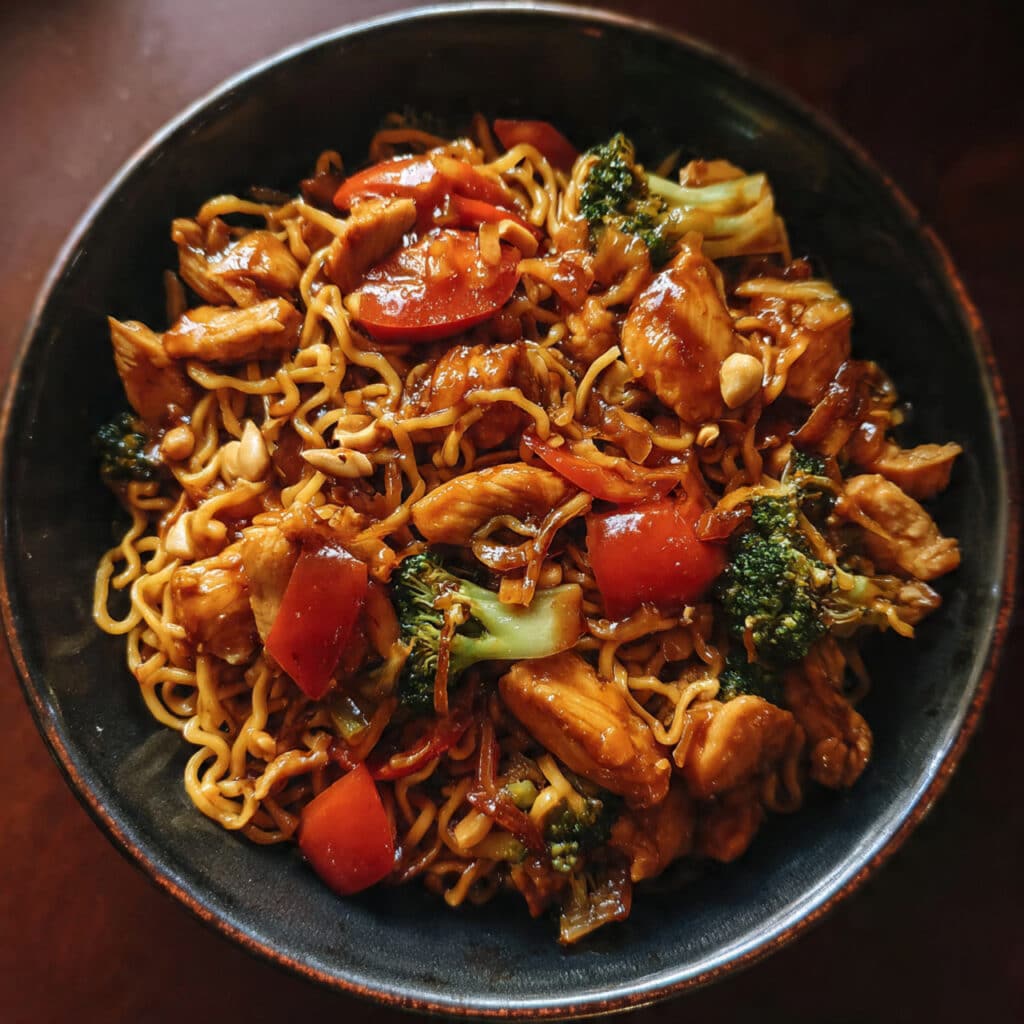
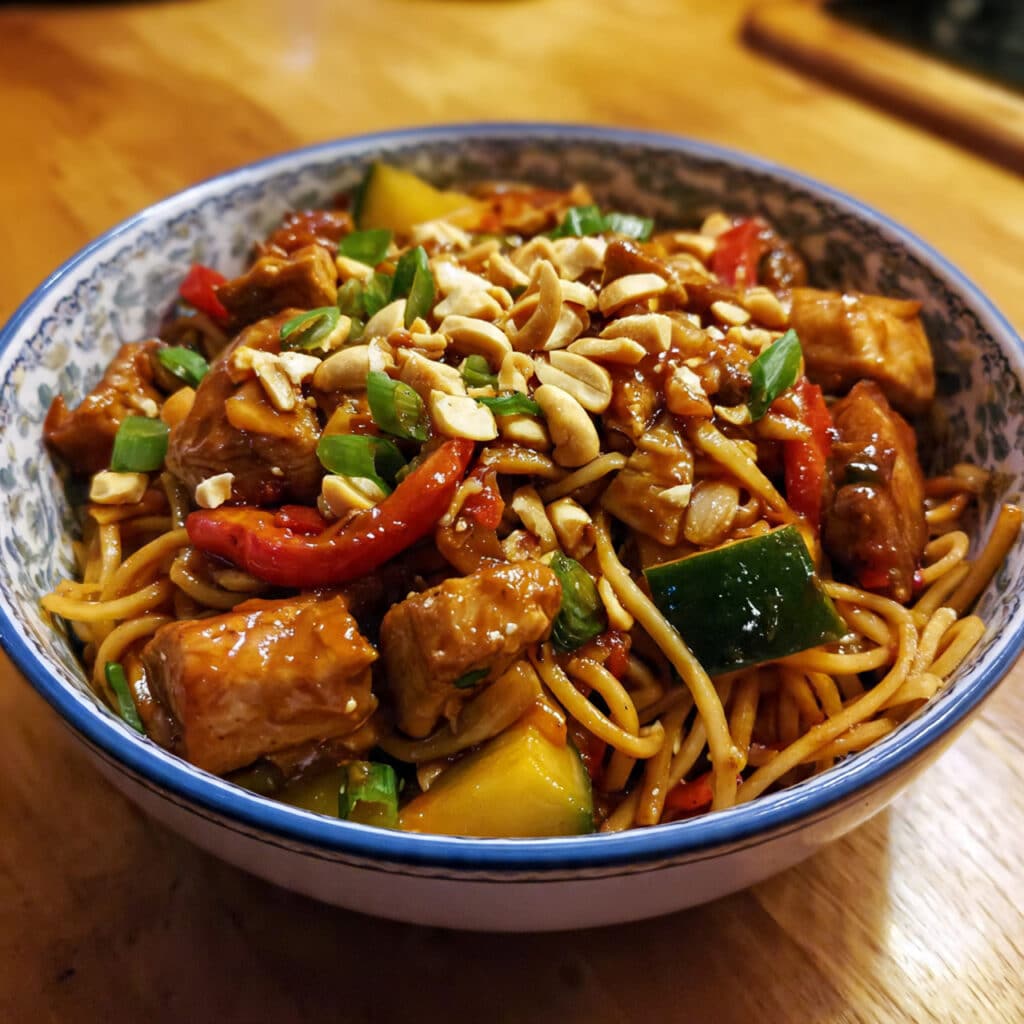
Kung Pao Chicken Noodles are bold, saucy, and packed with the perfect balance of sweet, spicy, and savory flavors! This easy weeknight dinner combines tender chicken, crisp vegetables, slurp worthy noodles, and crunchy peanuts all tossed in a mouthwatering sauce.
Why You’ll Love This Recipe
Spicy, savory, and packed with bold flavor, these Kung Pao Chicken Noodles are a satisfying twist on a takeout favorite. Tender chicken, springy noodles, crunchy peanuts, and crisp veggies are tossed in a rich, tangy sauce with just the right kick of heat. Quick to make and irresistibly delicious, it’s a weeknight dinner that brings big flavor to the table.
Print
Kung Pao Chicken Noodles
- Total Time: 30 minutes
- Yield: 4 generous bowls
Description
This easy Kung Pao Chicken Noodles recipe combines tender chicken, crisp vegetables, and slurp-worthy noodles in a sweet and spicy sauce with crunchy peanuts. Perfect weeknight dinner ready in 30 minutes!
Ingredients
Protein & Veggies
- 1 pound (450 g) boneless, skinless chicken breasts or thighs, cut into bite-size pieces
- 1–2 bell peppers, sliced (red and/or green)
- 1 medium carrot, thinly sliced or julienned
- 3–4 green onions (scallions), sliced
- 1–2 cloves garlic, minced
- 1 teaspoon fresh ginger, minced
Noodles
- 8–10 ounces (225–280 g) noodles (lo mein, rice noodles, or spaghetti)
Sauce
- ½ cup low-sodium soy sauce
- 2–3 tablespoons rice vinegar or white vinegar
- 2 tablespoons hoisin sauce
- 1–2 tablespoons chili paste or chili garlic sauce (adjust to heat preference)
- 1 tablespoon honey or brown sugar
- 1 teaspoon sesame oil
- 1 tablespoon cornstarch mixed with 2 tablespoons water (for thickening)
Toasted Peanuts
- ½ cup peanuts (unsalted or lightly salted)
Optional Garnish
- Extra sliced scallions
- Sesame seeds
- Lime wedges
Instructions
Cook the noodles according to package directions until just tender (al dente)—nobody likes mushy noodles! Drain and rinse briefly with warm water to prevent sticking. Set aside. Pro tip: Toss them with a tiny drizzle of sesame oil to keep them from clumping while you cook everything else.
In a bowl, whisk together soy sauce, vinegar, hoisin sauce, chili paste, honey, and sesame oil until smooth. Set the sauce aside—you’ll add the cornstarch slurry later when it’s time to thicken. I like to have this ready to go because once you start cooking, things move FAST!
Heat a large skillet or wok over medium-high heat and add a bit of oil (vegetable or peanut oil works great). Add the chicken pieces and cook 5–7 minutes, stirring frequently until no longer pink and slightly golden on the edges. Don’t crowd the pan or the chicken will steam instead of getting those delicious golden bits! Remove the chicken to a plate and set aside.
In the same skillet, add a splash of oil if needed. Add the bell peppers and carrot and stir-fry 3–4 minutes until crisp-tender—you want them to have a little bite still! Add the garlic and ginger and cook about 30 seconds until fragrant. Watch carefully here; garlic burns quickly and bitter garlic is NOT the vibe we’re going for.
Add the cooked chicken back to the pan with the vegetables. Pour the prepared sauce over the chicken and veggies, stirring to coat everything evenly. Add the cornstarch slurry and cook 1–2 minutes, stirring constantly, until the sauce slightly thickens and becomes glossy. This is when your kitchen starts smelling AMAZING!
Add the cooked noodles and toasted peanuts to the pan. Toss gently but thoroughly until the noodles are fully coated with the sauce and heated through. Use tongs or two spatulas for the best tossing action—it’s like giving your noodles a spa treatment!
Divide the Kung Pao chicken noodles onto plates or into bowls. Garnish with extra sliced scallions, sesame seeds, and lime wedges if you like. A squeeze of fresh lime at the end adds incredible brightness! Serve hot and enjoy the symphony of flavors.
Notes
- High heat is your friend! It helps veggies stay crisp and gives the chicken a nice sear. Don’t be scared of that sizzle!
- Cut chicken evenly so all pieces cook at the same rate. Nothing worse than some pieces being perfect and others still raw.
- Taste your sauce before adding it to the pan. Too spicy? Add more honey. Too sweet? A splash more vinegar balances it out.
- Don’t skip rinsing the noodles—it removes excess starch and prevents them from turning into a gummy mess.
- Common mistake: Adding the cornstarch slurry too early. Add it at the very end or your sauce will get gloppy and weird.
- Prep Time: 15 minutes
- Cook Time: 15 minutes
- Category: Main Dish
- Method: Stir-Fry
- Cuisine: Asian-Inspired
Ingredient List
Protein & Veggies
- 1 pound (450 g) boneless, skinless chicken breasts or thighs, cut into bite-size pieces
- 1–2 bell peppers, sliced (red and/or green)
- 1 medium carrot, thinly sliced or julienned
- 3–4 green onions (scallions), sliced
- 1–2 cloves garlic, minced
- 1 teaspoon fresh ginger, minced
Noodles
- 8–10 ounces (225–280 g) noodles (lo mein, rice noodles, or spaghetti)
Sauce
- ½ cup low-sodium soy sauce
- 2–3 tablespoons rice vinegar or white vinegar
- 2 tablespoons hoisin sauce
- 1–2 tablespoons chili paste or chili garlic sauce (adjust to heat preference)
- 1 tablespoon honey or brown sugar
- 1 teaspoon sesame oil
- 1 tablespoon cornstarch mixed with 2 tablespoons water (for thickening)
Toasted Peanuts
- ½ cup peanuts (unsalted or lightly salted)
Optional Garnish
- Extra sliced scallions
- Sesame seeds
- Lime wedges
Substitution Notes: No chicken thighs? Breasts work great—just don’t overcook them! Can’t find lo mein noodles? Regular spaghetti is totally fine (I’ve done it dozens of times). If you’re not a peanut person, cashews are a delicious swap. And honey haters, brown sugar works just as well for that touch of sweetness.
Why These Ingredients Work
The chicken thighs stay juicier than breasts, but either works beautifully. Those bell peppers and carrots add a satisfying crunch and gorgeous color—because we eat with our eyes first, right? The garlic and ginger are the aromatic dream team that makes your kitchen smell like a five-star restaurant.
Now, the SAUCE—this is where the magic happens! Soy sauce brings that deep, savory umami, while rice vinegar adds brightness and cuts through the richness. Hoisin sauce gives it body and a hint of sweetness, and the chili paste brings the heat (adjust to your liking—I’m a wimp, so I go light!).
Honey balances everything beautifully, and sesame oil adds that nutty, toasted flavor that screams “authentic Asian cuisine.” The cornstarch slurry is your secret weapon for that glossy, restaurant-style sauce that clings to every noodle.
And those peanuts? They’re not just a garnish—they add amazing crunch and nutty richness that makes this dish unforgettable!
Essential Tools and Equipment
You don’t need fancy equipment for this! Here’s what you’ll need:
- Large pot for boiling noodles
- Large skillet or wok (a wok is ideal for stir-frying, but a big skillet works great)
- Small bowl for mixing the sauce
- Colander for draining noodles
- Sharp knife and cutting board for prep
- Wooden spoon or spatula for stir-frying
How To Make Kung Pao Chicken Noodles
Step 1: Prepare the Noodles
Cook the noodles according to package directions until just tender (al dente)—nobody likes mushy noodles! Drain and rinse briefly with warm water to prevent sticking. Set aside. Pro tip: Toss them with a tiny drizzle of sesame oil to keep them from clumping while you cook everything else.
Step 2: Make the Sauce
In a bowl, whisk together soy sauce, vinegar, hoisin sauce, chili paste, honey, and sesame oil until smooth. Set the sauce aside—you’ll add the cornstarch slurry later when it’s time to thicken. I like to have this ready to go because once you start cooking, things move FAST!
Step 3: Cook the Chicken
Heat a large skillet or wok over medium-high heat and add a bit of oil (vegetable or peanut oil works great). Add the chicken pieces and cook 5–7 minutes, stirring frequently until no longer pink and slightly golden on the edges. Don’t crowd the pan or the chicken will steam instead of getting those delicious golden bits! Remove the chicken to a plate and set aside.
Step 4: Stir-Fry the Veggies
In the same skillet, add a splash of oil if needed. Add the bell peppers and carrot and stir-fry 3–4 minutes until crisp-tender—you want them to have a little bite still! Add the garlic and ginger and cook about 30 seconds until fragrant. Watch carefully here; garlic burns quickly and bitter garlic is NOT the vibe we’re going for.
Step 5: Combine & Sauce
Add the cooked chicken back to the pan with the vegetables. Pour the prepared sauce over the chicken and veggies, stirring to coat everything evenly. Add the cornstarch slurry and cook 1–2 minutes, stirring constantly, until the sauce slightly thickens and becomes glossy. This is when your kitchen starts smelling AMAZING!
Step 6: Add Noodles & Peanuts
Add the cooked noodles and toasted peanuts to the pan. Toss gently but thoroughly until the noodles are fully coated with the sauce and heated through. Use tongs or two spatulas for the best tossing action—it’s like giving your noodles a spa treatment!
Step 7: Serve
Divide the Kung Pao chicken noodles onto plates or into bowls. Garnish with extra sliced scallions, sesame seeds, and lime wedges if you like. A squeeze of fresh lime at the end adds incredible brightness! Serve hot and enjoy the symphony of flavors.
You Must Know
CRITICAL: Have all your ingredients prepped and ready BEFORE you start cooking! Stir-frying happens lightning-fast, and you don’t want to be frantically mincing garlic while your chicken burns. I learned this the hard way my first time—let’s just say the smoke alarm was not impressed.
Personal Secret: I toast my peanuts in a dry skillet for 2-3 minutes before adding them to the dish. It brings out their natural oils and makes them extra crunchy and flavorful.
Pro Tips & Cooking Hacks
- High heat is your friend! It helps veggies stay crisp and gives the chicken a nice sear. Don’t be scared of that sizzle!
- Cut chicken evenly so all pieces cook at the same rate. Nothing worse than some pieces being perfect and others still raw.
- Taste your sauce before adding it to the pan. Too spicy? Add more honey. Too sweet? A splash more vinegar balances it out.
- Don’t skip rinsing the noodles—it removes excess starch and prevents them from turning into a gummy mess.
- Common mistake: Adding the cornstarch slurry too early. Add it at the very end or your sauce will get gloppy and weird.
- Smart shortcut: Use pre-minced garlic and ginger from a jar if you’re in a rush. I won’t tell anyone!
Flavor Variations / Suggestions
Shrimp Lovers: Swap the chicken for 1 pound of peeled, deveined shrimp. Cook until pink (about 3-4 minutes) and you’ve got Kung Pao Shrimp Noodles!
Veggie Packed: Add snap peas, broccoli florets, sliced zucchini, or baby corn for extra nutrition and crunch.
Extra Spicy: Double the chili paste or add some red pepper flakes. Keep a glass of milk nearby!
Peanut Butter Twist: Stir a tablespoon of creamy peanut butter into the sauce for a richer, more satay-like flavor.
Cashew Version: Swap peanuts for cashews for a slightly sweeter, more buttery crunch.
Citrus Kick: Add a teaspoon of orange zest to the sauce for a bright, citrusy twist.
Make-Ahead Options
This is PERFECT for meal prep! You can prep all your ingredients the night before—cut the chicken, slice the veggies, mix the sauce, and store everything in separate containers in the fridge. When you’re ready to cook, everything comes together in about 15 minutes.
Sauce can be made up to 3 days ahead and stored in the fridge in an airtight container.
Cooked noodles can be prepped a day ahead—just toss with a little oil and store in the fridge.
Not great for freezing: The noodles get mushy and the veggies lose their crunch. This is best enjoyed fresh or within a few days from the fridge.
Recipe Notes & Baker’s Tips
- Noodle choices matter! Lo mein noodles are traditional and hold sauce beautifully. Rice noodles give it a gluten-free option and lighter texture. Regular spaghetti works in a pinch and honestly, my kids can’t tell the difference.
- Chicken thighs vs. breasts: Thighs stay juicier and have more flavor, but breasts are leaner. Your call!
- Heat level is personal: Start with 1 tablespoon chili paste and add more after tasting. You can always add heat, but you can’t take it away!
- The cornstarch slurry is what gives you that gorgeous, glossy, restaurant-quality sauce. Don’t skip it!
Serving Suggestions
This dish is pretty much a complete meal on its own, but it pairs beautifully with:
- Steamed or stir-fried broccoli or bok choy on the side
- Cucumber salad for a cool, refreshing contrast
- Crispy egg rolls or dumplings for a full Chinese-takeout experience at home
- Pickled ginger or kimchi for extra tanginess
- Fried rice if you’re feeding a crowd and need to stretch the meal
Serve in big bowls with chopsticks for the full experience, or just dig in with a fork—no judgment here! A cold beer or jasmine iced tea makes the perfect beverage pairing.
How to Store Your Kung Pao Chicken Noodles
Refrigerator: Store in an airtight container up to 3 days. The flavors actually get even better the next day!
Reheating: Microwave for 2-3 minutes, stirring halfway through. Or warm in a skillet over medium heat with a splash of chicken broth or water to loosen the sauce. I prefer the skillet method—it brings back that fresh-cooked texture.
Freezer: Not recommended. Noodles get mushy and vegetables lose their crisp texture when frozen and thawed.
Pro tip: If the noodles soak up too much sauce in the fridge, add a tablespoon or two of soy sauce or broth when reheating to freshen it up!
Allergy Information
Contains: Soy (soy sauce, hoisin sauce), peanuts, sesame, wheat (in most noodles and some sauces)
Gluten-free option: Use gluten-free soy sauce (tamari) and rice noodles instead of wheat-based noodles. Check that your hoisin sauce is gluten-free too!
Peanut allergy: Substitute cashews, almonds, or just omit the nuts entirely. You can add extra sesame seeds for crunch.
Soy-free option: Use coconut aminos instead of soy sauce—the flavor will be slightly different but still delicious!
Questions I Get Asked A Lot
Can I make this less spicy for kids?
Absolutely! Just reduce or completely omit the chili paste. You can always serve hot sauce on the side for adults who want extra heat. My youngest won’t touch anything spicy, so I make the sauce mild and let my husband add sriracha to his bowl.
What if I don’t have hoisin sauce?
You can substitute with a mixture of 1 tablespoon soy sauce + 1 tablespoon honey + a tiny pinch of five-spice powder (if you have it). It won’t be exactly the same, but it’ll still be delicious!
Can I use frozen vegetables?
Fresh is definitely better for that crisp-tender texture, but in a pinch, you can use frozen stir-fry vegetables. Just make sure to thaw and pat them dry first, or they’ll release too much water and make your dish soggy.
My sauce turned out too thick/thin. Help!
Too thick? Add a splash of chicken broth or water to thin it out. Too thin? Mix another teaspoon of cornstarch with a tablespoon of water and stir it in while cooking until it reaches your desired consistency.
Can I meal prep this for the whole week?
I’d say 3 days is the sweet spot. After that, the noodles start to get a little soft and absorb too much sauce. But honestly, this is so good it probably won’t last that long anyway!
💬 Tried this recipe? Leave a comment and rating below! I’d love to hear how your Kung Pao Chicken Noodles turned out! Did you make any fun variations?