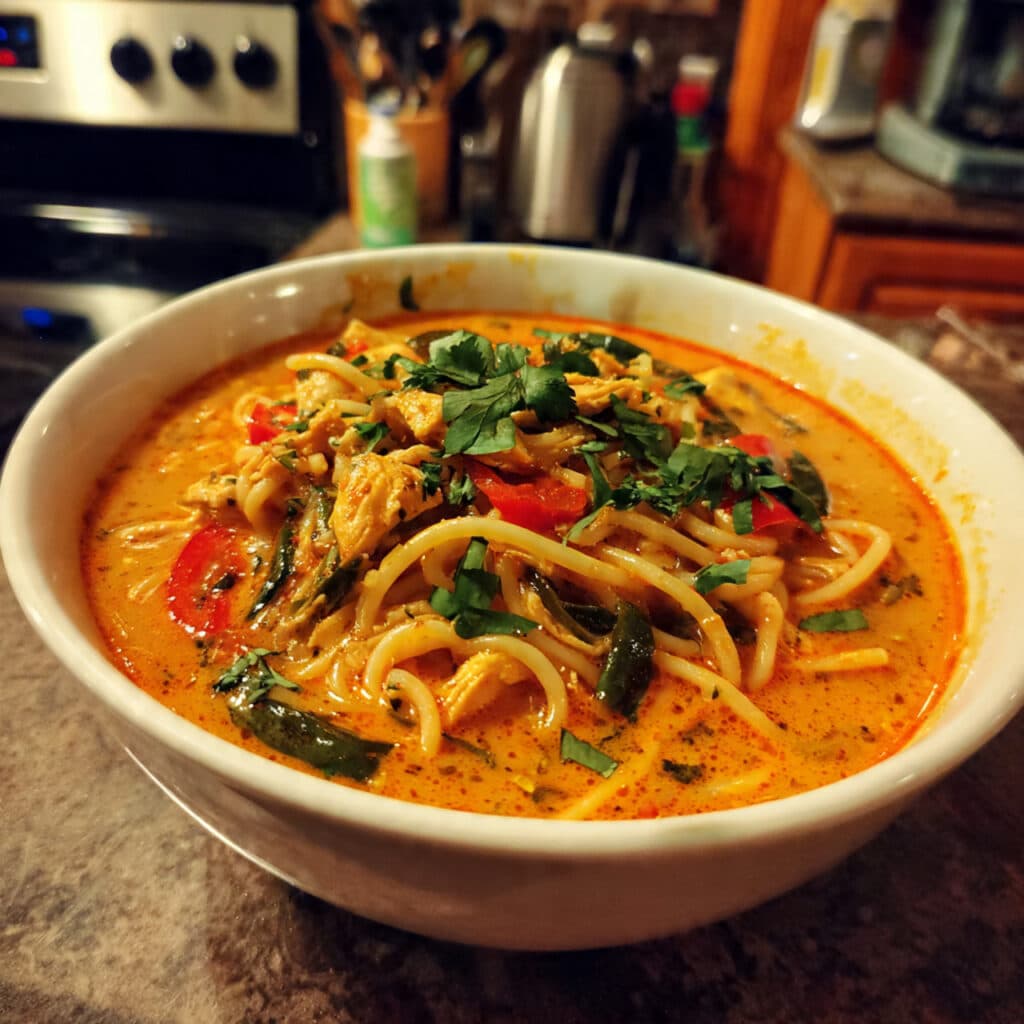
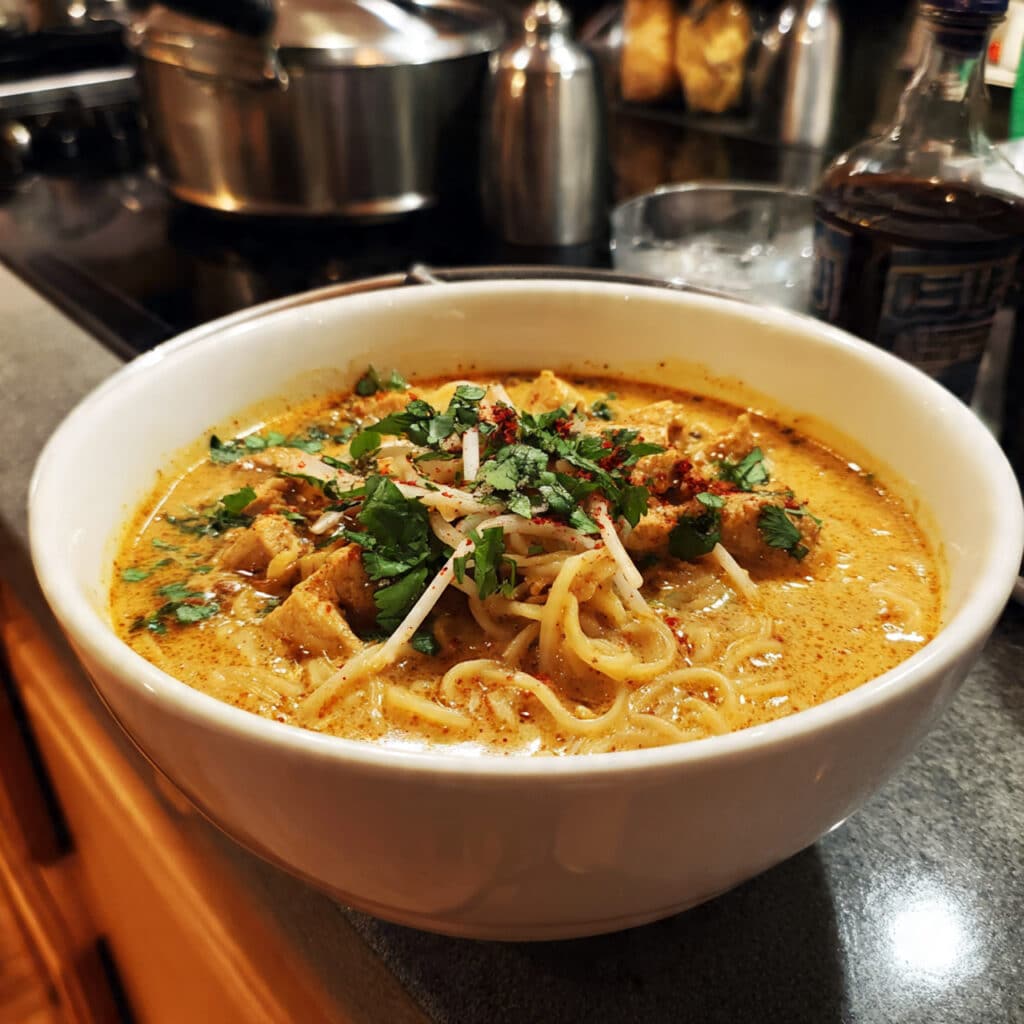
Thai Red Curry Noodle Soup is bold, creamy, and absolutely bursting with flavor, loaded with tender chicken, silky rice noodles, and a coconut broth that’s spicy, sweet, and totally crave worthy! This restaurant-quality soup comes together in just 30-40 minutes with accessible ingredients like red curry paste, coconut milk, fresh herbs, and lime juice.
Love More Soup Recipes? Try My Crack Chicken Noodle Soup or this Spring Vegetable Soup next.
Why You’ll Love This Recipe
This Thai Red Curry Noodle Soup is about to become your new favorite weeknight dinner!
- Ready in 30-40 minutes from start to finish
- Packed with bold, complex flavors that taste like hours of work
- Customizable heat level—make it mild or turn up the spice!
- One-pot meal that’s filling, nourishing, and satisfying
- Cheaper and fresher than takeout
- Uses ingredients you can find at most grocery stores
- Perfect for meal prep and adaptable to dietary needs
Thai Red Curry Noodle Soup
- Total Time: 30-40 minutes
- Yield: 4-6 servings
Description
This Thai Red Curry Noodle Soup is a restaurant-quality dish you can make at home in just 30-40 minutes! Featuring tender chicken, silky rice noodles, and vibrant vegetables in a rich coconut curry broth flavored with red curry paste, ginger, fish sauce, and lime. Finished with fresh cilantro, basil, and green onions, this soup delivers the perfect balance of spicy, sweet, salty, and sour flavors. Easily customizable with your choice of protein and vegetables, it’s cheaper and fresher than takeout and perfect for cozy weeknight dinners or meal prep!
Ingredients
For the Soup Base:
1 tablespoon olive oil
1½ pounds boneless, skinless chicken breasts, cut into ½-inch chunks
Kosher salt and freshly ground black pepper, to taste
3 cloves garlic, minced
1 red bell pepper, diced
1 onion, diced
3 tablespoons red curry paste (Thai Kitchen or Mae Ploy brands work great)
1 tablespoon freshly grated ginger
6 cups low-sodium chicken broth
1 (13.5-ounce) can full-fat coconut milk
4 ounces rice noodles
1 tablespoon fish sauce
2 teaspoons brown sugar
For Garnish:
3 green onions, thinly sliced
½ cup chopped fresh cilantro leaves
¼ cup chopped fresh basil leaves (Thai basil if you can find it!)
2 tablespoons freshly squeezed lime juice
Extra lime wedges for serving
Instructions
Heat the olive oil in a large stockpot or Dutch oven over medium heat until it’s shimmering.
Season your chicken chunks generously with salt and pepper on all sides. Add the chicken to the hot pot and cook until golden brown, about 2-3 minutes, stirring occasionally.
You don’t need to cook it all the way through at this point, just get some nice color on it! Remove the chicken to a plate and set aside. Those browned bits in the pot are flavor gold!
In the same pot (don’t clean it!), add the diced onion and red bell pepper. Cook, stirring occasionally, until they’re tender and starting to soften, about 3-4 minutes.
The vegetables will pick up those delicious browned bits from the chicken. Add the minced garlic and cook for another 30 seconds until fragrant.
Stir in the red curry paste and freshly grated ginger. Cook for about 1 minute, stirring constantly, until the curry paste becomes super fragrant and has darkened slightly.
This step is crucial! Cooking the curry paste releases all those essential oils and intensifies the flavor. Don’t skip this—it makes such a difference!
Pour in the chicken broth and coconut milk, stirring everything together. Use your spoon to scrape up any browned bits stuck to the bottom of the pot.
Stir until the coconut milk is fully incorporated and the mixture is smooth. The broth should look creamy and have a gorgeous orange-red color.
Return the browned chicken pieces to the pot and stir to combine. Bring the mixture to a boil, then reduce the heat to maintain a gentle simmer.
Let it cook, stirring occasionally, for about 10 minutes. This allows the chicken to finish cooking through and the flavors to meld together beautifully. The broth will reduce slightly and become even more concentrated.
Stir in the rice noodles, fish sauce, and brown sugar. Continue simmering until the noodles are tender, about 5 minutes.
Keep stirring occasionally so the noodles don’t stick together or to the bottom of the pot. The noodles will soften and become silky as they absorb the flavorful broth.
Taste the broth at this point—it should be a beautiful balance of spicy, salty, and slightly sweet!
Remove the pot from the heat. This is important because you don’t want to cook the fresh herbs—you want them bright and vibrant!
Stir in the sliced green onions, chopped cilantro, chopped basil, and freshly squeezed lime juice. Give everything a good stir to distribute the herbs throughout.
Taste and adjust seasoning with more salt, pepper, or lime juice if needed.
Ladle the hot soup into serving bowls, making sure everyone gets plenty of chicken, noodles, and vegetables in each portion.
Serve immediately while it’s piping hot, with extra lime wedges on the side for squeezing. The soup is best enjoyed fresh!
Notes
Prep everything before you start cooking—this recipe moves quickly once you begin!
Use rotisserie chicken for an even faster version—just shred and add with the broth
Adjust the heat level by using more or less curry paste (start with 2 tablespoons if you’re heat-sensitive)
Don’t overcook the chicken—cut it into smaller pieces so it cooks quickly and stays tender
Toast the curry paste well—it should darken slightly and smell incredibly fragrant
Squeeze lime juice fresh—bottled just doesn’t have the same bright, zingy flavor
Save pasta water trick—if your soup gets too thick, thin it with a little extra broth or water
Make it gluten-free—just ensure your curry paste and fish sauce are gluten-free (most are!)
- Prep Time: 10-15 minutes
- Cook Time: 20-25 minutes
- Category: Soup
- Method: Stovetop
- Cuisine: Thai
Ingredient List
For the Soup Base:
- 1 tablespoon olive oil
- 1½ pounds boneless, skinless chicken breasts, cut into ½-inch chunks
- Kosher salt and freshly ground black pepper, to taste
- 3 cloves garlic, minced
- 1 red bell pepper, diced
- 1 onion, diced
- 3 tablespoons red curry paste (Thai Kitchen or Mae Ploy brands work great)
- 1 tablespoon freshly grated ginger
- 6 cups low-sodium chicken broth
- 1 (13.5-ounce) can full-fat coconut milk
- 4 ounces rice noodles
- 1 tablespoon fish sauce
- 2 teaspoons brown sugar
For Garnish:
- 3 green onions, thinly sliced
- ½ cup chopped fresh cilantro leaves
- ¼ cup chopped fresh basil leaves (Thai basil if you can find it!)
- 2 tablespoons freshly squeezed lime juice
- Extra lime wedges for serving
Friendly Notes:
- Full-fat coconut milk makes the richest, creamiest broth—don’t use light!
- Thai Kitchen curry paste is available at most grocery stores; Mae Ploy has more heat if you like it spicy
- Fish sauce is essential for that authentic umami flavor—don’t skip it!
- You can substitute chicken thighs, shrimp, or tofu for the chicken
- Add extra veggies like mushrooms, bok choy, zucchini, or cabbage if you like!
Why These Ingredients Work
Let me tell you what makes this soup so incredibly delicious!
Red curry paste is the flavor powerhouse here—it’s a blend of red chilies, lemongrass, garlic, galangal, and aromatic spices all ground together. Cooking it in the pot first “blooms” those flavors and releases their essential oils.
Full-fat coconut milk creates that silky, creamy base that balances the heat from the curry paste. It coats your mouth in the most luxurious way and adds subtle sweetness. Light coconut milk just doesn’t give you the same richness!
Fish sauce might smell funky in the bottle, but trust me—it adds this incredible savory, salty depth (umami!) that makes everything taste more complex and authentic. It’s the secret ingredient!
Fresh ginger brings warmth and a little zing that cuts through the richness. Freshly grated ginger is SO much more vibrant than jarred or powdered.
Brown sugar balances the spice and saltiness with a touch of sweetness. Thai cuisine is all about that perfect balance of sweet, salty, sour, and spicy!
Lime juice added at the end brightens everything up and adds that essential tangy note. It wakes up all the other flavors!
Fresh herbs (cilantro, basil, green onions) aren’t just garnish—they add layers of fresh, aromatic flavor that make each bite exciting. The herbs cool down the heat a bit too!
Rice noodles are traditional in Thai soups—they’re light, slurpy, and soak up all that amazing broth without getting heavy.
Essential Tools and Equipment
Here’s what you’ll need to make this delicious soup:
- Large stockpot or Dutch oven (at least 5-6 quarts)
- Sharp knife for chopping vegetables and chicken
- Cutting board
- Wooden spoon or spatula for stirring
- Measuring cups and spoons
- Grater or microplane for fresh ginger
- Ladle for serving
- Serving bowls
How To Make Thai Red Curry Noodle Soup
Step 1: Brown the Chicken
Heat the olive oil in a large stockpot or Dutch oven over medium heat until it’s shimmering.
Season your chicken chunks generously with salt and pepper on all sides. Add the chicken to the hot pot and cook until golden brown, about 2-3 minutes, stirring occasionally.
You don’t need to cook it all the way through at this point, just get some nice color on it! Remove the chicken to a plate and set aside. Those browned bits in the pot are flavor gold!
Step 2: Sauté the Aromatics
In the same pot (don’t clean it!), add the diced onion and red bell pepper. Cook, stirring occasionally, until they’re tender and starting to soften, about 3-4 minutes.
The vegetables will pick up those delicious browned bits from the chicken. Add the minced garlic and cook for another 30 seconds until fragrant.
Step 3: Bloom the Curry Paste
Stir in the red curry paste and freshly grated ginger. Cook for about 1 minute, stirring constantly, until the curry paste becomes super fragrant and has darkened slightly.
This step is crucial! Cooking the curry paste releases all those essential oils and intensifies the flavor. Don’t skip this—it makes such a difference!
Step 4: Add the Liquids
Pour in the chicken broth and coconut milk, stirring everything together. Use your spoon to scrape up any browned bits stuck to the bottom of the pot.
Stir until the coconut milk is fully incorporated and the mixture is smooth. The broth should look creamy and have a gorgeous orange-red color.
Step 5: Simmer with Chicken
Return the browned chicken pieces to the pot and stir to combine. Bring the mixture to a boil, then reduce the heat to maintain a gentle simmer.
Let it cook, stirring occasionally, for about 10 minutes. This allows the chicken to finish cooking through and the flavors to meld together beautifully. The broth will reduce slightly and become even more concentrated.
Step 6: Add Noodles and Seasonings
Stir in the rice noodles, fish sauce, and brown sugar. Continue simmering until the noodles are tender, about 5 minutes.
Keep stirring occasionally so the noodles don’t stick together or to the bottom of the pot. The noodles will soften and become silky as they absorb the flavorful broth.
Taste the broth at this point—it should be a beautiful balance of spicy, salty, and slightly sweet!
Step 7: Finish with Fresh Herbs
Remove the pot from the heat. This is important because you don’t want to cook the fresh herbs—you want them bright and vibrant!
Stir in the sliced green onions, chopped cilantro, chopped basil, and freshly squeezed lime juice. Give everything a good stir to distribute the herbs throughout.
Taste and adjust seasoning with more salt, pepper, or lime juice if needed.
Step 8: Serve Immediately
Ladle the hot soup into serving bowls, making sure everyone gets plenty of chicken, noodles, and vegetables in each portion.
Serve immediately while it’s piping hot, with extra lime wedges on the side for squeezing. The soup is best enjoyed fresh!
You Must Know
Use full-fat coconut milk, not light! Light coconut milk is too thin and watery—it won’t give you that rich, creamy texture that makes this soup so satisfying. The fat in full-fat coconut milk also helps balance the heat from the curry paste.
Don’t add the fresh herbs until after you remove the pot from heat. If you cook them, they’ll turn brown and lose their vibrant color and fresh flavor. Stirring them in at the end keeps everything bright and aromatic!
Fish sauce is NOT optional. I know it smells strong, but it’s essential for authentic flavor. It adds that savory, umami depth that you just can’t replicate with anything else. Start with the tablespoon called for—you can always add more to taste!
Personal Secret: I always cook my rice noodles directly in the soup for maximum flavor absorption, but here’s my trick for meal prep: if you’re making this ahead, cook the noodles separately and store them apart from the broth. When reheating, add fresh noodles to your bowl and ladle the hot soup over them.
This prevents the noodles from getting mushy! I learned this the hard way after making a big batch for the week by day two, the noodles had absorbed all the broth and turned into mush. Now I always keep them separate!
Pro Tips & Cooking Hacks
- Prep everything before you start cooking—this recipe moves quickly once you begin!
- Use rotisserie chicken for an even faster version—just shred and add with the broth
- Adjust the heat level by using more or less curry paste (start with 2 tablespoons if you’re heat-sensitive)
- Don’t overcook the chicken—cut it into smaller pieces so it cooks quickly and stays tender
- Toast the curry paste well—it should darken slightly and smell incredibly fragrant
- Squeeze lime juice fresh—bottled just doesn’t have the same bright, zingy flavor
- Save pasta water trick—if your soup gets too thick, thin it with a little extra broth or water
- Make it gluten-free—just ensure your curry paste and fish sauce are gluten-free (most are!)
Common Mistakes to Avoid:
- Using light coconut milk (too thin!)
- Not browning the chicken first (misses out on flavor!)
- Skipping the curry paste blooming step (flavors won’t develop properly)
- Overcooking the rice noodles (they get mushy)
- Adding lime juice too early (the acid cooks out)
- Storing noodles in the broth overnight (they absorb everything and get soggy)
Flavor Variations & Suggestions
Protein Swaps: Use chicken thighs instead of breasts for richer, juicier meat. Shrimp cooks super fast—add it in the last 3-4 minutes. For tofu, use extra-firm, press it well, and brown it before adding. Ground chicken or turkey works great too!
Vegetarian/Vegan Version: Skip the chicken and use vegetable broth. Add more vegetables like mushrooms, bok choy, zucchini, and broccoli. Use soy sauce instead of fish sauce, or try vegan fish sauce!
Extra Veggies: Throw in whatever you have—cabbage, snap peas, baby corn, bamboo shoots, carrots, or spinach all work beautifully. Add heartier veggies with the bell pepper, and leafy greens at the very end.
Spice It Up: Add sliced fresh chilies or red pepper flakes for extra heat. Sriracha or chili oil drizzled on top is delicious!
Make It Creamy: Some people love adding a spoonful of peanut butter or almond butter to the broth for extra richness and a hint of nuttiness.
Noodle Options: Can’t find rice noodles? Use ramen noodles (discard the seasoning packet), udon, soba, vermicelli, or even angel hair pasta in a pinch!
Green Curry Version: Swap red curry paste for green curry paste for a different flavor profile—it’s more herbal and slightly less sweet.
Make-Ahead Options
This soup is great for meal prep with one important caveat—store the noodles separately!
The broth: Make the entire soup base (everything except the noodles and fresh herbs) up to 3 days ahead. Store in an airtight container in the fridge. When ready to serve, reheat the broth, then add fresh noodles and cook until tender. Stir in the herbs and lime juice right before serving.
The components: Prep everything ahead—chop the chicken and vegetables, mince the garlic and ginger, measure out your spices. Store everything in separate containers in the fridge. When you’re ready to cook, it’ll come together in 20 minutes!
Cooked soup storage: Store leftovers in an airtight container in the refrigerator for 1-2 days. For best results, store the noodles separately from the broth. The noodles will continue to absorb liquid and can make your soup thick and pasty.
Freezing: I don’t recommend freezing this soup—coconut milk can separate and become grainy when frozen and thawed. However, you CAN freeze the broth base (before adding coconut milk and noodles) for up to 2 months. Thaw, add coconut milk, and proceed with the recipe!
Recipe Notes & Baker’s Tips
About curry paste: Red curry paste is typically less spicy than you’d think—the coconut milk mellows it considerably. Thai Kitchen brand is widely available and has medium heat. Mae Ploy (in the tub) is spicier and more authentic if you can find it at Asian markets.
Rice noodle varieties: Thin rice vermicelli, flat pad thai noodles, or even rice stick noodles all work. Follow package directions—some need soaking in hot water, others need brief boiling. Don’t overcook them in the soup or they’ll turn mushy!
Coconut milk tip: Shake the can well before opening! The cream separates and rises to the top. If you forget and open it to find thick cream on top, just stir it together before adding to your pot.
Fish sauce brands: Three Crabs and Red Boat are excellent quality fish sauces. A little goes a long way—start with the tablespoon called for and add more if you want more saltiness.
Spice level: Start with 2-3 tablespoons of curry paste and taste. You can always add more, but you can’t take it out! The brown sugar and coconut milk help balance heat.
Leftovers: The flavors actually deepen overnight! Just remember to keep noodles separate and reheat gently on the stove rather than the microwave for best texture.
Serving Suggestions
Serve this gorgeous soup in deep bowls with all the garnishes within reach—extra lime wedges, fresh herbs, and maybe some sriracha or chili oil for those who like it HOT!
Set out small side dishes with bean sprouts, sliced jalapeños, extra basil, and cilantro so everyone can customize their bowl. Soft-boiled eggs are a delicious addition—the runny yolk makes the broth even richer!
For a complete meal, serve with spring rolls or lettuce wraps on the side. Crispy wontons or prawn crackers add fun texture contrast.
This soup is perfect for cozy weeknight dinners, meal prep, or even casual entertaining. It looks and tastes impressive but comes together so easily!
How to Store Your Thai Red Curry Noodle Soup
Room Temperature: Don’t leave this soup out for more than 2 hours—it needs to be refrigerated promptly due to the chicken and coconut milk.
Refrigerator: Store in an airtight container in the fridge for 1-2 days. Important: For best results, store the noodles separately from the broth! The noodles will absorb the liquid and become mushy if stored together. Keep leftover noodles in a separate container.
Reheating: Reheat the broth gently on the stovetop over medium heat until hot. Add the noodles to your serving bowl and ladle the hot broth over them. You can also reheat individual portions in the microwave for 2-3 minutes, stirring halfway through. Add a splash of broth or water if it’s thickened up.
Freezing: Not recommended! Coconut milk separates and becomes grainy when frozen. However, you can freeze the broth base BEFORE adding coconut milk for up to 2 months. Thaw, add fresh coconut milk, noodles, and herbs, and proceed with the recipe.
Allergy Information
Contains:
- Fish (fish sauce)
- Possible shellfish (check curry paste labels—some contain shrimp paste)
- Coconut (considered a tree nut by FDA, though technically a fruit)
Substitution Options:
For Fish Allergy: Replace fish sauce with soy sauce or tamari. You’ll lose some of that umami depth, but it still tastes great! Some brands make vegan “fish” sauce that works well too.
For Shellfish Allergy: Check your curry paste label carefully—some brands contain shrimp paste. Look for vegetarian curry paste or make your own.
For Coconut Allergy: This is tricky since coconut milk is essential! You could try using cashew cream (blend soaked cashews with water) but it won’t taste the same.
For Gluten-Free: Use gluten-free soy sauce or tamari, and check that your curry paste and fish sauce are gluten-free (most are, but always verify). Rice noodles are naturally gluten-free!
For Dairy-Free: This recipe is naturally dairy-free!
Always read labels carefully, especially on curry paste and fish sauce, as ingredients can vary by brand.
Questions I Get Asked A Lot
My soup is too spicy, how do I fix it?
Add more coconut milk to mellow the heat! You can also stir in a spoonful of peanut butter or brown sugar to balance the spice. Serving with extra lime juice and fresh herbs also helps cool it down. Next time, start with less curry paste (2 tablespoons instead of 3).
Why did my coconut milk separate or look curdled?
This can happen if the soup boils too vigorously after adding coconut milk. Once you add the coconut milk, keep it at a gentle simmer rather than a rolling boil. Stirring occasionally also helps keep everything emulsified and smooth.
Can I add other vegetables?
Definitely! This recipe is super flexible. Try adding mushrooms, zucchini, baby corn, snap peas, bok choy, cabbage, carrots, or broccoli. Add heartier veggies with the bell pepper and onion, and add quick-cooking or leafy greens near the end.
My noodles turned mushy, what happened?
The noodles overcooked or sat in the hot broth too long. Rice noodles cook quickly—usually in just 4-5 minutes. Remove the soup from heat as soon as the noodles are tender. For leftovers, always store noodles separately from the broth and add them fresh when reheating.
💬 Tried this recipe? I’d LOVE to hear what you think! Leave a comment and rating below, and let me know if you added any fun variations.