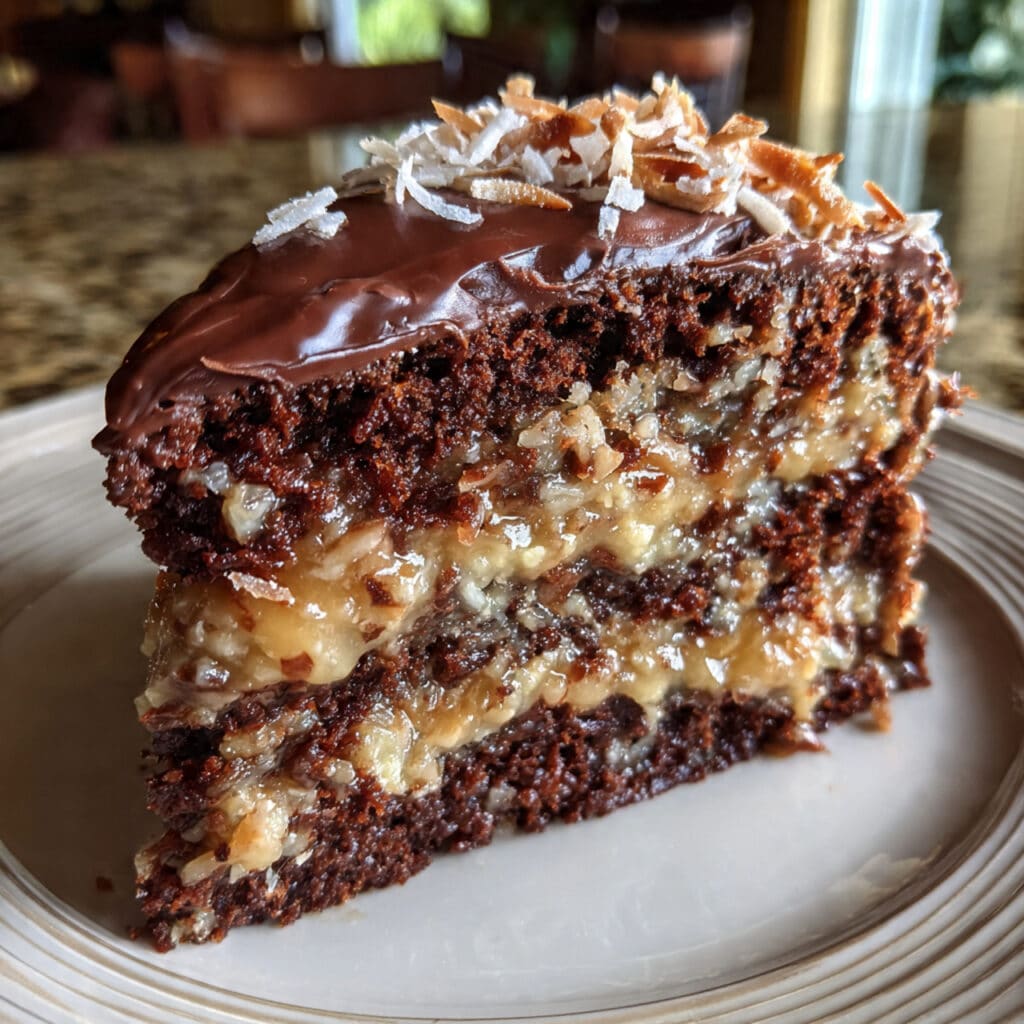
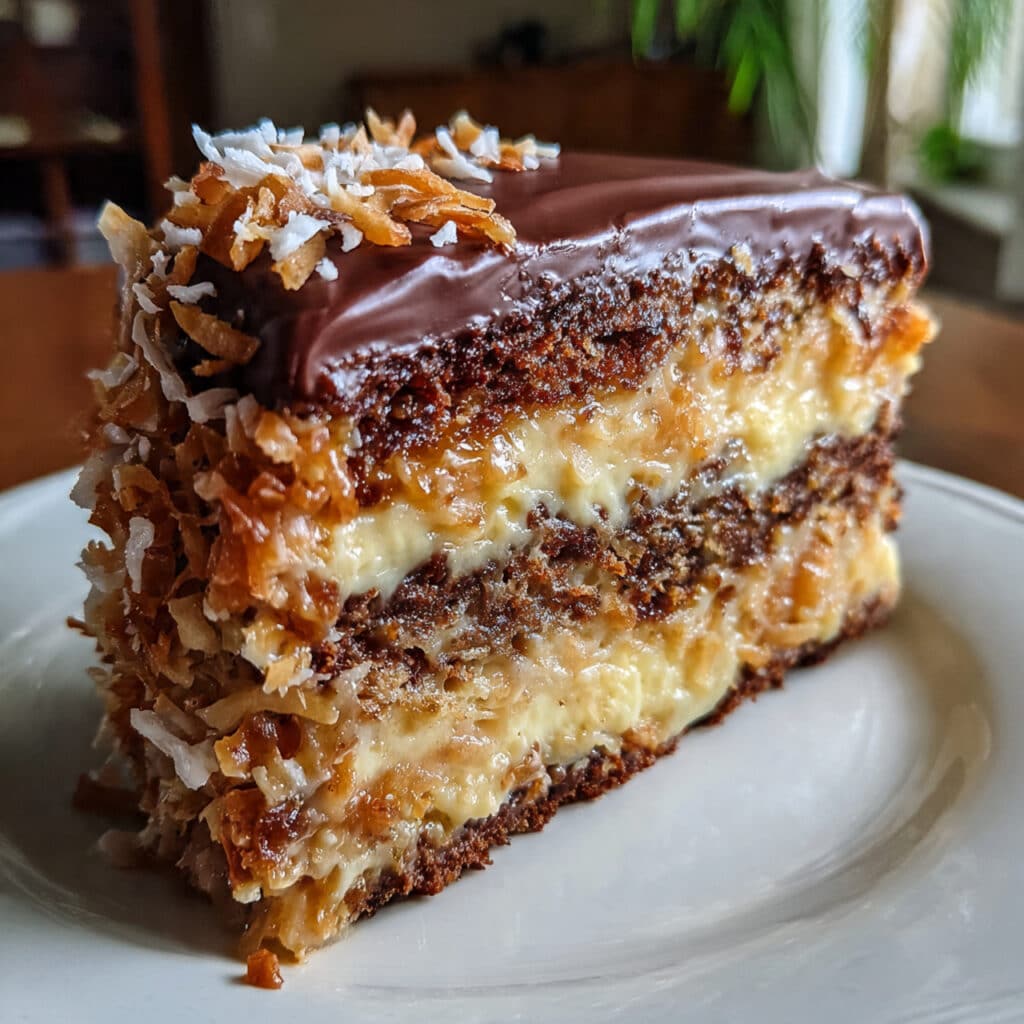
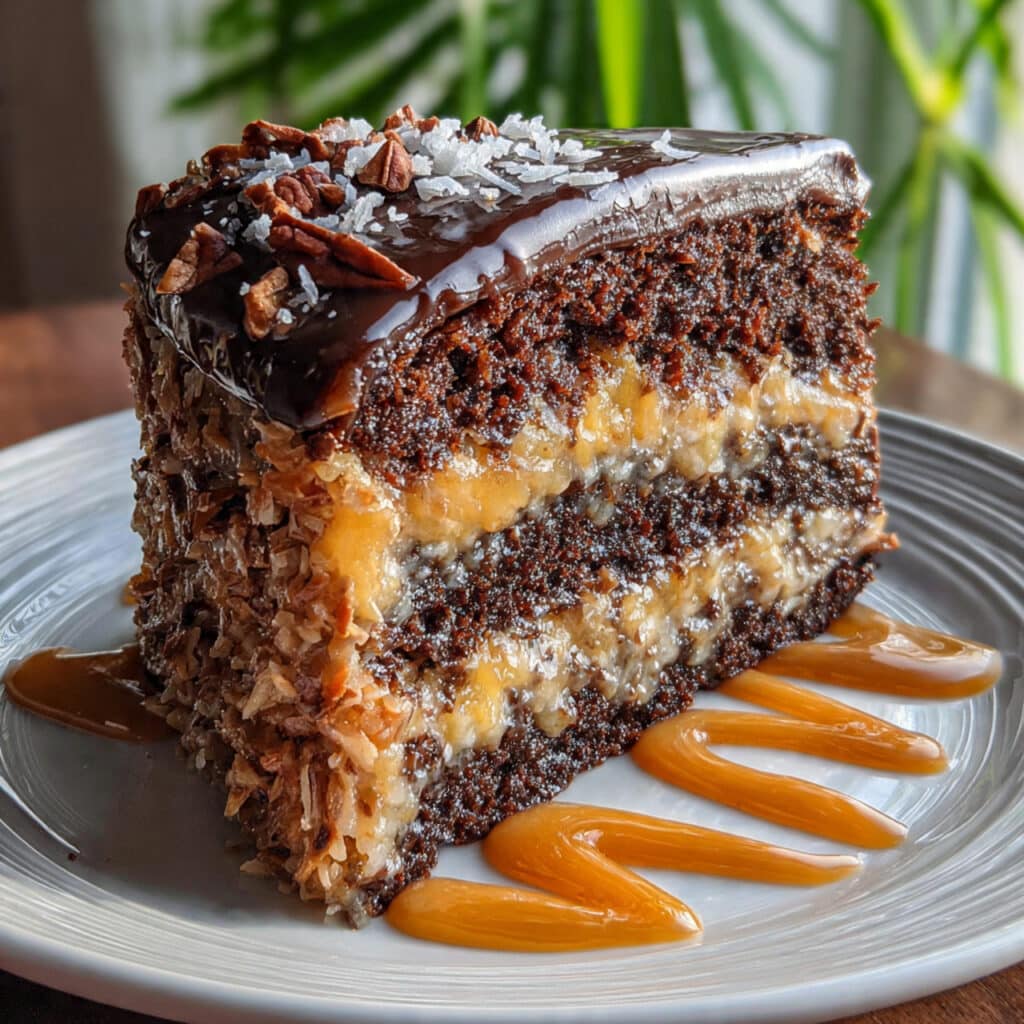
German Chocolate Cake is rich, decadent, and absolutely show-stopping with its signature coconut pecan frosting that makes every bite unforgettable! This classic layer cake features moist, tender chocolate cake paired with a sweet, gooey coconut frosting studded with crunchy pecans, then wrapped in silky chocolate buttercream.
Love More Desserts Recipes? Try My Dark Chocolate Cake Recipe or this Buttermilk chocolate cake next.
Why You’ll Love This Recipe
This German Chocolate Cake is everything you dream of in a special occasion dessert!
- Ultra-moist chocolate cake that stays tender for days
- That iconic coconut-pecan frosting is absolutely addictive
- Looks impressive but easier to make than you’d think
- Can be made ahead for stress-free entertaining
- Feeds a crowd (12-16 generous slices!)
- The perfect balance of chocolate, caramel-y coconut, and buttery pecans
German Chocolate Cake
- Total Time: 2-3 hours (including cooling time)
- Yield: One 2-layer 8 or 9-inch cake
Description
This classic German Chocolate Cake features incredibly moist, tender chocolate cake layers made with buttermilk and cocoa, filled and topped with a rich, homemade coconut-pecan frosting that’s cooked to caramel-y perfection, then wrapped in silky chocolate buttercream. Perfect for birthdays, holidays, and special celebrations, this showstopping layer cake serves 12-16 and can be made ahead for easy entertaining. The combination of rich chocolate, sweet coconut, and crunchy pecans creates an unforgettable dessert that’s been a beloved classic for generations!
Ingredients
For the Chocolate Cake:
2 cups granulated sugar (400 g)
1¾ cups all-purpose flour (210 g)
¾ cup unsweetened cocoa powder (75 g)
1½ teaspoons baking powder (6 g)
1½ teaspoons baking soda (7.5 g)
1 teaspoon salt (5 g)
2 large eggs
1 cup buttermilk (240 ml) see notes for substitute
½ cup vegetable or canola oil (120 ml)
2 teaspoons vanilla extract (10 ml)
1 cup boiling water (240 ml)
For the Coconut Pecan Frosting:
½ cup light brown sugar (100 g)
½ cup granulated sugar (100 g)
½ cup butter (115 g / 1 stick)
3 large egg yolks
¾ cup evaporated milk (180 ml)
1 tablespoon vanilla extract (15 ml)
1 cup chopped pecans (120 g)
1 cup shredded sweetened coconut (80 g)
For the Chocolate Buttercream Frosting:
½ cup butter (115 g / 1 stick)
⅔ cup unsweetened cocoa powder (65 g)
3 cups powdered sugar (360 g)
⅓ cup evaporated milk (80 ml)
1 teaspoon vanilla extract (5 ml)
Instructions
Preheat your oven to 375°F. This is higher than most cakes, but it creates a beautiful dome and perfect texture!
Grease two 8 or 9-inch round cake pans generously. Here’s my trick: Cut circles of parchment or wax paper to fit the bottom of each pan perfectly. This ensures your cakes come out cleanly every single time!
In a large bowl, stir together the sugar, flour, cocoa powder, baking powder, baking soda, and salt. Whisk it well so everything is evenly distributed.
This is your dry ingredient base—simple but essential!
In a separate bowl, whisk together the eggs, buttermilk, oil, and vanilla until well combined. Make sure those eggs are fully incorporated!
The mixture should be smooth and slightly frothy.
Add the wet ingredients to the dry ingredients and mix until just combined. Don’t overmix—you just want everything incorporated with no dry flour streaks.
Now here’s the interesting part: stir in the boiling water. The batter will become VERY thin—almost like chocolate milk consistency. This is COMPLETELY NORMAL and exactly what you want! Don’t panic!
Divide the thin batter evenly between your two prepared pans. Pour carefully and slowly.
Bake for 25-35 minutes, depending on your pan size. Nine-inch pans take less time (closer to 25 minutes), while 8-inch pans need the full 30-35 minutes.
The cakes are done when a toothpick inserted in the center comes out clean or with just a few moist crumbs. The tops should spring back when lightly touched.
This step requires patience, but it’s SO important! Let the cakes cool in the pans for 5 minutes only.
Then carefully run a knife around the edges and invert the cakes onto wire racks. Peel off the parchment paper gently.
Let them cool COMPLETELY before frosting—at least 1-2 hours. If you frost warm cake, everything will slide right off!
While the cakes cool, make your frosting! In a medium saucepan, combine the brown sugar, granulated sugar, butter, egg yolks, and evaporated milk.
Stir everything together, then place over medium heat. Bring to a low boil, stirring constantly.
Keep stirring! This is crucial. Cook for several minutes (usually 8-12 minutes) until the mixture noticeably thickens. It should coat the back of your spoon.
Remove from heat immediately and stir in the vanilla, chopped pecans, and shredded coconut.
Let this cool COMPLETELY before using—at least 1-2 hours, or refrigerate it to speed things up. It needs to be thick and spreadable, not runny!
Melt the butter (I do this in the microwave in 15-second bursts). Stir in the cocoa powder until smooth.
Now alternately add the powdered sugar and evaporated milk, beating well after each addition. Start and end with powdered sugar.
Beat until you reach a smooth, spreadable consistency. Add a tiny bit more milk if it’s too thick, or more powdered sugar if it’s too thin.
Stir in the vanilla extract. Your chocolate frosting is ready!
Place one cake layer on your serving stand or plate. If it has a dome, you can trim it flat with a serrated knife for easier stacking (but this is optional!).
Spread a thin layer of chocolate frosting over the top of the bottom cake layer. This acts as a “glue” and adds extra chocolate flavor.
Spoon HALF of the coconut-pecan frosting on top and spread it into an even layer. Leave about ½ inch between the frosting and the edge—it will spread when you add the top layer.
Carefully place the second cake layer on top, pressing down gently.
Now frost the sides and top of the entire cake with the chocolate buttercream. Use an offset spatula for the smoothest results!
Finally, spoon the remaining coconut-pecan frosting on top of the cake. You can spread it to the edges or leave it in the center for a more rustic look—both are beautiful!
Optional: Use a piping bag with a large star tip to pipe decorative borders or rosettes with any extra chocolate frosting.
Notes
Use room temperature ingredients for the cake—run hot water over your eggs to warm them quickly, and microwave buttermilk for 10-15 seconds
Measure flour correctly by spooning it into your measuring cup and leveling off—don’t scoop directly from the bag or you’ll get too much
Toast the pecans at 350°F for 5-7 minutes for deeper, richer flavor
Line your cake plate with strips of parchment paper before assembling—tuck them under the cake, frost, then pull them away for a clean presentation
Use a lazy Susan or rotating cake stand for easier frosting
Refrigerate the assembled cake for 15 minutes after frosting to help everything set before slicing
Dip your knife in hot water and wipe clean between slices for picture-perfect portions
- Prep Time: 30 minutes
- Cook Time: 25-35 minutes
- Category: Dessert
- Method: Baked
- Cuisine: American
Ingredient List
For the Chocolate Cake:
- 2 cups granulated sugar (400 g)
- 1¾ cups all-purpose flour (210 g)
- ¾ cup unsweetened cocoa powder (75 g)
- 1½ teaspoons baking powder (6 g)
- 1½ teaspoons baking soda (7.5 g)
- 1 teaspoon salt (5 g)
- 2 large eggs
- 1 cup buttermilk (240 ml) see notes for substitute
- ½ cup vegetable or canola oil (120 ml)
- 2 teaspoons vanilla extract (10 ml)
- 1 cup boiling water (240 ml)
For the Coconut Pecan Frosting:
- ½ cup light brown sugar (100 g)
- ½ cup granulated sugar (100 g)
- ½ cup butter (115 g / 1 stick)
- 3 large egg yolks
- ¾ cup evaporated milk (180 ml)
- 1 tablespoon vanilla extract (15 ml)
- 1 cup chopped pecans (120 g)
- 1 cup shredded sweetened coconut (80 g)
For the Chocolate Buttercream Frosting:
- ½ cup butter (115 g / 1 stick)
- ⅔ cup unsweetened cocoa powder (65 g)
- 3 cups powdered sugar (360 g)
- ⅓ cup evaporated milk (80 ml)
- 1 teaspoon vanilla extract (5 ml)
Friendly Notes:
- If you don’t have buttermilk, make your own! Add 1 tablespoon white vinegar or lemon juice to 1 cup of milk, stir, and let sit 5 minutes.
- Use sweetened shredded coconut (not unsweetened) for the traditional flavor
- Toast your pecans for even more flavor—just pop them in a 350°F oven for 5-7 minutes!
- Room temperature eggs work best for even mixing
Why These Ingredients Work
Let me tell you about the genius behind each component!
The boiling water in the cake batter might seem weird, but it’s the secret to incredibly moist cake. It “blooms” the cocoa powder, intensifying the chocolate flavor and creating a super tender crumb.
Buttermilk adds tanginess that balances the sweetness and reacts with the baking soda to create a light, fluffy texture. It’s essential for that classic German Chocolate Cake taste!
Oil instead of butter in the cake keeps it moist for days. Butter-based cakes can dry out, but oil-based cakes stay tender and delicious.
The coconut-pecan frosting is cooked on the stovetop, which caramelizes the sugars and creates this incredible toffee-like flavor. The egg yolks thicken it into a luxurious, spreadable consistency.
Evaporated milk (not sweetened condensed!) gives both frostings a creamy richness without being too sweet. It’s thicker than regular milk, which helps create the perfect texture.
Brown sugar in the coconut frosting adds molasses notes that complement the caramelization beautifully. It’s richer and more complex than white sugar alone.
The combination of shredded coconut and chopped pecans gives you amazing texture—chewy, crunchy, sweet, and nutty all at once!
Essential Tools and Equipment
Here’s what you’ll need to make this beauty:
- Two 8 or 9-inch round cake pans (I prefer 9-inch for slightly shorter layers)
- Parchment or wax paper for lining pan bottoms
- Large mixing bowl for cake batter
- Medium saucepan for cooking coconut frosting
- Wire cooling racks (essential for even cooling!)
- Electric mixer or whisk for chocolate frosting
- Offset spatula for frosting (makes assembly so much easier!)
- Cake stand or serving plate
- Measuring cups and spoons
- Optional: Wilton 2D or 1M piping tip with Ateco flex 14-inch piping bag for decorative frosting
How To Make German Chocolate Cake
Step 1: Prep Your Pans and Preheat
Preheat your oven to 375°F. This is higher than most cakes, but it creates a beautiful dome and perfect texture!
Grease two 8 or 9-inch round cake pans generously. Here’s my trick: Cut circles of parchment or wax paper to fit the bottom of each pan perfectly. This ensures your cakes come out cleanly every single time!
Step 2: Mix the Dry Ingredients
In a large bowl, stir together the sugar, flour, cocoa powder, baking powder, baking soda, and salt. Whisk it well so everything is evenly distributed.
This is your dry ingredient base—simple but essential!
Step 3: Combine the Wet Ingredients
In a separate bowl, whisk together the eggs, buttermilk, oil, and vanilla until well combined. Make sure those eggs are fully incorporated!
The mixture should be smooth and slightly frothy.
Step 4: Bring It All Together
Add the wet ingredients to the dry ingredients and mix until just combined. Don’t overmix—you just want everything incorporated with no dry flour streaks.
Now here’s the interesting part: stir in the boiling water. The batter will become VERY thin—almost like chocolate milk consistency. This is COMPLETELY NORMAL and exactly what you want! Don’t panic!
Step 5: Bake the Cakes
Divide the thin batter evenly between your two prepared pans. Pour carefully and slowly.
Bake for 25-35 minutes, depending on your pan size. Nine-inch pans take less time (closer to 25 minutes), while 8-inch pans need the full 30-35 minutes.
The cakes are done when a toothpick inserted in the center comes out clean or with just a few moist crumbs. The tops should spring back when lightly touched.
Step 6: Cool the Cakes
This step requires patience, but it’s SO important! Let the cakes cool in the pans for 5 minutes only.
Then carefully run a knife around the edges and invert the cakes onto wire racks. Peel off the parchment paper gently.
Let them cool COMPLETELY before frosting—at least 1-2 hours. If you frost warm cake, everything will slide right off!
Step 7: Make the Coconut Pecan Frosting
While the cakes cool, make your frosting! In a medium saucepan, combine the brown sugar, granulated sugar, butter, egg yolks, and evaporated milk.
Stir everything together, then place over medium heat. Bring to a low boil, stirring constantly.
Keep stirring! This is crucial. Cook for several minutes (usually 8-12 minutes) until the mixture noticeably thickens. It should coat the back of your spoon.
Remove from heat immediately and stir in the vanilla, chopped pecans, and shredded coconut.
Let this cool COMPLETELY before using—at least 1-2 hours, or refrigerate it to speed things up. It needs to be thick and spreadable, not runny!
Step 8: Make the Chocolate Buttercream
Melt the butter (I do this in the microwave in 15-second bursts). Stir in the cocoa powder until smooth.
Now alternately add the powdered sugar and evaporated milk, beating well after each addition. Start and end with powdered sugar.
Beat until you reach a smooth, spreadable consistency. Add a tiny bit more milk if it’s too thick, or more powdered sugar if it’s too thin.
Stir in the vanilla extract. Your chocolate frosting is ready!
Step 9: Assemble Your Masterpiece
Place one cake layer on your serving stand or plate. If it has a dome, you can trim it flat with a serrated knife for easier stacking (but this is optional!).
Spread a thin layer of chocolate frosting over the top of the bottom cake layer. This acts as a “glue” and adds extra chocolate flavor.
Spoon HALF of the coconut-pecan frosting on top and spread it into an even layer. Leave about ½ inch between the frosting and the edge—it will spread when you add the top layer.
Carefully place the second cake layer on top, pressing down gently.
Now frost the sides and top of the entire cake with the chocolate buttercream. Use an offset spatula for the smoothest results!
Finally, spoon the remaining coconut-pecan frosting on top of the cake. You can spread it to the edges or leave it in the center for a more rustic look—both are beautiful!
Optional: Use a piping bag with a large star tip to pipe decorative borders or rosettes with any extra chocolate frosting.
You Must Know
The coconut frosting MUST cool completely before assembly! If you spread it while it’s warm, it will run right off the cake and create a mess. I usually make it first and let it chill in the fridge while the cakes bake and cool.
Don’t skip lining the pan bottoms with parchment paper. German Chocolate Cake is tender and moist, which means it’s also delicate. That parchment ensures clean release every time.
The cake batter is supposed to be very thin! I get SO many questions about this. Yes, it looks like it won’t work. Yes, it’s almost pourable like soup. But trust the process—this thin batter is what creates that incredibly moist, tender crumb!
Personal Secret: I always make both frostings the day before and store them covered in the fridge. An hour before I’m ready to assemble, I pull them out to come to room temperature.
Pro Tips & Cooking Hacks
- Use room temperature ingredients for the cake—run hot water over your eggs to warm them quickly, and microwave buttermilk for 10-15 seconds
- Measure flour correctly by spooning it into your measuring cup and leveling off—don’t scoop directly from the bag or you’ll get too much
- Toast the pecans at 350°F for 5-7 minutes for deeper, richer flavor
- Line your cake plate with strips of parchment paper before assembling—tuck them under the cake, frost, then pull them away for a clean presentation
- Use a lazy Susan or rotating cake stand for easier frosting
- Refrigerate the assembled cake for 15 minutes after frosting to help everything set before slicing
- Dip your knife in hot water and wipe clean between slices for picture-perfect portions
Common Mistakes to Avoid:
- Overbaking the cake (check at the minimum time—overbaked = dry!)
- Not stirring the coconut frosting constantly (it can scorch on the bottom)
- Frosting warm cakes (everything slides off!)
- Using sweetened condensed milk instead of evaporated milk (totally different products!)
- Cutting into the cake before it’s fully cooled
Flavor Variations & Suggestions
Classic with a Twist: Add a teaspoon of instant espresso powder to the boiling water before mixing into the batter. It deepens the chocolate flavor without making it taste like coffee!
Extra Chocolatey: Fold ½ cup of mini chocolate chips into the cooled coconut frosting for extra pockets of chocolate.
Rum-Spiked: Add 2 tablespoons of dark rum to the coconut frosting for a grown-up version with deep, complex flavor.
Almond Lover’s Dream: Swap the vanilla extract in the cake for almond extract, and add ½ teaspoon almond extract to the coconut frosting. It pairs beautifully with the coconut!
Double Coconut: Toast the shredded coconut in a dry skillet before adding to the frosting. The toasted coconut adds incredible depth and nuttiness.
Salted Caramel Twist: Sprinkle flaky sea salt over the coconut frosting layers for a sweet-salty contrast that’s absolutely divine.
You can also make this as a three-layer 6-inch cake if you want a taller, more dramatic presentation—just adjust your baking time down slightly!
Make-Ahead Options
This is one of the BEST make-ahead cakes!
The frostings: Both frostings can be made 1-2 weeks ahead! Store the coconut-pecan frosting in an airtight container in the fridge for 1-2 weeks. The chocolate buttercream keeps for 2-3 weeks in the fridge. Remove from the fridge an hour before using to bring to room temperature for easy spreading.
The cake layers: Bake the cakes, cool them completely, then wrap each layer tightly in plastic wrap and store at room temperature for up to 2 days, or freeze for up to 3 months. Frozen layers are actually EASIER to frost—they’re more stable and create fewer crumbs!
Assembled cake: You can assemble the entire cake up to 2 days ahead. Cover loosely and store in the refrigerator. Bring to room temperature 1-2 hours before serving for the best flavor and texture.
Freezing the assembled cake: This cake freezes beautifully! Freeze the whole cake or individual slices. Wrap tightly in plastic wrap, then aluminum foil. Freeze for 2-3 months. Thaw overnight in the refrigerator, then bring to room temperature before serving.
Recipe Notes & Baker’s Tips
About buttermilk: If you don’t have buttermilk, the vinegar/lemon juice substitution works great, but if you bake often, powdered buttermilk (like Saco brand) is a lifesaver to keep in your pantry!
Pan size matters: Nine-inch pans create slightly shorter, wider layers that take less time to bake. Eight-inch pans create taller, more dramatic layers but need a few extra minutes in the oven. Either works beautifully!
The coconut frosting texture: It should be thick, spreadable, and hold its shape—like thick oatmeal consistency. If it seems too thin after cooling, you didn’t cook it quite long enough. Pop it back on the stove for 2-3 more minutes.
Chocolate frosting consistency: The chocolate buttercream should be smooth and spreadable but hold its shape. If it’s too stiff, add milk a teaspoon at a time. If it’s too thin, add more powdered sugar.
Storage after slicing: Once you cut into the cake, cover the cut sides with plastic wrap pressed directly against the cake to prevent drying.
Serving temperature: This cake is delicious at room temperature, but some people LOVE it chilled from the fridge! The coconut frosting gets a bit firmer and fudgier when cold. Try it both ways!
Serving Suggestions
Serve this beautiful cake as the star of any celebration! It’s perfect for birthdays, anniversaries, holidays, or “just because” moments.
Cut generous slices—this is a rich, decadent cake, so smaller portions are actually ideal. Pair each slice with a cold glass of milk or a cup of strong coffee to balance the sweetness.
For an extra-special presentation, garnish each slice with a sprinkle of toasted coconut or a whole pecan on top. A small dollop of whipped cream on the side is lovely too, though definitely not necessary!
This cake is rich enough to stand alone, but if you’re serving a full dessert spread, pair it with fresh berries or vanilla ice cream for contrast.
How to Store Your German Chocolate Cake
Room Temperature: Store the cake under a cake dome or covered with plastic wrap at room temperature for up to 2 days. The frosting is stable thanks to the cooked egg yolks.
Refrigerator: For longer storage, keep the cake covered in the refrigerator for up to 5-7 days. The coconut frosting stays fresh beautifully! Bring to room temperature before serving for the best flavor and texture (about 1-2 hours).
Freezer: This cake freezes wonderfully! Wrap the entire cake or individual slices tightly in plastic wrap, then aluminum foil. Freeze for up to 2-3 months. Thaw in the refrigerator overnight, then bring to room temperature before serving.
Pro tip: Slice and wrap individual pieces before freezing—perfect for enjoying a slice whenever the craving hits, without thawing the entire cake!
Allergy Information
Contains:
- Wheat (all-purpose flour)
- Eggs (in both cake and frostings)
- Dairy (butter, buttermilk, evaporated milk)
- Tree nuts (pecans, coconut)
Substitution Options:
For Gluten-Free: Use a 1:1 gluten-free flour blend (like Bob’s Red Mill or King Arthur) in place of all-purpose flour. The texture will be slightly different but still delicious!
For Dairy-Free: This is trickier since butter and evaporated milk are key components. You can use dairy-free butter and coconut milk (the canned, full-fat kind) in place of evaporated milk. For buttermilk, use dairy-free milk with vinegar using the substitute method.
For Egg-Free: The eggs in the cake can be replaced with flax eggs (1 tablespoon ground flaxseed + 3 tablespoons water per egg, let sit 5 minutes). The egg yolks in the coconut frosting are harder to replace—you might need to use a different frosting entirely.
For Nut-Free: Omit the pecans and use extra coconut, or substitute with sunflower seeds or pumpkin seeds for crunch. If allergic to coconut (which is technically a fruit, not a nut), you’ll need a completely different frosting.
Always check all ingredient labels for potential cross-contamination if you have severe allergies.
Questions I Get Asked A Lot
Why is my coconut frosting runny?
It wasn’t cooked long enough! The mixture needs to thicken considerably on the stove, it should coat the back of a spoon and hold its shape when you draw a line through it. If it’s too thin, return it to the heat and cook 2-3 minutes longer, stirring constantly. It will also thicken as it cools.
My cake layers are domed, is that okay?
Yes! You can either trim the domes off with a serrated knife for perfectly flat layers, or embrace the dome and just stack them as-is. If you leave the domes, place the first layer dome-side-down (flat side up) for easier frosting, then place the second layer dome-side-up.
Do I have to use both frostings?
The coconut-pecan frosting is essential—it’s what makes German Chocolate Cake unique! However, some people skip the chocolate buttercream and just use the coconut frosting between the layers and on top, leaving the sides naked. It’s a simpler, more rustic look that’s equally delicious!
How do I know when the coconut frosting is done cooking?
It should visibly thicken and coat the back of your spoon. When you draw your finger through the frosting on the spoon, it should leave a clear line that doesn’t immediately run back together. It usually takes 8-12 minutes of constant stirring over medium heat.
💬 Tried this recipe? I’d LOVE to see your beautiful German Chocolate Cake! Leave a comment and rating below, and tag me on social media so I can celebrate your baking success!