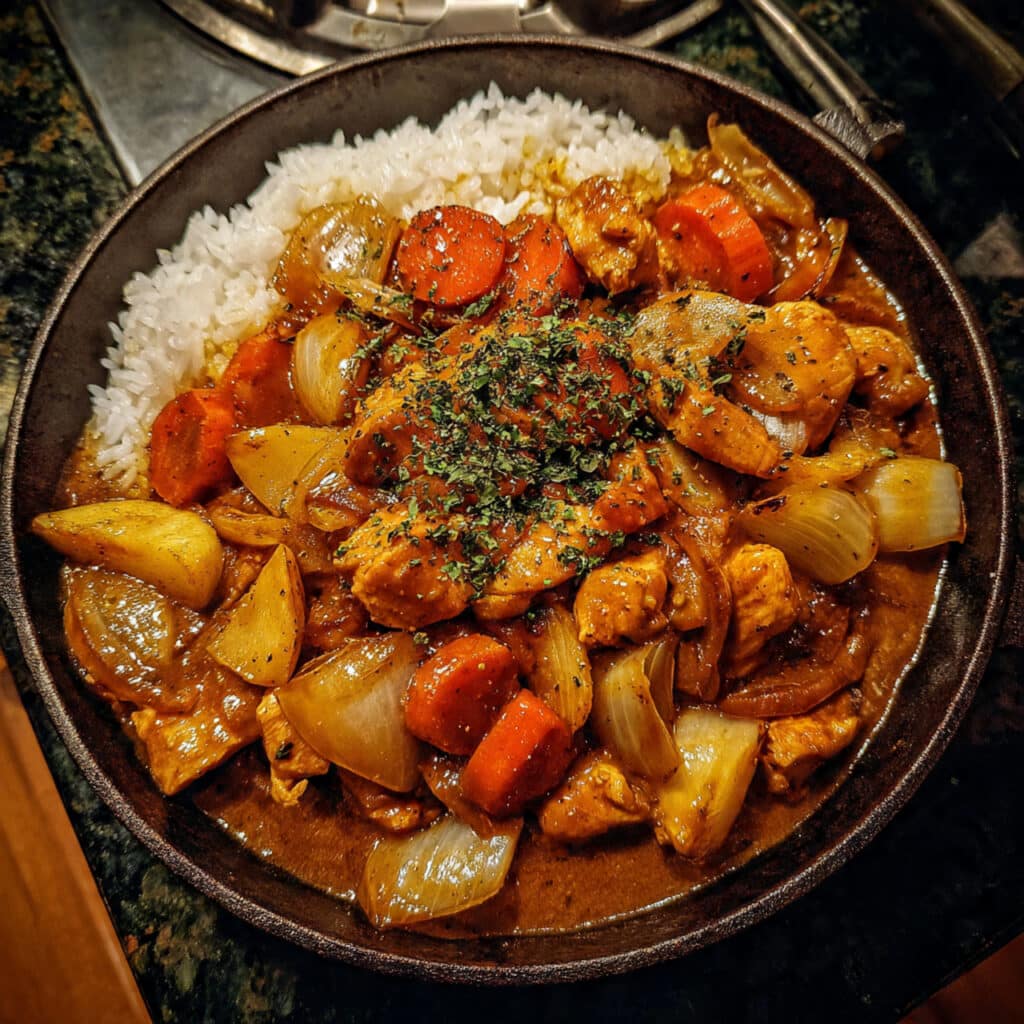
Japanese Curry is a warm, comforting bowl of pure joy. With tender chicken, sweet carrots, creamy potatoes, and that signature savory-sweet curry sauce, this dish is easier than you think and tastes like a warm hug in a bowl. No fancy ingredients required, just simple pantry staples and a little love!
Why You’ll Love This Recipe
Warm, comforting, and deeply flavorful, Japanese curry features tender meat and vegetables simmered in a rich, mildly spiced gravy. The curry is thick, savory, and slightly sweet, making it incredibly satisfying over a bed of fluffy rice. It’s an easy, cozy dish that delivers pure comfort in every bite.
Print
Japanese Curry Ready in 45 Minutes
- Total Time: 45 minutes
- Yield: About 6 cups of curry
Description
This authentic Japanese Curry recipe is easier than you think! With tender chicken, caramelized onions, hearty vegetables, and a rich umami-packed curry sauce made with Japanese curry roux, this dish comes together in just 45 minutes. Perfect for weeknight dinners and even better as leftovers!
Ingredients
For the Curry:
- 1 pound boneless chicken thighs (substitute chicken breast or cubed firm tofu)
- 2 tablespoons neutral oil (canola, grapeseed, or light olive oil)
- 1 large yellow onion, thinly sliced (sweet Vidalia works beautifully!)
- 2 medium carrots, peeled and cut into 1-inch rounds
- 2 medium russet potatoes, peeled and diced (Yukon Gold for extra creaminess)
- 2 cloves garlic, minced (or 1 teaspoon garlic paste)
- 1-inch piece fresh ginger, grated (about 1 tablespoon)
- 3 cups low-sodium chicken broth (or vegetable broth for vegetarian)
- 100 grams Japanese curry roux block (mild or hot—your choice!)
- 1 small apple, grated (Fuji or Gala for natural sweetness)
- 1 tablespoon soy sauce (or tamari for gluten-free)
- 1 teaspoon Worcestershire sauce (skip if vegan)
For Serving:
- Steamed rice (short-grain sushi rice or jasmine)
Instructions
Slice your onions thinly, dice potatoes and carrots into 1-inch pieces, mince the garlic, and grate both the ginger and apple. Getting everything ready before you start cooking makes the whole process smooth and stress-free—I promise it’s worth it!
Heat 2 tablespoons of oil in your heavy pot or Dutch oven over medium heat. Add the sliced onions with a pinch of salt and cook, stirring occasionally, until they turn golden brown—about 8 minutes. Those browned edges? That’s where the magic happens! They add INCREDIBLE depth of flavor to your curry.
Stir in your minced garlic and grated ginger. Cook until fragrant, about 30 seconds. Your kitchen will smell absolutely amazing at this point!
Add your chicken pieces to the pot and brown them on all sides, about 4–5 minutes total. Don’t worry about cooking them through—they’ll finish cooking in the broth. If you’re using tofu, make sure to press it first to remove excess moisture so it doesn’t water down your curry.
Toss in your carrots and potatoes. Pour in the 3 cups of chicken broth, making sure to scrape up any browned bits from the bottom of the pot with your spoon. Those little bits are PURE FLAVOR!
Bring everything to a gentle boil, then reduce the heat and let it simmer until your vegetables are fork-tender, about 15–20 minutes. I usually test a potato piece—if it breaks apart easily, you’re good to go!
Here’s the important part: Turn off the heat completely. Break your curry roux into individual blocks and stir them into the pot until they’re completely melted. If you see any lumps, just whisk gently and they’ll disappear. Adding the roux off the heat prevents it from getting clumpy!
Stir in your grated apple, soy sauce, and Worcestershire sauce. Return the pot to low heat and simmer for 5 more minutes. The curry will thicken beautifully and develop that gorgeous glossy sheen.
Give it a taste! Need more savory depth? Add a splash more soy sauce. Want it richer? This is when I sometimes stir in a small knob of butter for extra indulgence.
Serve your curry hot over a bed of warm steamed rice. I like to make a little well in the rice and ladle the curry right into it!
Notes
- Don’t rush the onions. That 8-minute caramelization is where your curry gets its soul. Pale onions = bland curry!
- Cut vegetables uniformly so they cook at the same rate. Nobody wants crunchy carrots with mushy potatoes.
- If your curry gets too thick, just add a splash of broth or water and stir. Easy fix!
- For deeper flavor, refrigerate overnight. The flavors meld and intensify beautifully—some say day-two curry is the BEST curry.
- Curry roux sticking to the package? Run the sealed packet under warm water for 10 seconds. The blocks slip right out!
- Prep Time: 15 minutes
- Cook Time: 30 minutes
- Category: Main Dish
- Method: Stovetop, Simmering
- Cuisine: Japanese
Ingredient List
For the Curry:
- 1 pound boneless chicken thighs (substitute chicken breast or cubed firm tofu)
- 2 tablespoons neutral oil (canola, grapeseed, or light olive oil)
- 1 large yellow onion, thinly sliced (sweet Vidalia works beautifully!)
- 2 medium carrots, peeled and cut into 1-inch rounds
- 2 medium russet potatoes, peeled and diced (Yukon Gold for extra creaminess)
- 2 cloves garlic, minced (or 1 teaspoon garlic paste)
- 1-inch piece fresh ginger, grated (about 1 tablespoon)
- 3 cups low-sodium chicken broth (or vegetable broth for vegetarian)
- 100 grams Japanese curry roux block (mild or hot—your choice!)
- 1 small apple, grated (Fuji or Gala for natural sweetness)
- 1 tablespoon soy sauce (or tamari for gluten-free)
- 1 teaspoon Worcestershire sauce (skip if vegan)
For Serving:
- Steamed rice (short-grain sushi rice or jasmine)
Friendly Notes:
- Can’t find Japanese curry roux? Look for brands like S&B Golden Curry or Java Curry in the Asian section of your grocery store. Each box comes with little foil-wrapped blocks!
- No fresh ginger? Use 1/2 teaspoon ground ginger in a pinch.
- The grated apple is my SECRET WEAPON—it adds natural sweetness and helps balance the savory flavors perfectly.
Why These Ingredients Work
Chicken thighs stay juicy and tender during simmering, unlike chicken breast which can dry out. The dark meat also adds richness to the sauce.
Yellow onions caramelize beautifully and create that deep, sweet base flavor that makes Japanese curry so addictive.
Carrots and potatoes are traditional vegetables that add sweetness, texture, and help thicken the curry naturally as they break down slightly.
Fresh ginger and garlic provide aromatic depth and that warming, slightly spicy kick.
Grated apple might sound unusual, but trust me on this! It’s a classic Japanese technique that adds natural sweetness and helps create that glossy, velvety sauce texture.
Japanese curry roux blocks are pre-made flavor concentrates containing curry spices, flour, and seasonings. They make this dish incredibly easy and consistent every time!
Soy sauce and Worcestershire sauce add layers of umami (that savory, can’t-quite-put-your-finger-on-it deliciousness) that make the curry incredibly complex and satisfying.
Essential Tools and Equipment
- Heavy pot or Dutch oven (5-6 quart capacity) – Essential for even heat distribution and preventing scorching
- Sharp chef’s knife for chopping vegetables
- Box grater for the apple and ginger
- Wooden spoon or silicone spatula for stirring
- Measuring cups and spoons
- Rice cooker or pot for steaming rice
How To Make Japanese Curry
Step 1: Prep Your Ingredients
Slice your onions thinly, dice potatoes and carrots into 1-inch pieces, mince the garlic, and grate both the ginger and apple. Getting everything ready before you start cooking makes the whole process smooth and stress-free—I promise it’s worth it!
Step 2: Caramelize the Onions
Heat 2 tablespoons of oil in your heavy pot or Dutch oven over medium heat. Add the sliced onions with a pinch of salt and cook, stirring occasionally, until they turn golden brown—about 8 minutes. Those browned edges? That’s where the magic happens! They add INCREDIBLE depth of flavor to your curry.
Step 3: Add Aromatics
Stir in your minced garlic and grated ginger. Cook until fragrant, about 30 seconds. Your kitchen will smell absolutely amazing at this point!
Step 4: Brown the Chicken
Add your chicken pieces to the pot and brown them on all sides, about 4–5 minutes total. Don’t worry about cooking them through—they’ll finish cooking in the broth. If you’re using tofu, make sure to press it first to remove excess moisture so it doesn’t water down your curry.
Step 5: Add Vegetables and Broth
Toss in your carrots and potatoes. Pour in the 3 cups of chicken broth, making sure to scrape up any browned bits from the bottom of the pot with your spoon. Those little bits are PURE FLAVOR!
Step 6: Simmer Until Tender
Bring everything to a gentle boil, then reduce the heat and let it simmer until your vegetables are fork-tender, about 15–20 minutes. I usually test a potato piece—if it breaks apart easily, you’re good to go!
Step 7: Add the Curry Roux
Here’s the important part: Turn off the heat completely. Break your curry roux into individual blocks and stir them into the pot until they’re completely melted. If you see any lumps, just whisk gently and they’ll disappear. Adding the roux off the heat prevents it from getting clumpy!
Step 8: Add Final Flavors
Stir in your grated apple, soy sauce, and Worcestershire sauce. Return the pot to low heat and simmer for 5 more minutes. The curry will thicken beautifully and develop that gorgeous glossy sheen.
Step 9: Taste and Adjust
Give it a taste! Need more savory depth? Add a splash more soy sauce. Want it richer? This is when I sometimes stir in a small knob of butter for extra indulgence.
Step 10: Serve and Enjoy
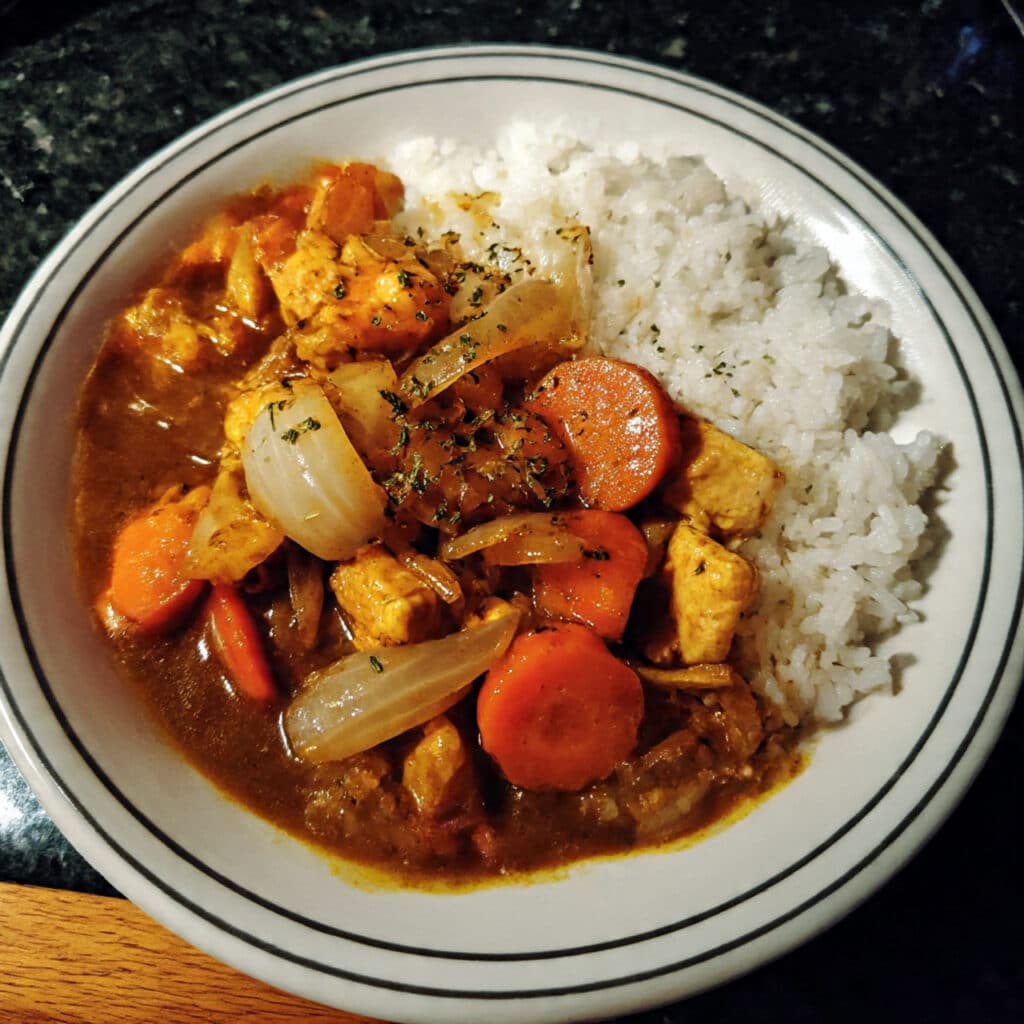
Serve your curry hot over a bed of warm steamed rice. I like to make a little well in the rice and ladle the curry right into it!
You Must Know
Never add curry roux to boiling liquid! Always turn off the heat first. The roux contains flour, and adding it to actively boiling liquid can cause clumping that’s hard to fix. Trust me, I learned this the hard way!
Personal Secret: I always grate my apple directly into the pot including the skin! The skin contains pectin which helps create that silky, restaurant-quality texture. Just make sure to wash it well first.
Pro Tips & Cooking Hacks
- Don’t rush the onions. That 8-minute caramelization is where your curry gets its soul. Pale onions = bland curry!
- Cut vegetables uniformly so they cook at the same rate. Nobody wants crunchy carrots with mushy potatoes.
- If your curry gets too thick, just add a splash of broth or water and stir. Easy fix!
- For deeper flavor, refrigerate overnight. The flavors meld and intensify beautifully—some say day-two curry is the BEST curry.
- Curry roux sticking to the package? Run the sealed packet under warm water for 10 seconds. The blocks slip right out!
Flavor Variations / Suggestions
Beef Curry: Swap chicken for thinly sliced chuck steak and simmer a bit longer (about 25-30 minutes) until the beef is tender.
Vegan Version: Use pressed firm tofu, vegetable broth, and vegan curry roux (check the label—some contain beef fat). Add a splash of coconut milk at the end for extra creaminess!
Spicy Kick: Stir in 1/2 teaspoon chili oil or sprinkle shichimi togarashi (Japanese seven-spice) on top when serving.
Sweet Potato Swap: Replace russet potatoes with sweet potatoes for extra color, natural sweetness, and fiber.
Seafood Twist: Add raw shrimp or scallops in the last 5 minutes of cooking for a luxurious seafood curry.
Curry Pan (Curry Buns): Cool your leftovers completely, sandwich between two slices of bread, coat in panko breadcrumbs, and shallow fry until golden. These are dangerously addictive!
Extra Vegetables: Throw in green beans, peas, bell peppers, or mushrooms along with the carrots and potatoes.
Coconut Curry Fusion: Add 1/2 cup coconut milk for a creamier, slightly tropical version.
Make-Ahead Options
Japanese Curry is a meal prepper’s DREAM! Here’s how to get ahead:
Make Ahead: Prepare the entire curry up to 3 days in advance. Store in an airtight container in the refrigerator. The flavors actually deepen and improve as they sit—this is one dish that gets better with time!
Freezer-Friendly: Cool completely and freeze in airtight containers or freezer bags for up to 3 months. I like to portion it into individual servings for easy grab-and-go lunches.
Thawing: Transfer from freezer to refrigerator the night before you want to eat it. Thaw completely before reheating.
Meal Prep Tip: Cook a big batch on Sunday and enjoy it throughout the week. Pair with different sides each day to keep things interesting—rice one day, noodles the next, or even over a baked potato!
Recipe Notes & Baker’s Tips
- Curry roux comes in different spice levels: Mild (perfect for kids and spice-sensitive folks), medium, and hot. Start with mild if you’re new to Japanese curry—you can always spice it up!
- The potato starch matters: As the potatoes simmer, they release starch that naturally thickens the curry. If you want an even thicker consistency, mash a few potato chunks against the side of the pot.
- Sauce too thin? Simmer uncovered for a few extra minutes to reduce and thicken. Too thick? Add broth or water, a tablespoon at a time.
- For extra gloss and richness, stir in a tablespoon of butter or a splash of heavy cream at the very end. This is my restaurant-style secret!
- Why short-grain rice? It’s sticky and clumps slightly, making it perfect for soaking up all that luscious curry sauce. But honestly, any rice works!
Serving Suggestions
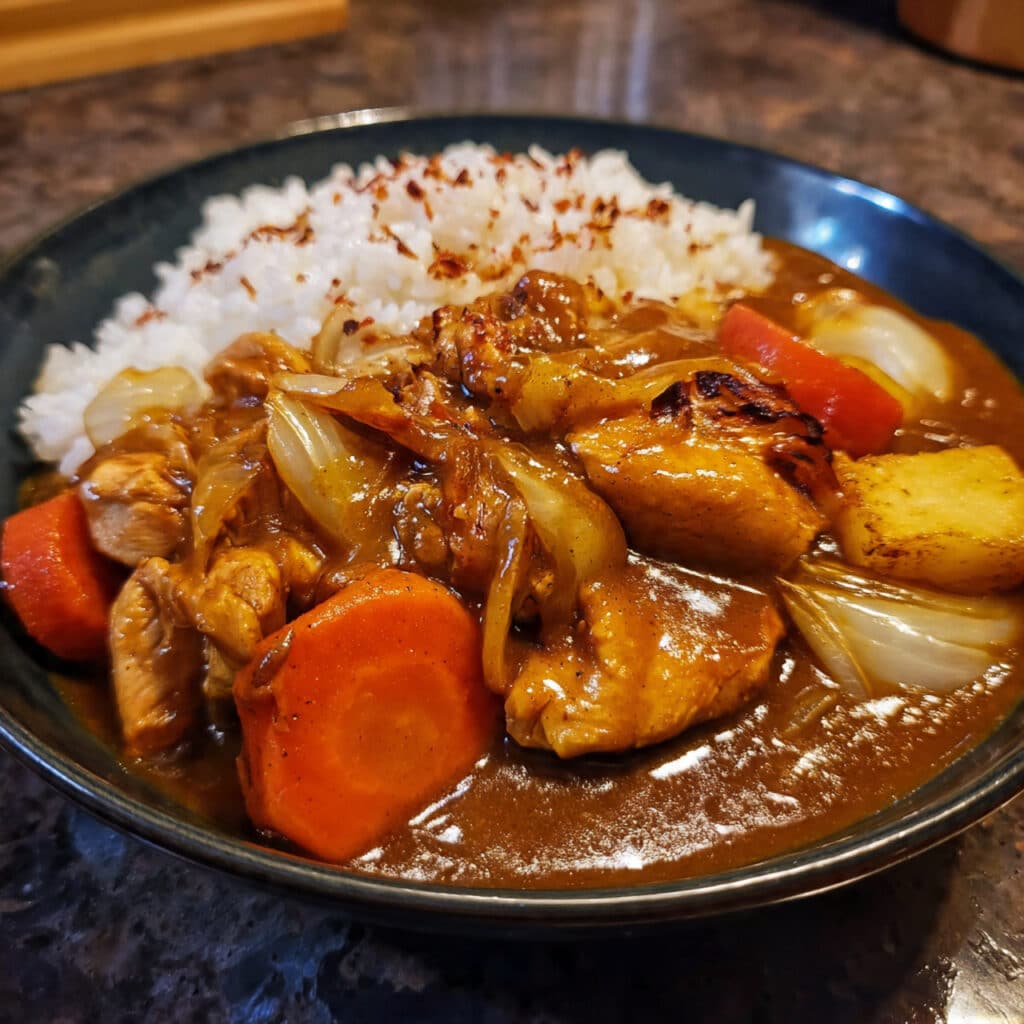
Classic Style: Serve over steamed white rice with the curry ladled generously on top or alongside in the traditional Japanese presentation style where curry covers half the plate.
Mix It Up:
- Serve over udon noodles for curry udon (SO GOOD!)
- Pair with crispy tonkatsu (breaded pork cutlet) on the side
- Add fukujinzuke (pickled vegetables) for authentic Japanese accompaniment
- Sprinkle with crispy fried onions for textural contrast
- Serve with a simple cucumber salad to cut through the richness
- Top with a soft-boiled egg for extra protein and creaminess
Garnish Ideas:
- Fresh cilantro or parsley
- Sliced green onions
- A dollop of plain yogurt or sour cream
- Pickled ginger
- Toasted sesame seeds
How to Store Your Japanese Curry
Refrigerator Storage: Let the curry cool completely, then transfer to an airtight container. It’ll keep beautifully for up to 4 days in the fridge. In fact, I think it tastes even better on day two when all those flavors have had time to become best friends!
Freezer Storage: Cool completely and portion into freezer-safe containers or heavy-duty freezer bags. Remove as much air as possible and freeze flat for easy stacking. Properly stored, your curry will keep for up to 3 months.
Reheating Instructions:
- Stovetop (best method): Transfer to a pot and warm gently over low heat, stirring occasionally. Add a splash of water or broth if it’s too thick—the curry thickens as it sits.
- Microwave: Place in a microwave-safe bowl, cover loosely, and heat in 1-minute intervals, stirring between each, until heated through.
Pro Tip: Store the rice separately from the curry. Rice can get mushy when stored in liquid, so keep them apart and combine fresh when you’re ready to eat!
Allergy Information
Contains:
- Soy (in soy sauce and some curry roux brands)
- Wheat/Gluten (in most curry roux blocks and Worcestershire sauce)
- Fish (in some Worcestershire sauce brands)
Substitutions for Common Allergies:
- Gluten-Free: Use gluten-free curry roux (available from some brands), substitute tamari for soy sauce, and skip the Worcestershire sauce or use a gluten-free version
- Soy-Free: Replace soy sauce with coconut aminos
- Vegan: Use tofu or chickpeas instead of chicken, vegetable broth, vegan curry roux, and skip the Worcestershire sauce
- Nightshade-Free: This recipe is naturally nightshade-free! Just check your curry roux ingredients to be sure.
Always check your specific curry roux package for allergen information, as ingredients can vary by brand.
Questions I Get Asked A Lot
My curry turned out watery. What did I do wrong?
This usually happens if you added too much broth or didn’t simmer long enough after adding the roux. The good news? Super easy fix! Just simmer uncovered for an extra 5-10 minutes to reduce the liquid, or mash some of the potato chunks against the side of the pot to release their starch, it’ll thicken right up!
How spicy is Japanese curry?
Japanese curry is generally MUCH milder than Indian or Thai curries! Even the “hot” versions are pretty manageable for most people. The flavor is more savory-sweet than fiery. It’s totally kid-friendly when you use mild curry roux, my friend’s picky 5 year old devours this!
Do I really need to add the apple?
YES! I know it sounds weird, but the apple is traditional in Japanese curry and adds a subtle sweetness that balances the savory flavors perfectly. You won’t taste “apple” specifically, it just makes everything taste more rounded and complex.
💬 Tried this recipe? Leave a comment and rating below! I’d LOVE to hear how your Japanese Curry turned out! Did you try any fun variations?