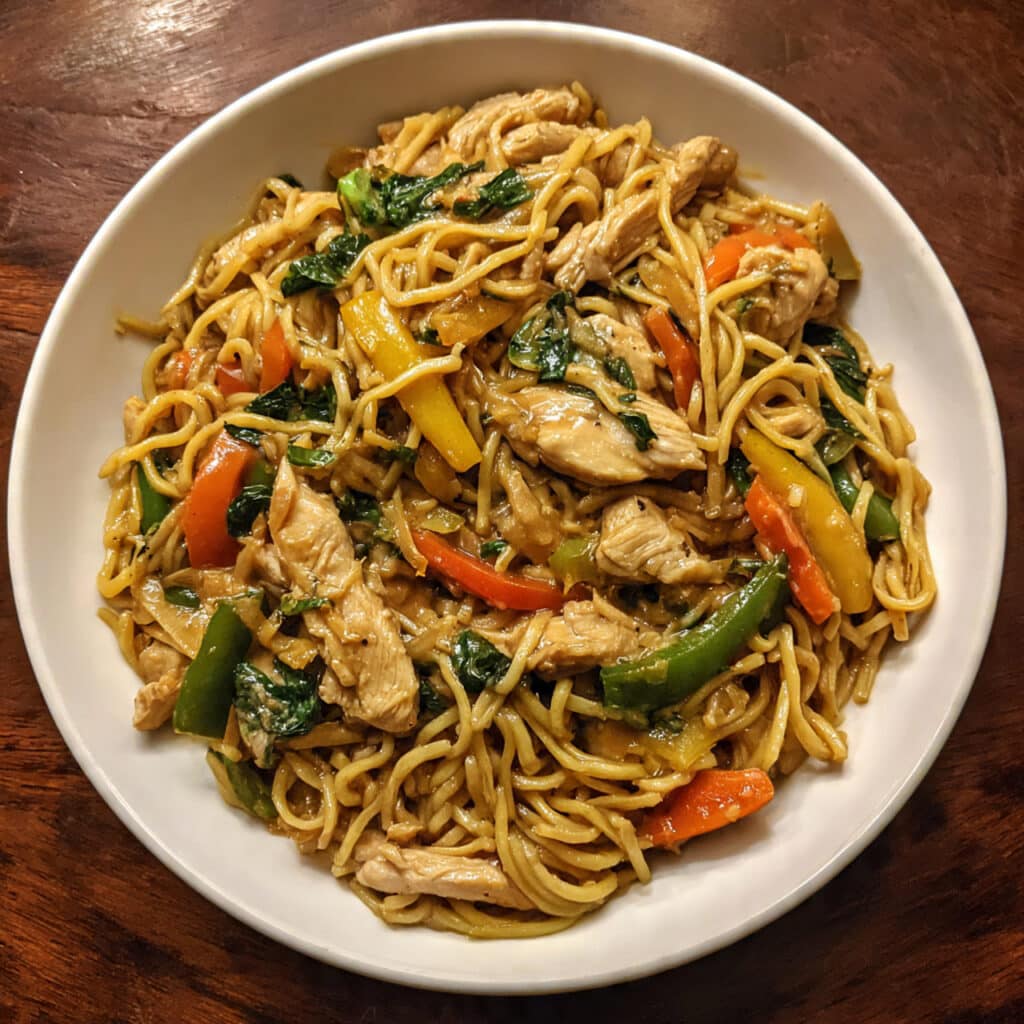
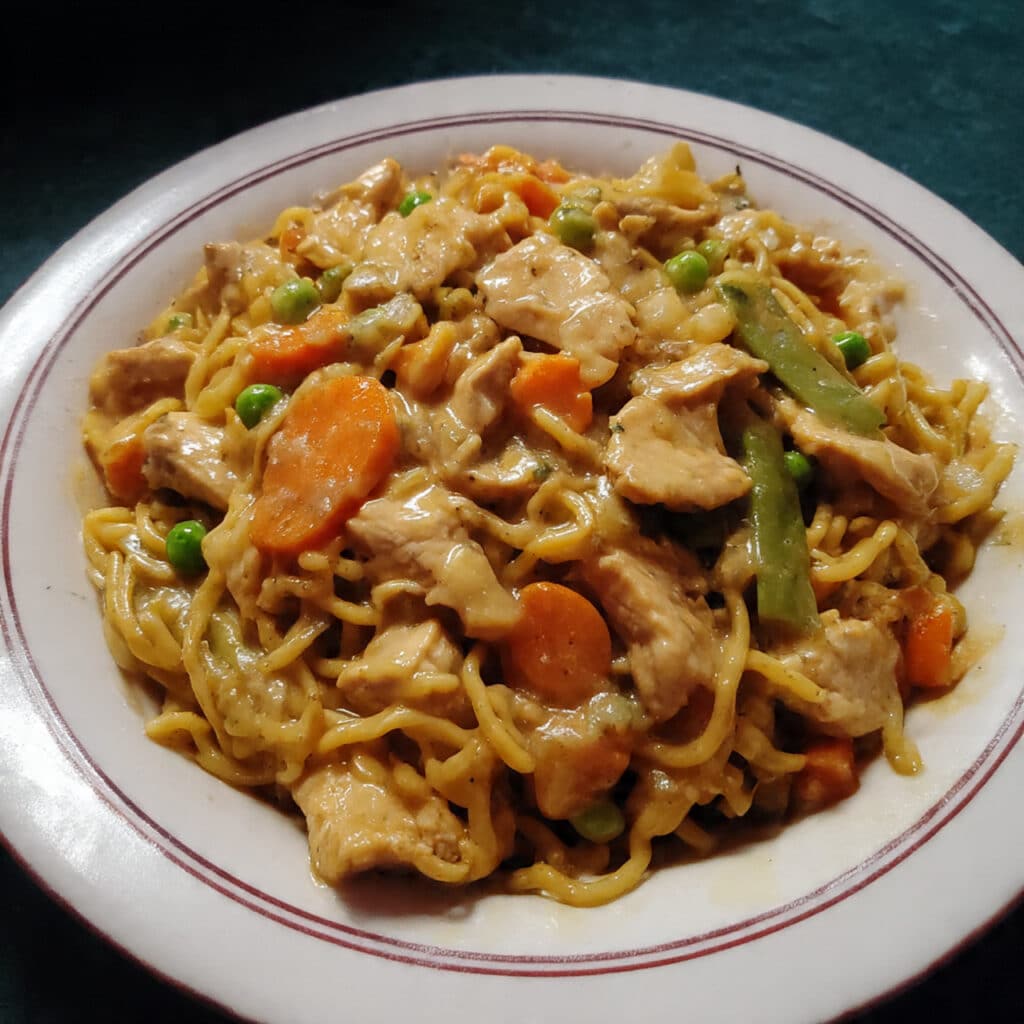
Chicken chow mein is quick, flavorful, and absolutely addictive! With tender chicken, crisp vegetables, chewy noodles, and a savory sauce that coats every bite, this restaurant-quality dish is ready in just 15 minutes. It’s the perfect weeknight dinner when you’re craving Chinese takeout but want something fresh, homemade, and way more delicious.
Love More Chinese Recipes? Try My Chinese Beef and Broccoli or this Crispy Szechuan Tofu next.
Why You’ll Love This Recipe
Tender chicken, crisp veggies, and perfectly saucy noodles come together in this delicious Chicken Chow Mein. It’s savory, satisfying, and full of classic takeout-style flavor. A quick, easy stir-fry that makes weeknight dinners feel effortlessly delicious.
Print
Chicken Chow Mein
- Total Time: 15 minutes
- Yield: 2-3 servings
Description
Quick and easy chicken chow mein made with tender sliced chicken, fresh vegetables, and chewy noodles all tossed in a savory homemade sauce. Ready in just 15 minutes, this restaurant-quality stir-fried noodle dish is perfect for busy weeknights when you’re craving Chinese takeout. The high-heat cooking method creates perfectly crisp-tender vegetables and beautifully caramelized chicken, while the glossy sauce coats every bite. Better than takeout and made with simple, wholesome ingredients!
Ingredients
Chow Mein Sauce
- 2 teaspoons cornstarch
- 1 1/2 tablespoons soy sauce (all-purpose or light)
- 1 1/2 tablespoons oyster sauce (substitute hoisin if needed)
- 1 1/2 tablespoons Chinese cooking wine or mirin
- 2 teaspoons sugar (reduce to 1 teaspoon if using mirin)
- 1/2 teaspoon sesame oil
- Pinch of white pepper (substitute black pepper)
Main Ingredients
- 200 grams (6 ounces) chicken breast or thigh fillets, thinly sliced
- 200 grams (6 ounces) chow mein noodles
- 4 cups green cabbage, finely shredded
- 1 carrot, julienned
- 1 1/2 cups bean sprouts
- 3 green onions, cut into 2-inch pieces
- 1 1/2 tablespoons peanut oil (or other cooking oil)
- 2 cloves garlic, finely chopped
- 1/4 cup (65 ml) water
Instructions
In a small bowl, mix the cornstarch and soy sauce until completely smooth with no lumps. Add the oyster sauce, Chinese cooking wine, sugar, sesame oil, and white pepper. Stir everything together until well combined and set aside. This is your flavor powerhouse!
Pour 1 tablespoon of your prepared sauce over the thinly sliced chicken. Toss to coat every piece and let it marinate for 10 minutes. This step is KEY – it gives the chicken incredible flavor and helps it stay tender during the quick, high-heat cooking.
While the chicken marinates, prepare your chow mein noodles according to package directions. Typically, you’ll just need to soak them in boiling water for about 1 minute. Drain them REALLY well – excess water will make your chow mein soggy instead of beautifully saucy.
Heat the oil in your wok or large skillet over HIGH heat. Let it get really hot – this is crucial for that restaurant-quality sear and those slightly charred edges. Don’t be timid with the heat!
Add the finely chopped garlic and stir-fry for about 10 seconds until it starts to turn golden and becomes incredibly fragrant. Watch it carefully – garlic can go from perfect to burnt in seconds, and burnt garlic tastes bitter.
Add your marinated chicken and stir-fry for about 1 minute, tossing constantly. You want the surface to start browning beautifully, but the inside can still be slightly raw – it’ll finish cooking with the vegetables. Keep everything moving!
Toss in the shredded cabbage, julienned carrot, and the white parts of the green onions (save those green tops for later!). Stir-fry for 1 1/2 minutes, tossing constantly. The cabbage should be mostly wilted but still have some crunch. This is where the magic happens!
Add your drained noodles, the remaining sauce, and the water. Toss everything constantly for 1 minute. The water helps distribute the sauce and prevents the noodles from sticking. Keep tossing – this is your arm workout for the day!
Add the bean sprouts and the green parts of the green onions. Toss for just 30 seconds until the bean sprouts JUST start to wilt. You want them to stay mostly crunchy for that fresh contrast.
Remove from heat right away and serve immediately while everything is hot, glossy, and perfect!
Notes
- Don’t overcrowd the pan. If you’re doubling the recipe, cook it in two batches. Overcrowding drops the temperature and you’ll end up steaming instead of stir-frying.
- Finely chop your garlic by hand – don’t use a garlic press or jarred garlic. They release too much moisture and burn too quickly at high heat.
- For extra-tender chicken, try the Chinese velveting method: toss chicken with 1/4 teaspoon baking soda, 1 teaspoon oil, and 1 teaspoon water. Let it sit for 15 minutes, rinse, pat dry, then proceed with marinating.
- Common mistake to avoid: Adding the sauce too early. If you add it before the vegetables are nearly done, everything steams instead of getting that gorgeous sear.
- Prep Time: 10 minutes
- Cook Time: 5 minutes
- Category: Main Dish
- Method: Stir-Fry
- Cuisine: Chinese
Ingredient List
Chow Mein Sauce
- 2 teaspoons cornstarch
- 1 1/2 tablespoons soy sauce (all-purpose or light)
- 1 1/2 tablespoons oyster sauce (substitute hoisin if needed)
- 1 1/2 tablespoons Chinese cooking wine or mirin
- 2 teaspoons sugar (reduce to 1 teaspoon if using mirin)
- 1/2 teaspoon sesame oil
- Pinch of white pepper (substitute black pepper)
Main Ingredients
- 200 grams (6 ounces) chicken breast or thigh fillets, thinly sliced
- 200 grams (6 ounces) chow mein noodles
- 4 cups green cabbage, finely shredded
- 1 carrot, julienned
- 1 1/2 cups bean sprouts
- 3 green onions, cut into 2-inch pieces
- 1 1/2 tablespoons peanut oil (or other cooking oil)
- 2 cloves garlic, finely chopped
- 1/4 cup (65 ml) water
Why These Ingredients Work
Cornstarch in the sauce creates that glossy, restaurant-style coating that clings to every noodle and vegetable without being gummy. Oyster sauce is the secret weapon here – it adds deep umami and a subtle sweetness that makes this taste authentically Chinese. Chinese cooking wine brings complexity and helps tenderize the chicken while adding that distinctive restaurant flavor you can’t quite put your finger on.
Sesame oil is used sparingly (just 1/2 teaspoon!) because it’s SO potent – too much and it’ll overpower everything. White pepper gives a more subtle, aromatic heat than black pepper and is traditional in Chinese cooking.
For the vegetables, cabbage provides the bulk and stays crisp-tender with a slight bite, carrots add sweetness and color, bean sprouts bring that fresh, crunchy texture, and green onions give a mild onion flavor without being overwhelming. The garlic blooms in the hot oil and infuses everything with its flavor, while peanut oil has a high smoke point perfect for the intense heat needed for stir-frying.
Essential Tools and Equipment
- Wok or large skillet (12-inch minimum) – A wok is ideal for that high-heat toss-and-flip action, but a large skillet works beautifully too. Just make sure it’s big enough so noodles don’t go flying!
- Small mixing bowl for the sauce
- Sharp knife for slicing chicken and vegetables
- Tongs or a large spatula for tossing
- Colander for draining noodles
- Cutting board
How To Make Chicken Chow Mein
Step 1: Make the Sauce
In a small bowl, mix the cornstarch and soy sauce until completely smooth with no lumps. Add the oyster sauce, Chinese cooking wine, sugar, sesame oil, and white pepper. Stir everything together until well combined and set aside. This is your flavor powerhouse!
Step 2: Marinate the Chicken
Pour 1 tablespoon of your prepared sauce over the thinly sliced chicken. Toss to coat every piece and let it marinate for 10 minutes. This step is KEY – it gives the chicken incredible flavor and helps it stay tender during the quick, high-heat cooking.
Step 3: Prepare the Noodles
While the chicken marinates, prepare your chow mein noodles according to package directions. Typically, you’ll just need to soak them in boiling water for about 1 minute. Drain them REALLY well – excess water will make your chow mein soggy instead of beautifully saucy.
Step 4: Heat Your Wok
Heat the oil in your wok or large skillet over HIGH heat. Let it get really hot – this is crucial for that restaurant-quality sear and those slightly charred edges. Don’t be timid with the heat!
Step 5: Cook the Garlic
Add the finely chopped garlic and stir-fry for about 10 seconds until it starts to turn golden and becomes incredibly fragrant. Watch it carefully – garlic can go from perfect to burnt in seconds, and burnt garlic tastes bitter.
Step 6: Stir-Fry the Chicken
Add your marinated chicken and stir-fry for about 1 minute, tossing constantly. You want the surface to start browning beautifully, but the inside can still be slightly raw – it’ll finish cooking with the vegetables. Keep everything moving!
Step 7: Add the Vegetables
Toss in the shredded cabbage, julienned carrot, and the white parts of the green onions (save those green tops for later!). Stir-fry for 1 1/2 minutes, tossing constantly. The cabbage should be mostly wilted but still have some crunch. This is where the magic happens!
Step 8: Add Noodles and Sauce
Add your drained noodles, the remaining sauce, and the water. Toss everything constantly for 1 minute. The water helps distribute the sauce and prevents the noodles from sticking. Keep tossing – this is your arm workout for the day!
Step 9: Finish with Bean Sprouts and Green Onions
Add the bean sprouts and the green parts of the green onions. Toss for just 30 seconds until the bean sprouts JUST start to wilt. You want them to stay mostly crunchy for that fresh contrast.
Step 10: Serve Immediately
Remove from heat right away and serve immediately while everything is hot, glossy, and perfect!
You Must Know
The MOST important thing about making chow mein is having everything prepped and ready before you turn on the heat. Once you start cooking, everything moves FAST – we’re talking 5 minutes total. If you’re still chopping vegetables while your garlic is burning, you’re going to have a bad time. Mise en place is your best friend here!
Personal Secret: I always slice my chicken breast against the grain and make the slices thin – about 1/4 inch thick. Then I partially freeze it for 15 minutes before slicing. This makes it SO much easier to get those perfect, thin, restaurant-style slices that cook quickly and stay tender.
Pro Tips & Cooking Hacks
- Use the highest heat your stove can produce. Home stoves don’t get as hot as restaurant woks, so crank it up! This is what gives you those caramelized edges and restaurant-quality flavor.
- Don’t overcrowd the pan. If you’re doubling the recipe, cook it in two batches. Overcrowding drops the temperature and you’ll end up steaming instead of stir-frying.
- Finely chop your garlic by hand – don’t use a garlic press or jarred garlic. They release too much moisture and burn too quickly at high heat.
- For extra-tender chicken, try the Chinese velveting method: toss chicken with 1/4 teaspoon baking soda, 1 teaspoon oil, and 1 teaspoon water. Let it sit for 15 minutes, rinse, pat dry, then proceed with marinating.
- Common mistake to avoid: Adding the sauce too early. If you add it before the vegetables are nearly done, everything steams instead of getting that gorgeous sear.
Flavor Variations / Suggestions
- Spicy Chow Mein: Add 1-2 teaspoons of chili garlic sauce or sriracha to the sauce, or toss in some fresh sliced red chilies with the garlic.
- Veggie-Loaded: Add sliced bell peppers, snap peas, mushrooms, or bok choy. Just remember to add harder vegetables first and delicate ones last.
- Protein Swaps: Use sliced pork tenderloin, beef sirloin, turkey breast, whole shrimp (deveined), or even ground meat for a different take.
- Vegetarian Version: Skip the chicken and use extra firm tofu (pressed and cubed) or just load up on extra vegetables and add some scrambled egg.
- Noodle Options: Can’t find chow mein noodles? Use ramen noodles (toss that seasoning packet!), thin egg noodles, rice noodles, or even thin spaghetti in a pinch.
- Extra Umami: Add a splash of fish sauce or a spoonful of hoisin sauce to the sauce mixture.
Make-Ahead Options
Honestly, chow mein is best enjoyed fresh and hot from the wok. BUT you can absolutely do the prep work ahead:
- Slice and marinate the chicken up to 24 hours in advance. Keep it covered in the fridge.
- Prep all your vegetables and store them in separate containers in the fridge for up to 1 day.
- Mix the sauce up to 3 days ahead and refrigerate. Just give it a good stir before using.
- Cook the noodles a few hours ahead, toss with a tiny bit of oil to prevent sticking, and refrigerate.
When you’re ready to cook, everything comes together in 5 minutes!
Recipe Notes & Baker’s Tips
- About Chinese cooking wine: This ingredient is ESSENTIAL for authentic flavor. It’s inexpensive and lasts forever in your pantry. If you absolutely can’t find it, substitute dry sherry or mirin (but reduce sugar to 1 teaspoon with mirin since it’s sweeter).
- Chicken thigh vs. breast: Thigh meat stays juicier and is more forgiving if you slightly overcook it. Breast is leaner but can dry out faster, so watch your timing!
- The water addition might seem weird, but it’s crucial! It helps the sauce coat the noodles evenly and prevents them from clumping. Don’t skip it.
- Purple cabbage works too! It’ll turn the whole dish slightly purple, but the flavor is identical once cooked.
Serving Suggestions
Serve your chicken chow mein immediately in big bowls or on plates. I love garnishing with:
- Extra sliced green onions
- Toasted sesame seeds
- A drizzle of chili oil for heat lovers
- Fresh cilantro (not traditional, but I love it!)
This is a complete meal on its own, but if you want to make it a feast, serve alongside:
- Egg rolls or spring rolls
- Hot and sour soup or egg drop soup
- Steamed edumplings
- Simple cucumber salad with rice vinegar
And don’t forget the chopsticks! 🥢
How to Store Your Chicken Chow Mein
Room Temperature: Don’t leave this out – it contains chicken and should be refrigerated within 2 hours.
Refrigerator: Store leftovers in an airtight container for 1-2 days maximum. The noodles will absorb more sauce as they sit, so they won’t be quite as perfect as fresh.
Reheating: Add a splash of water or chicken broth and reheat gently in a skillet over medium heat, tossing frequently. You can also microwave it, but add a little water and cover with a damp paper towel to prevent drying out. The wok/skillet method gives better results though!
Freezing: I don’t recommend freezing chow mein – the noodles and vegetables don’t thaw well and get mushy.
Allergy Information
Contains:
- Soy (soy sauce)
- Wheat (noodles, oyster sauce, soy sauce)
- Shellfish (oyster sauce)
- Possible sesame
Allergy-Friendly Substitutions:
- Gluten-free: Use gluten-free soy sauce (tamari), gluten-free oyster sauce or hoisin, and rice noodles or gluten-free noodles.
- Shellfish allergy: Substitute hoisin sauce for oyster sauce – it’s sweeter but still delicious.
- Soy-free: Use coconut aminos instead of soy sauce (you may need to add a bit more salt).
Questions I Get Asked A Lot
My chow mein is too dry/too wet, what happened?
If it’s too dry, you didn’t add enough water in step 8, or your noodles absorbed too much liquid. Next time, add an extra 2-3 tablespoons of water. If it’s too wet, your noodles weren’t drained well enough, or you added the sauce too early before the vegetables released their moisture. Make sure to drain those noodles really well!
Why is my chicken tough?
This usually means you either cut the chicken with the grain (always slice against it!), cooked it on heat that was too low, or overcooked it. Chicken should only take about 1-2 minutes total since it’s sliced thin. Using thigh meat instead of breast is more forgiving!
Can I prep this ahead for meal prep?
Chow mein is really best fresh, but you CAN prep all the components separately and then do the quick 5-minute stir-fry when you’re ready to eat. If you must make it completely ahead, undercook everything slightly and add extra water when reheating.
What’s the difference between chow mein and lo mein?
Great question! Chow mein means “stir-fried noodles” and traditionally uses thinner, crispier noodles that are sometimes pan-fried. Lo mein means “tossed noodles” and uses thicker, softer noodles tossed in sauce.
💬 Tried this recipe? Leave a comment and rating below! I’d love to hear how it turned out and what variations you tried!