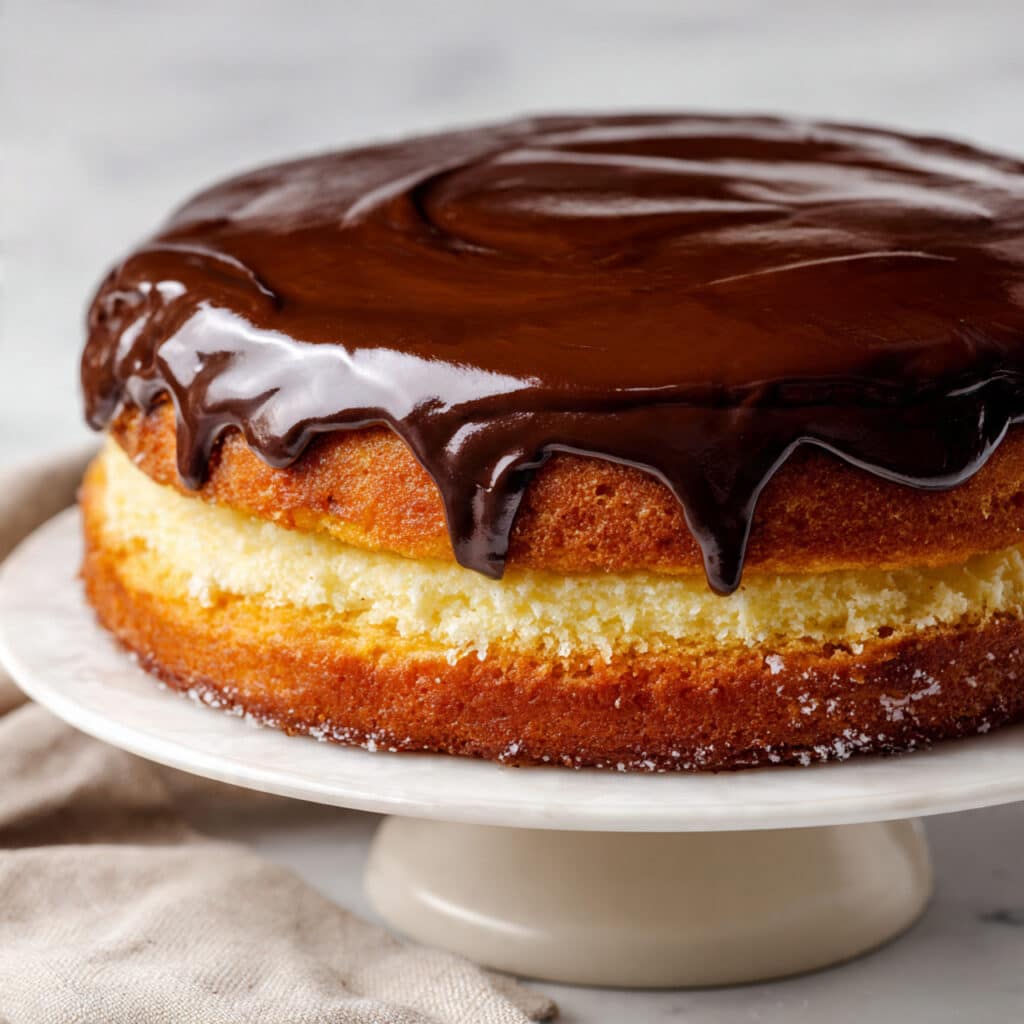
Boston Cream Pie is a dreamy, show-stopping dessert with layers of tender vanilla sponge cake, silky homemade pastry cream, and a glossy chocolate glaze. Despite its name, it’s actually a cake—and honestly, one of the most elegant and delicious cakes you’ll ever make.
Love More Desserts Recipes? Try My No Bake Chocolate Cheesecake or this Chocolate Pecan Pie Bars next.
Why You’ll Love This Recipe
Light, fluffy cake layers filled with smooth vanilla pastry cream and topped with a glossy chocolate ganache make this dessert truly irresistible. Each bite is creamy, rich, and perfectly balanced. It’s a timeless classic that feels both elegant and comforting.
Print
Boston Cream Pie
- Total Time: 3 hours 10 minutes (includes chilling time)
- Yield: One 8-inch layer cake
Description
This classic Boston Cream Pie features two layers of light, airy vanilla sponge cake filled with rich homemade vanilla pastry cream and topped with a smooth, glossy dark chocolate glaze. It’s an elegant, show-stopping dessert that looks bakery-perfect but is completely doable at home with simple ingredients and clear instructions.
Ingredients
For the Cake:
- Cake flour: 1 1/4 cups (150 g) (gives that tender, delicate crumb)
- Baking powder: 1 1/4 teaspoons
- Kosher salt: 1/2 teaspoon
- Whole milk: 1/2 cup (120 ml), room temperature
- Unsalted butter: 4 tablespoons (57 g), melted and cooled slightly
- Neutral oil (such as vegetable or canola): 2 tablespoons (30 ml)
- Vanilla extract: 2 teaspoons
- Large eggs: 3, at room temperature
- Granulated sugar: 3/4 cup (150 g)
For the Pastry Cream (Filling):
- Whole milk: 2 cups (480 ml)
- Granulated sugar: 1/2 cup (100 g)
- Egg yolks: 4 large
- Cornstarch: 3 tablespoons (about 27 g)
- Kosher salt: small pinch
- Unsalted butter: 2 tablespoons (28 g)
- Vanilla extract (or vanilla paste): 2 teaspoons (vanilla paste adds gorgeous specks!)
For the Chocolate Glaze:
- Heavy cream: 1/2 cup (120 ml)
- Corn syrup: 1 tablespoon (optional but helps with shine and texture)
- Dark chocolate (bittersweet or semisweet), finely chopped: 4 ounces (about 115 g)
- Unsalted butter: 1 tablespoon (14 g), softened
Instructions
In a saucepan, heat the milk over medium heat until it’s steaming and just starting to bubble around the edges. Don’t let it fully boil—you just want it nice and hot.
In a separate bowl, whisk together the sugar, egg yolks, cornstarch, and a pinch of salt until the mixture is very smooth and pale yellow. Really get in there with that whisk! You want it completely combined with no lumps.
Here’s the crucial step—slowly whisk some of the hot milk into your yolk mixture, just a little at a time. This is called tempering, and it prevents the eggs from scrambling. Once you’ve added about half the hot milk, pour everything back into the saucepan, whisking constantly.
Cook over medium heat, whisking continuously (yes, your arm will get a workout!), until the mixture thickens and just starts to bubble. Once it bubbles, keep whisking for about 1 minute more to cook out that starchy taste from the cornstarch.
Remove from heat and whisk in the butter and vanilla until everything is smooth and glossy. Pour the pastry cream through a fine-mesh strainer into a clean bowl—this catches any bits and gives you that perfect, velvety texture.
Preheat your oven to 325°F. Grease and flour two 8-inch round cake pans, or better yet, grease them, line the bottoms with parchment paper, and grease again. This guarantees easy release!
In a bowl, whisk together the cake flour, baking powder, and salt. Set this aside.
In a measuring cup or small bowl, whisk together the milk, melted butter, oil, and vanilla. Set this aside too—you’ll fold it in at the end.
Here’s where the magic happens! In a large mixing bowl, beat the eggs and sugar together with your electric mixer on medium-high speed. This is going to take several minutes—don’t stop too early! You want the mixture to be very thick, pale, and tripled in volume. When you lift the beater, it should form ribbons that slowly dissolve back into the mixture.
Gently fold the dry ingredients into the egg mixture in two or three additions, using a rubber spatula. Work gently—you don’t want to deflate all those beautiful air bubbles you just created! Mix just until mostly combined.
Fold in the milk-butter mixture, still working gently. Mix until there are no streaks remaining, but don’t overmix.
Divide the batter evenly between your prepared pans and smooth the tops. Bake until the cakes are golden, lightly spring back when touched, and a toothpick inserted in the center comes out clean—usually about 20 to 25 minutes.
Place your chopped chocolate in a heatproof bowl. In a small saucepan, combine the heavy cream and corn syrup (if using) and heat over medium until it just comes to a simmer—little bubbles around the edges.
Pour the hot cream over the chocolate, let it sit for a minute to melt, then whisk gently until smooth and glossy. Whisk in the butter until it’s fully melted and the glaze is beautifully shiny.
Let the glaze cool slightly until it thickens a bit but is still pourable. If it’s too hot, it’ll run right off the cake; if it’s too cool, it won’t spread nicely.
Place one cooled cake layer on your serving plate or cake stand. Give your chilled pastry cream a good whisk to loosen it up and make it spreadable.
Spread the pastry cream evenly over the first cake layer, leaving a small margin at the edges so it doesn’t squish out when you add the top layer.
Place the second cake layer on top, pressing gently to set. Pour the chocolate glaze over the top center of the cake and let it flow outward naturally. It should drip slightly down the sides—that’s the classic Boston Cream Pie look! Use a spatula to nudge it if needed.
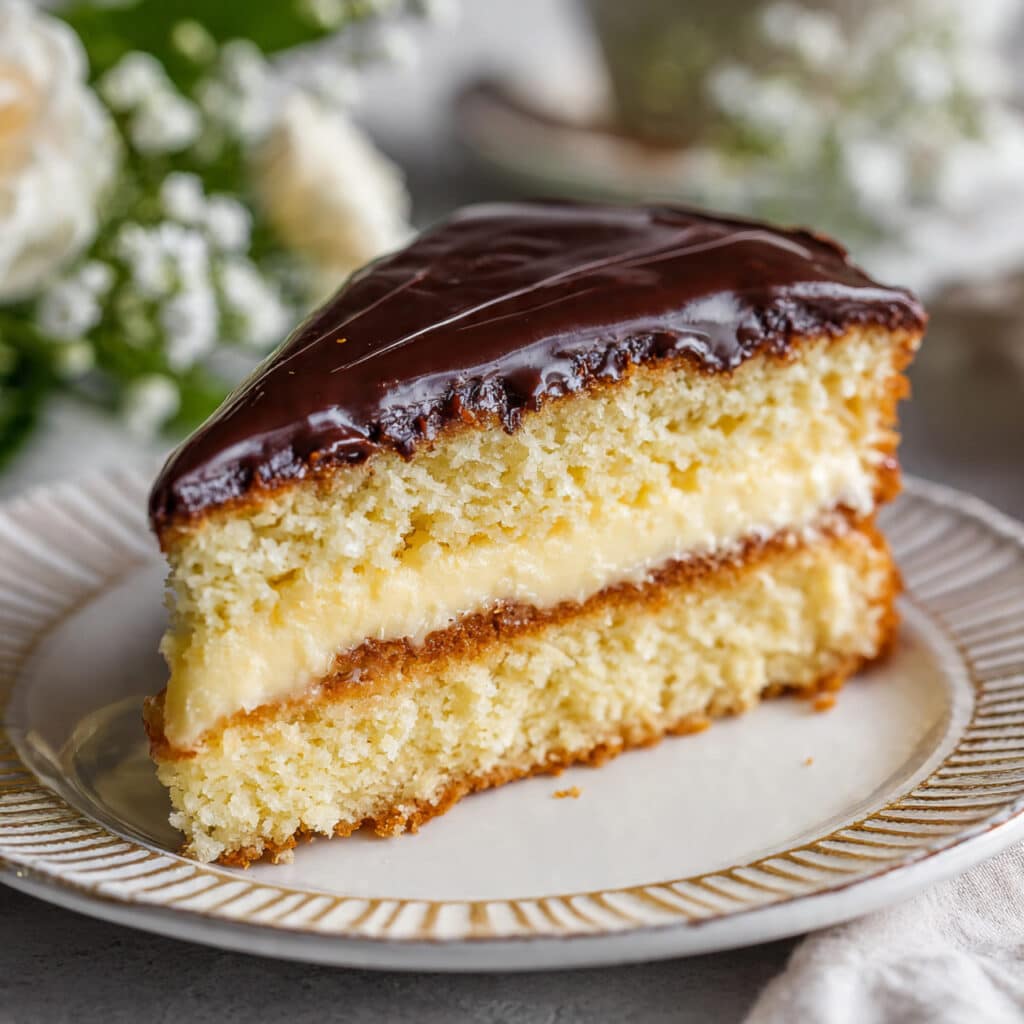
Let the glaze set until it thickens and loses its wet sheen, then slice and serve! Each slice should show off those gorgeous layers.
Notes
Don’t skip the plastic wrap directly on the custard. Pressing it right onto the surface prevents a skin from forming, which would give you an unpleasant texture.
Test your glaze consistency by letting a spoonful drip back into the bowl. It should flow slowly but steadily. Too runny? Let it cool a few more minutes. Too thick? Whisk in a teaspoon of warm cream.
Level your cake layers if needed. If the tops domed during baking, use a serrated knife to carefully slice off the dome. This helps them stack more evenly.
Common mistake: Assembling the cake while components are still warm. Everything needs to be completely cool, especially that pastry cream! Warm pastry cream = soggy, sliding disaster.
Smart shortcut: While homemade is best, you can use instant vanilla pudding made with half the recommended milk for a thicker consistency. It won’t be quite as luxurious, but it’ll still be delicious!
- Prep Time: 45 minutes (including pastry cream)
- Cook Time: 25 minutes
- Category: Dessert
- Method: Baking
- Cuisine: American
Ingredient List
For the Cake:
- Cake flour: 1 1/4 cups (150 g) (gives that tender, delicate crumb)
- Baking powder: 1 1/4 teaspoons
- Kosher salt: 1/2 teaspoon
- Whole milk: 1/2 cup (120 ml), room temperature
- Unsalted butter: 4 tablespoons (57 g), melted and cooled slightly
- Neutral oil (such as vegetable or canola): 2 tablespoons (30 ml)
- Vanilla extract: 2 teaspoons
- Large eggs: 3, at room temperature
- Granulated sugar: 3/4 cup (150 g)
For the Pastry Cream (Filling):
- Whole milk: 2 cups (480 ml)
- Granulated sugar: 1/2 cup (100 g)
- Egg yolks: 4 large
- Cornstarch: 3 tablespoons (about 27 g)
- Kosher salt: small pinch
- Unsalted butter: 2 tablespoons (28 g)
- Vanilla extract (or vanilla paste): 2 teaspoons (vanilla paste adds gorgeous specks!)
For the Chocolate Glaze:
- Heavy cream: 1/2 cup (120 ml)
- Corn syrup: 1 tablespoon (optional but helps with shine and texture)
- Dark chocolate (bittersweet or semisweet), finely chopped: 4 ounces (about 115 g)
- Unsalted butter: 1 tablespoon (14 g), softened
Why These Ingredients Work
Cake flour is the secret to that incredibly light, tender crumb that can hold up the custard without getting soggy. It has less protein than all-purpose flour, which means less gluten development and more delicate texture.
Room temperature eggs and milk are crucial! They whip up better and create more volume, giving you that airy, sponge-like cake that’s traditional for Boston Cream Pie.
The combination of butter and oil in the cake gives you the best of both worlds—butter for flavor and oil for moisture that lasts.
Cornstarch in the pastry cream is what creates that silky, sliceable texture. It thickens beautifully without making the cream gummy or heavy.
Quality chocolate in the glaze matters! Use something you’d enjoy eating on its own—bittersweet or semisweet work beautifully and balance the sweet custard perfectly.
Corn syrup in the glaze isn’t just for looks (though that shine is gorgeous!)—it also keeps the ganache smooth and prevents it from seizing or getting grainy.
Essential Tools and Equipment
- Two 8-inch round cake pans (the traditional size for Boston Cream Pie)
- Electric mixer (hand mixer or stand mixer with whisk attachment)
- Medium saucepan for the pastry cream
- Whisk (you’ll need this for the custard!)
- Fine-mesh strainer to ensure silky-smooth pastry cream
- Rubber spatula for gentle folding
- Plastic wrap to cover the pastry cream
- Heatproof bowl for the chocolate glaze
- Cake stand or serving plate
- Offset spatula (helpful for spreading, but not essential)
How To Make Boston Cream Pie
Make the Pastry Cream First
In a saucepan, heat the milk over medium heat until it’s steaming and just starting to bubble around the edges. Don’t let it fully boil—you just want it nice and hot.
Whisk the Egg Mixture
In a separate bowl, whisk together the sugar, egg yolks, cornstarch, and a pinch of salt until the mixture is very smooth and pale yellow. Really get in there with that whisk! You want it completely combined with no lumps.
Temper the Eggs
Here’s the crucial step—slowly whisk some of the hot milk into your yolk mixture, just a little at a time. This is called tempering, and it prevents the eggs from scrambling. Once you’ve added about half the hot milk, pour everything back into the saucepan, whisking constantly.
Cook Until Thickened
Cook over medium heat, whisking continuously (yes, your arm will get a workout!), until the mixture thickens and just starts to bubble. Once it bubbles, keep whisking for about 1 minute more to cook out that starchy taste from the cornstarch.
Finish the Pastry Cream
Remove from heat and whisk in the butter and vanilla until everything is smooth and glossy. Pour the pastry cream through a fine-mesh strainer into a clean bowl—this catches any bits and gives you that perfect, velvety texture.
Prep and Preheat for the Cake
Preheat your oven to 325°F. Grease and flour two 8-inch round cake pans, or better yet, grease them, line the bottoms with parchment paper, and grease again. This guarantees easy release!
Mix the Dry Ingredients
In a bowl, whisk together the cake flour, baking powder, and salt. Set this aside.
Combine the Wet Ingredients
In a measuring cup or small bowl, whisk together the milk, melted butter, oil, and vanilla. Set this aside too—you’ll fold it in at the end.
Beat the Eggs and Sugar
Here’s where the magic happens! In a large mixing bowl, beat the eggs and sugar together with your electric mixer on medium-high speed. This is going to take several minutes—don’t stop too early! You want the mixture to be very thick, pale, and tripled in volume. When you lift the beater, it should form ribbons that slowly dissolve back into the mixture.
Fold in the Flour
Gently fold the dry ingredients into the egg mixture in two or three additions, using a rubber spatula. Work gently—you don’t want to deflate all those beautiful air bubbles you just created! Mix just until mostly combined.
Add the Milk Mixture
Fold in the milk-butter mixture, still working gently. Mix until there are no streaks remaining, but don’t overmix.
Bake the Cakes
Divide the batter evenly between your prepared pans and smooth the tops. Bake until the cakes are golden, lightly spring back when touched, and a toothpick inserted in the center comes out clean—usually about 20 to 25 minutes.
Make the Chocolate Glaze
Place your chopped chocolate in a heatproof bowl. In a small saucepan, combine the heavy cream and corn syrup (if using) and heat over medium until it just comes to a simmer—little bubbles around the edges.
Pour the hot cream over the chocolate, let it sit for a minute to melt, then whisk gently until smooth and glossy. Whisk in the butter until it’s fully melted and the glaze is beautifully shiny.
Let the glaze cool slightly until it thickens a bit but is still pourable. If it’s too hot, it’ll run right off the cake; if it’s too cool, it won’t spread nicely.
Assemble Your Masterpiece
Place one cooled cake layer on your serving plate or cake stand. Give your chilled pastry cream a good whisk to loosen it up and make it spreadable.
Spread the pastry cream evenly over the first cake layer, leaving a small margin at the edges so it doesn’t squish out when you add the top layer.
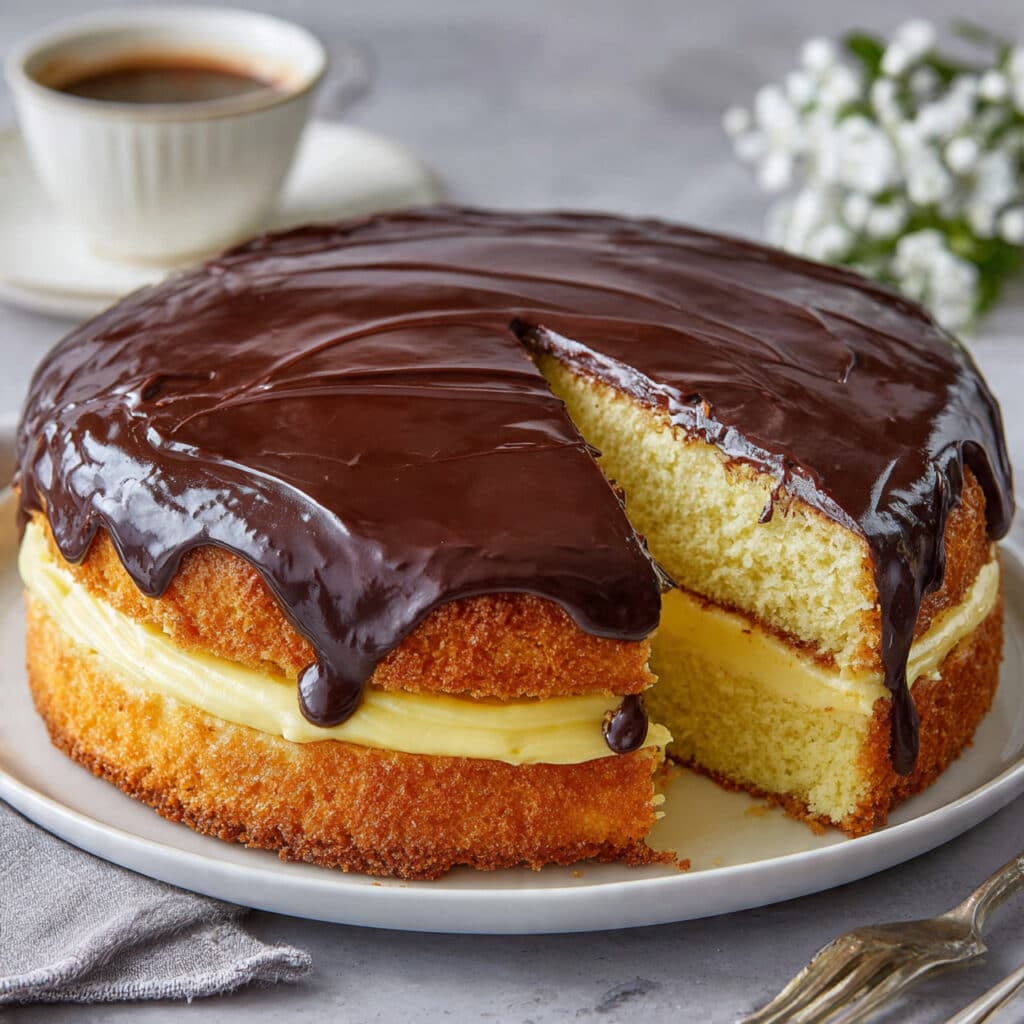
Place the second cake layer on top, pressing gently to set. Pour the chocolate glaze over the top center of the cake and let it flow outward naturally. It should drip slightly down the sides—that’s the classic Boston Cream Pie look! Use a spatula to nudge it if needed.
Let the glaze set until it thickens and loses its wet sheen, then slice and serve! Each slice should show off those gorgeous layers.
You Must Know
The eggs and sugar MUST be beaten until thick and ribbony. This takes at least 4-5 minutes with an electric mixer. If you stop too soon, your cake will be dense instead of light and airy. When you lift the beater, the mixture should fall in thick ribbons that sit on the surface for a few seconds before sinking in.
Pastry cream must be completely cold before assembly. If it’s even slightly warm, it will make your cake layers soggy and might even slide right off. I always make mine the day before!
Use room temperature eggs for the cake. Cold eggs won’t whip up as much, and you’ll miss out on that crucial volume and lightness.
Personal Secret: I always add just a tiny pinch of espresso powder to my chocolate glaze—not enough to make it taste like coffee, but just enough to deepen and intensify the chocolate flavor. It’s my secret weapon for making that glaze taste like it came from a fancy bakery!
Pro Tips & Cooking Hacks
Line your pans with parchment circles. Yes, greasing and flouring works, but parchment guarantees those cakes will release perfectly every time. Trust me on this one!
Strain your pastry cream even if it looks smooth. That fine-mesh strainer catches any tiny bits of cooked egg and ensures silky perfection.
Don’t skip the plastic wrap directly on the custard. Pressing it right onto the surface prevents a skin from forming, which would give you an unpleasant texture.
Test your glaze consistency by letting a spoonful drip back into the bowl. It should flow slowly but steadily. Too runny? Let it cool a few more minutes. Too thick? Whisk in a teaspoon of warm cream.
Level your cake layers if needed. If the tops domed during baking, use a serrated knife to carefully slice off the dome. This helps them stack more evenly.
Common mistake: Assembling the cake while components are still warm. Everything needs to be completely cool, especially that pastry cream! Warm pastry cream = soggy, sliding disaster.
Smart shortcut: While homemade is best, you can use instant vanilla pudding made with half the recommended milk for a thicker consistency. It won’t be quite as luxurious, but it’ll still be delicious!
Flavor Variations & Suggestions
Chocolate lover’s version: Add 2 tablespoons of cocoa powder to one of the cake layers for a chocolate-vanilla swirl effect.
Espresso Boston Cream: Add 1 tablespoon of instant espresso powder to your pastry cream for a sophisticated coffee flavor. The chocolate glaze will love you for it!
Citrus twist: Add the zest of one lemon or orange to your pastry cream for a bright, fresh flavor that cuts through the richness.
Coconut cream version: Replace 1/2 cup of the milk in the pastry cream with coconut milk and add 1/2 teaspoon coconut extract. Toast some coconut flakes and press them around the sides.
Berry Boston Cream: Layer fresh sliced strawberries or raspberries with the pastry cream for a fruity surprise in every bite.
White chocolate glaze: Swap the dark chocolate for high-quality white chocolate. It’s sweeter but absolutely gorgeous and delicious.
Make-Ahead Options
This is one of the best make-ahead desserts because you can break it into stages!
Pastry cream: Make it up to 2 days ahead. Keep it covered with plastic wrap pressed directly on the surface in the refrigerator. Give it a good whisk before using.
Cake layers: Bake them a day ahead, let them cool completely, then wrap tightly in plastic wrap and keep at room temperature. They’ll actually be easier to work with after they’ve had time to set.
Chocolate glaze: You can make this a few hours ahead and keep it at room temperature. If it thickens too much, just warm it gently over a double boiler or in 10-second microwave bursts, stirring between each.
Full assembly: I don’t recommend assembling more than 6-8 hours before serving. The cake stays fresh, but the longer it sits, the more moisture seeps in from the pastry cream.
Freezing: I wouldn’t recommend freezing the assembled cake—the pastry cream doesn’t freeze well and can become watery when thawed. However, you CAN freeze the unfilled cake layers for up to 3 months. Thaw completely before assembling.
Recipe Notes & Baker’s Tips
The baking temperature can range from 325°F to 350°F depending on your oven. I prefer 325°F because it gives a more even crumb without the edges getting too brown. If you’re in a hurry, 350°F works but watch closely after 18 minutes.
When tempering the eggs for the pastry cream, add the hot milk in a thin, steady stream while whisking constantly. If you add it too fast, you’ll get scrambled eggs. If you’re nervous, add it one tablespoon at a time at first until you get the hang of it.
The cake batter will seem thin compared to a typical cake batter—that’s normal! The whipped eggs give it structure, not flour.
If your pastry cream seems too thick after chilling, whisk it vigorously for 30 seconds. It should become smooth and spreadable. If it’s truly too stiff, you can whisk in a tablespoon of milk.
Don’t refrigerate your assembled cake immediately after glazing—let the chocolate set first at room temperature (about 30 minutes), THEN refrigerate. This prevents condensation from making the glaze streaky.
Serving Suggestions
Boston Cream Pie is rich and decadent, so I like to serve it with:
Fresh berries on the side for a tart contrast—raspberries are especially lovely
A small scoop of vanilla ice cream for special occasions (yes, it’s extra, but it’s SO good)
Strong coffee or espresso—the slight bitterness balances the sweetness perfectly
A dollop of lightly sweetened whipped cream on the side (I know, there’s already cream in it, but some people love it!)
Serve it slightly chilled but not ice cold—about 30 minutes out of the fridge is perfect. The flavors are more pronounced when it’s not super cold, and the pastry cream has a better texture.
This is the perfect dessert for birthdays, dinner parties, holidays, or honestly any Tuesday when you want to feel fancy. It looks so impressive that people will think you spent all day on it (we’ll keep the “it’s actually pretty straightforward” secret between us!).
How to Store Your Boston Cream Pie
Refrigerator: Store the assembled cake covered (a cake dome is perfect, or tent loosely with plastic wrap) in the refrigerator. It’s best within 1-2 days. The cake stays moist, but after day two, it can start to get a bit soggy from the pastry cream.
Room temperature: Because of the pastry cream filling, this cake MUST be refrigerated. Don’t leave it out for more than 2 hours, especially in warm weather.
Freezing: I don’t recommend freezing the assembled cake. The pastry cream doesn’t thaw well and can become weepy and grainy. If you must freeze something, freeze only the unfilled cake layers wrapped tightly in plastic wrap and then foil, for up to 3 months.
Reheating: No reheating needed—this is meant to be served chilled! Just take it out of the fridge about 20-30 minutes before serving to take the chill off.
Allergy Information
Contains: Eggs, milk (dairy), wheat (gluten), and depending on your chocolate, may contain soy lecithin
Dairy-free option: This one is tricky because pastry cream is traditionally dairy-based. You could try coconut cream or a dairy-free milk with extra cornstarch, but the texture won’t be quite the same. The chocolate glaze can be made with coconut cream instead of heavy cream.
Gluten-free option: Use a good-quality gluten-free 1:1 baking flour blend in place of the cake flour. The texture will be slightly different but still delicious.
Egg-free: Unfortunately, this recipe relies heavily on eggs both for the cake structure (all that whipping!) and the pastry cream. An egg-free version would be a completely different recipe.
Questions I Get Asked A Lot
My pastry cream is lumpy—what went wrong?
This usually happens if the eggs weren’t whisked smooth enough before adding the hot milk, or if the heat was too high and the eggs cooked too quickly. Next time, make sure your egg mixture is completely smooth and pale, and keep that heat at medium. And always strain it! That’s your insurance policy against lumps.
The chocolate glaze is too thick to pour—help!
If your glaze cooled too much and got thick, just warm it gently. You can set the bowl over a pot of barely simmering water (double boiler style) or microwave it in 10-second bursts, stirring between each, until it’s pourable again. Don’t overheat it or it might separate!
Can I use vanilla pudding mix instead of making pastry cream from scratch?
You can, though it won’t be quite as luxurious. Use instant vanilla pudding but prepare it with only HALF the milk called for on the package—you need it much thicker than normal pudding. Make sure it’s completely chilled and set before assembling.
Why is my cake dense instead of light and fluffy?
The most common reason is not beating the eggs and sugar long enough. You need to whip them for at least 4-5 minutes until they’re thick, pale, and tripled in volume. Also, make sure you’re folding gently—if you stir too vigorously, you’ll deflate all those air bubbles you worked so hard to create!
💬 Tried this recipe? Leave a comment and rating below! I’d love to hear how your Boston Cream Pie turned out, and if you have any questions, ask away!