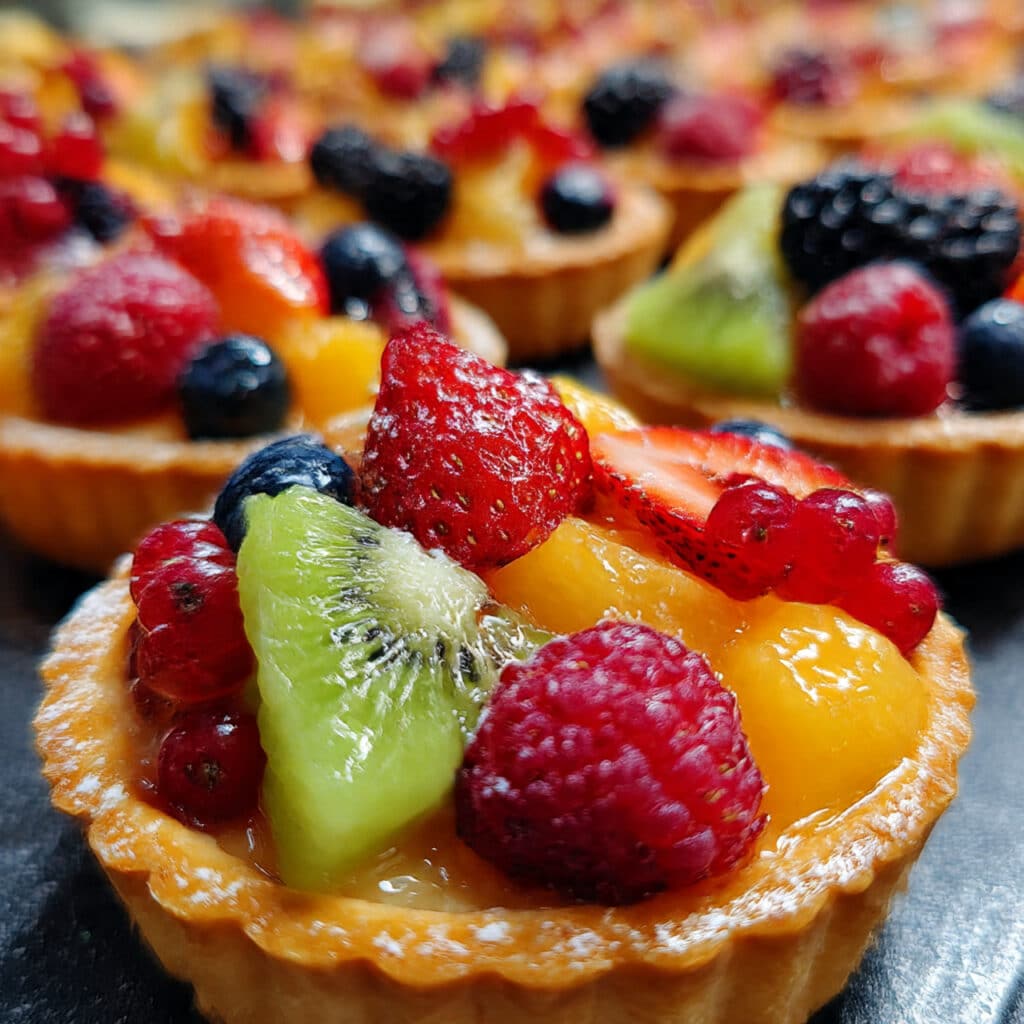
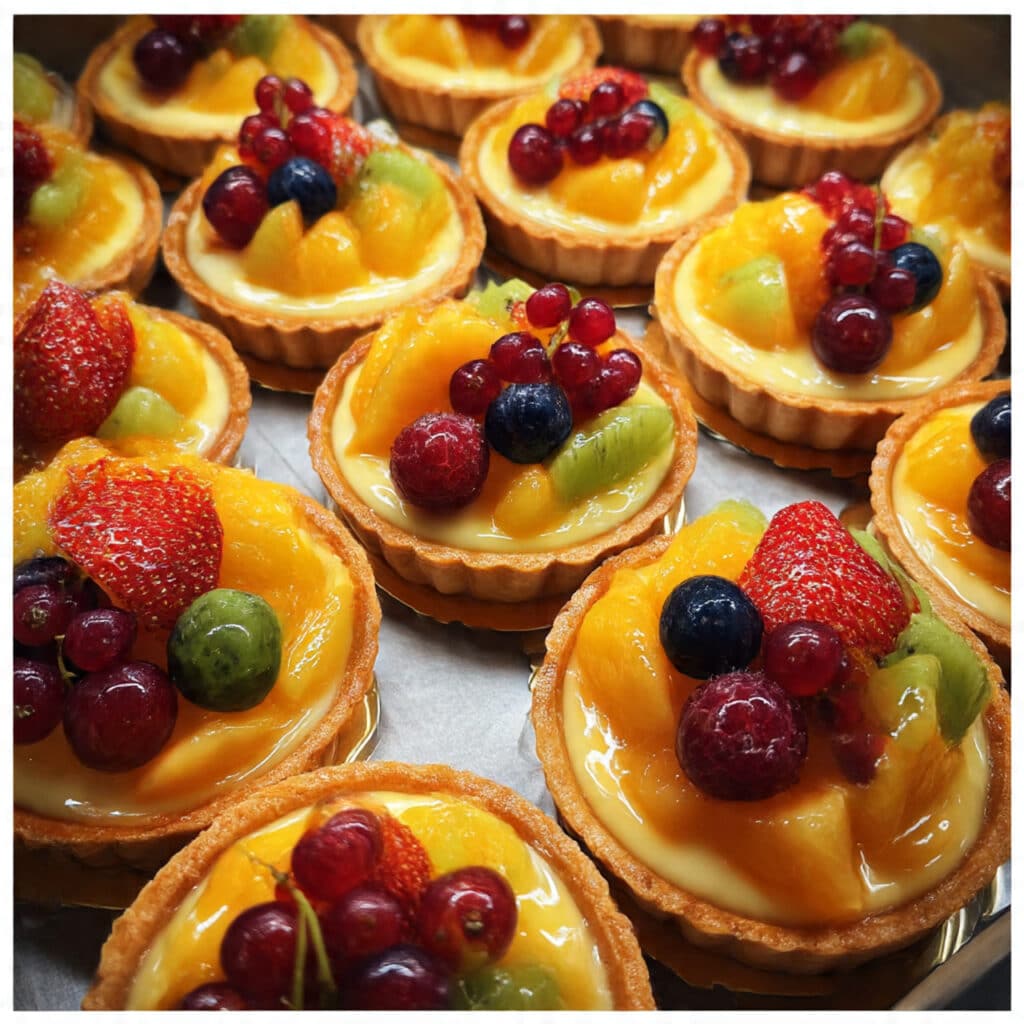
Parisian Fruit Tarts are stunning, elegant, and surprisingly simple to make at home! These beautiful French pastries feature a buttery cookie crust, silky vanilla pastry cream, and a gorgeous array of fresh fruit that’s glazed to perfection.
Why You’ll Love This Recipe
Delicate pastry shells filled with silky pastry cream and topped with glossy, vibrant fresh fruit make these tarts as beautiful as they are delicious. Each bite is light, sweet, and perfectly balanced. They’re an elegant treat that brings a touch of Parisian charm to any occasion.
Print
Parisian Fruit Tarts
- Total Time: Approximately 3 hours
- Yield: 4- to 4½-inch tarts
Description
These stunning Parisian Fruit Tarts feature a tender, buttery cookie dough crust (pâte sablée) filled with homemade vanilla pastry cream and topped with an artful arrangement of fresh glazed fruits including strawberries, raspberries, blueberries, kiwi, mango, and pineapple. Perfect for special occasions, they’re surprisingly achievable for home bakers and can be made in stages for easy entertaining.
Ingredients
For the Cookie Dough Tart Crust:
- 2 sticks (16 tablespoons) unsalted butter, slightly softened
- 1 cup confectioners’ sugar, sifted after measuring
- 2 teaspoons vanilla extract
- ½ teaspoon lemon extract (optional, but adds a lovely brightness!)
- 2 large egg yolks
- 2½ cups unbleached all-purpose flour
For the Pastry Cream:
- 1 cup milk
- ½ cup heavy whipping cream
- ⅓ cup sugar, divided
- 3 tablespoons all-purpose flour
- 4 egg yolks
- 2 teaspoons vanilla extract
For the Topping and Glaze:
- About 5 cups assorted fruit and berries: rinsed and dried blueberries; picked over but unwashed raspberries; rinsed, drained, hulled, and halved small strawberries; peeled, halved, and sliced kiwis; peeled and cored pineapple cut into ¾-inch dice; peeled and diced mango
- ¾ cup apricot preserves
- 2 tablespoons water
Instructions
Beat the butter and confectioners’ sugar in your stand mixer with the paddle attachment on the lowest speed until well mixed—don’t rush this! Then increase to medium speed and beat until lightened and fluffy, about 3 minutes. Beat in the extracts, then add the egg yolks one at a time, beating smooth after each addition. Use a rubber spatula to scrape down the bowl and beater (you don’t want any butter pockets hiding!), then beat in the flour on the lowest speed until just combined.
Scrape the dough onto a lightly floured work surface and gently knead it 3 or 4 times to make it smooth and cohesive. Divide the dough into 6 equal pieces and wrap each one in plastic wrap. Chill for a couple of hours before rolling—this is non-negotiable, folks! The dough needs this rest time to firm up and let the flour hydrate.
Preheat your oven to 375°F. Take one piece of dough out and let it soften at room temperature for about 15 minutes—you want it pliable but still cold. Roll it out on a lightly floured surface and line your tart pan, trimming off the excess dough at the rim. Repeat with the remaining dough pieces. Pierce the bottom of each crust all over with a fork (this prevents puffing) and pop them back in the fridge to chill while the oven heats.
In a medium saucepan, bring the milk, cream, and half the sugar (that’s about 2½ tablespoons) to a simmer over medium heat. Stir occasionally so nothing scorches on the bottom.
While the milk is heating, whisk the remaining sugar with the flour in a separate bowl until combined, then whisk in the egg yolks until smooth and pale yellow. This mixture might look a little thick—that’s exactly what you want!
Here’s where your technique matters! Whisk about a third of the simmering milk mixture into the yolk mixture—this tempers the eggs so they don’t scramble. Return the remaining milk to a simmer, then whisk in the yolk mixture. Keep whisking constantly until the cream thickens and comes to a boil. Once it’s boiling, keep whisking and let it bubble for about 30 seconds. This cooks out the flour taste and activates its thickening power.
Remove from heat and whisk in the vanilla extract. Scrape the cream into a glass bowl and press plastic wrap directly against the surface—this prevents that dreaded skin from forming. Chill until completely cold, at least 2 hours.
After the pastry cream is completely cold, it’s time to prep your fruit! Layer a little of each fruit at a time in a large bowl, repeating the layers until all fruit is used. This gentle layering method cuts down on mixing and bruising the delicate berries.
Combine the apricot preserves and 2 tablespoons water in a small bowl and stir well. Strain the mixture through a fine-mesh strainer into a small saucepan (this removes any chunks) and bring to a boil over low heat, stirring occasionally. Let the glaze reduce to about ⅔ of its original volume—it should look thick and glossy. Pour into a shallow bowl and let cool for 10 minutes. You want it liquid enough to coat the fruit but not so hot that it cooks the berries.
Carefully spread about ⅙ of the chilled pastry cream in each tart crust. Here’s the crucial part: DON’T whisk or beat the pastry cream or it might liquefy and get runny! Just scrape it gently into the crust and use a small metal offset spatula to spread it evenly across the bottom.
Drizzle the cooled glaze over the fruit and use a large rubber spatula to gently toss the fruit until everything is coated with that gorgeous, shiny glaze. Now for the fun part—artfully arrange the glazed fruit over the pastry cream, making sure it comes all the way to the edge of the crust and mounds beautifully in the center.
Carefully unmold the tarts by removing the outer ring, then slide them from the pan bases to a serving platter.
Notes
- Prevent Shrinkage: After rolling out your dough, let the lined tart pans rest in the fridge for 20-30 minutes before baking. This relaxes the gluten and prevents shrinking.
- No Tart Pans? You can use a muffin tin! Just press the dough into the cups and trim the edges. They won’t be as tall, but they’ll still be delicious.
- Pastry Cream Insurance: If your pastry cream gets a few lumps (it happens to everyone!), just strain it through a fine-mesh sieve while it’s still warm. Problem solved!
- Skip the Straining: If you don’t have a strainer for the glaze, just scoop out the big chunks of fruit from the preserves and proceed. It won’t be quite as smooth, but it’ll still work beautifully.
- Berry Hack: Never wash raspberries! They’re like tiny sponges and will get mushy. Just look them over and remove any stems or questionable ones.
- Prep Time: 45 minutes
- Cook Time: 15-20 minutes + Chilling Time: 2 hours minimum
- Category: Dessert
- Method: Baking
- Cuisine: French
Ingredient List
For the Cookie Dough Tart Crust:
- 2 sticks (16 tablespoons) unsalted butter, slightly softened
- 1 cup confectioners’ sugar, sifted after measuring
- 2 teaspoons vanilla extract
- ½ teaspoon lemon extract (optional, but adds a lovely brightness!)
- 2 large egg yolks
- 2½ cups unbleached all-purpose flour
For the Pastry Cream:
- 1 cup milk
- ½ cup heavy whipping cream
- ⅓ cup sugar, divided
- 3 tablespoons all-purpose flour
- 4 egg yolks
- 2 teaspoons vanilla extract
For the Topping and Glaze:
- About 5 cups assorted fruit and berries: rinsed and dried blueberries; picked over but unwashed raspberries; rinsed, drained, hulled, and halved small strawberries; peeled, halved, and sliced kiwis; peeled and cored pineapple cut into ¾-inch dice; peeled and diced mango
- ¾ cup apricot preserves
- 2 tablespoons water
Yields: Six 4- to 4½-inch tart crusts
Why These Ingredients Work
Let me break down the magic happening in these tarts!
Confectioners’ Sugar in the Crust: Unlike granulated sugar, powdered sugar creates that signature tender, cookie-like texture. It dissolves instantly into the butter, giving you that melt-away quality that makes French tart crusts so special.
Egg Yolks (Not Whole Eggs): Using just yolks in both the crust and pastry cream creates richness without adding too much moisture. Yolks = luxurious texture and that beautiful golden color!
The Flour-Thickened Pastry Cream: Some recipes use cornstarch, but flour gives you a more stable, traditional French crème pâtissière that holds up beautifully under the fruit without weeping or sliding around.
Apricot Preserves for Glazing: Apricot is the classic choice because it’s neutral enough not to compete with your fruit flavors, but adds that gorgeous professional-looking shine. It also acts as a protective seal to keep the fruit fresh and the pastry cream from getting soggy.
Mix of Fruits: The variety isn’t just pretty—it creates different flavor notes and textures in every bite. Berries add tartness, tropical fruits bring sweetness, and the combination keeps things interesting!
Essential Tools and Equipment
Here’s what you’ll need to make these beauties:
- Stand mixer with paddle attachment (or a hand mixer and some arm strength!)
- Six 4- to 4½-inch tart pans with removable bottoms
- Rolling pin
- Plastic wrap
- Rubber spatula
- Small metal offset spatula (this is KEY for spreading the pastry cream smoothly)
- Whisk
- Medium saucepan
- Fine-mesh strainer (for the glaze)
- Glass bowl for chilling the pastry cream
- Fork (for docking the crust)
- Wire cooling rack
How To Make Parisian Fruit Tarts
Step 1 – Mix the Dough
Beat the butter and confectioners’ sugar in your stand mixer with the paddle attachment on the lowest speed until well mixed—don’t rush this! Then increase to medium speed and beat until lightened and fluffy, about 3 minutes. Beat in the extracts, then add the egg yolks one at a time, beating smooth after each addition. Use a rubber spatula to scrape down the bowl and beater (you don’t want any butter pockets hiding!), then beat in the flour on the lowest speed until just combined.
Step 2 – Chill the Dough
Scrape the dough onto a lightly floured work surface and gently knead it 3 or 4 times to make it smooth and cohesive. Divide the dough into 6 equal pieces and wrap each one in plastic wrap. Chill for a couple of hours before rolling—this is non-negotiable, folks! The dough needs this rest time to firm up and let the flour hydrate.
Step 3 – Roll and Bake the Crusts
Preheat your oven to 375°F. Take one piece of dough out and let it soften at room temperature for about 15 minutes—you want it pliable but still cold. Roll it out on a lightly floured surface and line your tart pan, trimming off the excess dough at the rim. Repeat with the remaining dough pieces. Pierce the bottom of each crust all over with a fork (this prevents puffing) and pop them back in the fridge to chill while the oven heats.
Step 4 – Heat the Liquid for Pastry Cream
In a medium saucepan, bring the milk, cream, and half the sugar (that’s about 2½ tablespoons) to a simmer over medium heat. Stir occasionally so nothing scorches on the bottom.
Step 5 – Mix the Yolks
While the milk is heating, whisk the remaining sugar with the flour in a separate bowl until combined, then whisk in the egg yolks until smooth and pale yellow. This mixture might look a little thick—that’s exactly what you want!
Step 6 – Temper and Cook the Pastry Cream
Here’s where your technique matters! Whisk about a third of the simmering milk mixture into the yolk mixture—this tempers the eggs so they don’t scramble. Return the remaining milk to a simmer, then whisk in the yolk mixture. Keep whisking constantly until the cream thickens and comes to a boil. Once it’s boiling, keep whisking and let it bubble for about 30 seconds. This cooks out the flour taste and activates its thickening power.
Step 7 – Chill the Pastry Cream
Remove from heat and whisk in the vanilla extract. Scrape the cream into a glass bowl and press plastic wrap directly against the surface—this prevents that dreaded skin from forming. Chill until completely cold, at least 2 hours.
Step 8 – Layer the Fruit
After the pastry cream is completely cold, it’s time to prep your fruit! Layer a little of each fruit at a time in a large bowl, repeating the layers until all fruit is used. This gentle layering method cuts down on mixing and bruising the delicate berries.
Step 9 – Make the Apricot Glaze
Combine the apricot preserves and 2 tablespoons water in a small bowl and stir well. Strain the mixture through a fine-mesh strainer into a small saucepan (this removes any chunks) and bring to a boil over low heat, stirring occasionally. Let the glaze reduce to about ⅔ of its original volume—it should look thick and glossy. Pour into a shallow bowl and let cool for 10 minutes. You want it liquid enough to coat the fruit but not so hot that it cooks the berries.
Step 10 – Spread the Pastry Cream
Carefully spread about ⅙ of the chilled pastry cream in each tart crust. Here’s the crucial part: DON’T whisk or beat the pastry cream or it might liquefy and get runny! Just scrape it gently into the crust and use a small metal offset spatula to spread it evenly across the bottom.
Step 11 – Add the Glazed Fruit
Drizzle the cooled glaze over the fruit and use a large rubber spatula to gently toss the fruit until everything is coated with that gorgeous, shiny glaze. Now for the fun part—artfully arrange the glazed fruit over the pastry cream, making sure it comes all the way to the edge of the crust and mounds beautifully in the center.
Step 12 – Serve Your Masterpieces
Carefully unmold the tarts by removing the outer ring, then slide them from the pan bases to a serving platter.
You Must Know
The dough MUST chill: I know it’s tempting to skip this, especially when you’re excited to get baking, but warm dough = shrinking crusts and a kitchen disaster. Give it the full 2 hours!
Room temperature matters for the pastry cream: Don’t try to spread cold-from-the-fridge pastry cream. Let it sit out for about 10 minutes to soften slightly, but don’t stir it vigorously or it’ll turn soupy.
Assemble close to serving time: These tarts are absolutely at their best within a few hours of assembly. The crust stays crispest, and the fruit stays freshest and most vibrant.
Personal Secret: I always make an extra tart crust or two and freeze them unbaked. That way, when I want to make these on short notice, I’m already halfway there! Just bake from frozen, adding a few extra minutes to the baking time.
Pro Tips & Cooking Hacks
- Prevent Shrinkage: After rolling out your dough, let the lined tart pans rest in the fridge for 20-30 minutes before baking. This relaxes the gluten and prevents shrinking.
- No Tart Pans? You can use a muffin tin! Just press the dough into the cups and trim the edges. They won’t be as tall, but they’ll still be delicious.
- Pastry Cream Insurance: If your pastry cream gets a few lumps (it happens to everyone!), just strain it through a fine-mesh sieve while it’s still warm. Problem solved!
- Skip the Straining: If you don’t have a strainer for the glaze, just scoop out the big chunks of fruit from the preserves and proceed. It won’t be quite as smooth, but it’ll still work beautifully.
- Berry Hack: Never wash raspberries! They’re like tiny sponges and will get mushy. Just look them over and remove any stems or questionable ones.
Flavor Variations & Suggestions
Chocolate Lover’s Version: Add 2 tablespoons of cocoa powder to the pastry cream and use chocolate glaze instead of apricot. Top with berries only for a chocolate-berry tart.
Citrus Twist: Add the zest of one lemon or orange to your pastry cream while it’s cooking. It adds such a bright, sophisticated flavor!
Tropical Paradise: Use only tropical fruits—mango, pineapple, kiwi, and passion fruit pulp drizzled on top. Use guava jelly for the glaze!
Berry Bonanza: Stick with just berries—strawberries, raspberries, blueberries, and blackberries for a classic French look.
Nut Crust: Add ½ cup finely ground almonds or hazelnuts to the tart dough for extra flavor and texture.
Lemon Curd Layer: Spread a thin layer of lemon curd under the pastry cream for an extra tangy surprise.
Make-Ahead Options
These tarts are perfect for entertaining because you can break up the work:
Up to 2 Days Ahead: Bake the tart crusts and store them at room temperature in an airtight container. They’ll stay crisp and fresh.
1 Day Ahead: Make the pastry cream and keep it refrigerated with plastic wrap pressed against the surface.
Morning of Serving: Prep all your fruit, make the glaze, and keep everything separate in the fridge.
1-4 Hours Before: Assemble the tarts. They’ll hold beautifully at cool room temperature for up to 4 hours.
Freezing the Crusts: Unbaked tart shells can be frozen for up to 3 months. Bake directly from frozen, adding 3-5 minutes to the baking time.
Recipe Notes & Baker’s Tips
- Softened vs. Melted Butter: The butter should be cool enough to hold its shape but soft enough to press your finger into easily. If it’s too soft, your dough will spread during baking.
- Why Sift the Confectioners’ Sugar? Those lumps in powdered sugar will NEVER dissolve into your dough, and you’ll end up with gritty spots. Always sift!
- Docking is Essential: Those fork pricks aren’t just decorative—they let steam escape so your crust stays flat instead of puffing up like a balloon.
- The Pastry Cream Test: You’ll know your pastry cream is thick enough when you can draw a line through it on the back of a spoon and it holds without running back together.
- Glaze Too Thick? Just add a teaspoon of water and rewarm. Too thin? Keep reducing it a bit longer.
Serving Suggestions
These tarts are stunning enough to stand alone, but here are some pairing ideas:
- Serve with a cup of espresso or French press coffee for an authentic Parisian café experience
- Add a dollop of lightly sweetened whipped cream on the side (though honestly, they don’t need it!)
- Pair with a glass of champagne or sweet dessert wine for an elegant dinner party finale
- Arrange on a beautiful cake stand or platter with fresh mint leaves scattered around for extra elegance
- Dust the plate with a tiny bit of confectioners’ sugar for that restaurant-style presentation
These are perfect for:
- Baby showers and bridal showers
- Easter or Mother’s Day brunch
- Spring and summer garden parties
- Fancy birthday celebrations
- Anytime you want to feel like you’re dining in Paris!
How to Store Your Parisian Fruit Tarts
Room Temperature: Once assembled, these tarts are best kept at cool room temperature (not above 70°F) and served within 4 hours. The fruit and pastry cream need to stay cool but not cold, and the crust stays crispest this way.
Refrigerator: If you must refrigerate assembled tarts, cover them loosely and keep for no more than 8 hours. Let them sit at room temperature for 15 minutes before serving. Be aware that the crust may soften slightly in the fridge.
Components Separately:
- Baked crusts: Room temperature in airtight container for up to 2 days
- Pastry cream: Refrigerated with plastic wrap pressed on surface for up to 2 days
- Prepped fruit: Refrigerated separately for up to 1 day
Freezing: I don’t recommend freezing assembled tarts. However, you CAN freeze the baked, cooled crusts for up to 1 month in a freezer-safe container. Thaw at room temperature before filling.
Reheating: These are meant to be served at room temperature, so no reheating needed!
Allergy Information
Contains:
- Dairy (butter, milk, cream)
- Eggs
- Gluten (wheat flour)
Substitution Options:
Dairy-Free: This one’s tricky because butter and cream are so central to the recipe. You could try using plant-based butter sticks (not margarine) for the crust, and coconut cream for the pastry cream, though the texture and flavor will be different.
Egg-Free: Unfortunately, eggs are essential for both the crust structure and pastry cream. There isn’t a reliable substitute that will give you the same results.
Gluten-Free: You can try a 1:1 gluten-free flour blend in both the crust and pastry cream, but the crust texture will be more crumbly and delicate. Make sure to chill the dough extra well.
Nut-Free: This recipe is naturally nut-free! Just make sure your vanilla extract doesn’t contain almond flavoring.
Fruit Allergies: Feel free to customize the fruit selection based on allergies—strawberries, mango, and kiwi are common allergens, so swap them out for safe alternatives.
Questions I Get Asked A Lot
Why did my tart crust shrink?
This usually happens when the dough was too warm when you baked it, or the gluten was overworked. Make sure to chill the lined tart pans before baking, and handle the dough gently when rolling. Also, letting the rolled dough rest for 20 minutes before baking helps prevent shrinkage.
My pastry cream has lumps. Can I fix it?
Yes! If you catch it while it’s still warm, strain it through a fine-mesh sieve into a clean bowl. Press it through with a rubber spatula. This will remove any cooked egg bits or flour lumps. If it’s already cold, you can gently warm it and then strain it.
Can I use frozen fruit?
I really don’t recommend it for topping. Frozen fruit releases too much liquid when thawed and will make your tarts soggy. Stick with fresh, ripe, high-quality fruit for the best results and presentation.
How far in advance can I make the glaze?
The apricot glaze can be made up to 3 days ahead! Just store it in a covered container at room temperature. When you’re ready to use it, gently rewarm it until it’s fluid enough to toss with the fruit.
💬 Tried this recipe? Leave a comment and rating below! I’d love to see photos of your beautiful Parisian Fruit Tarts