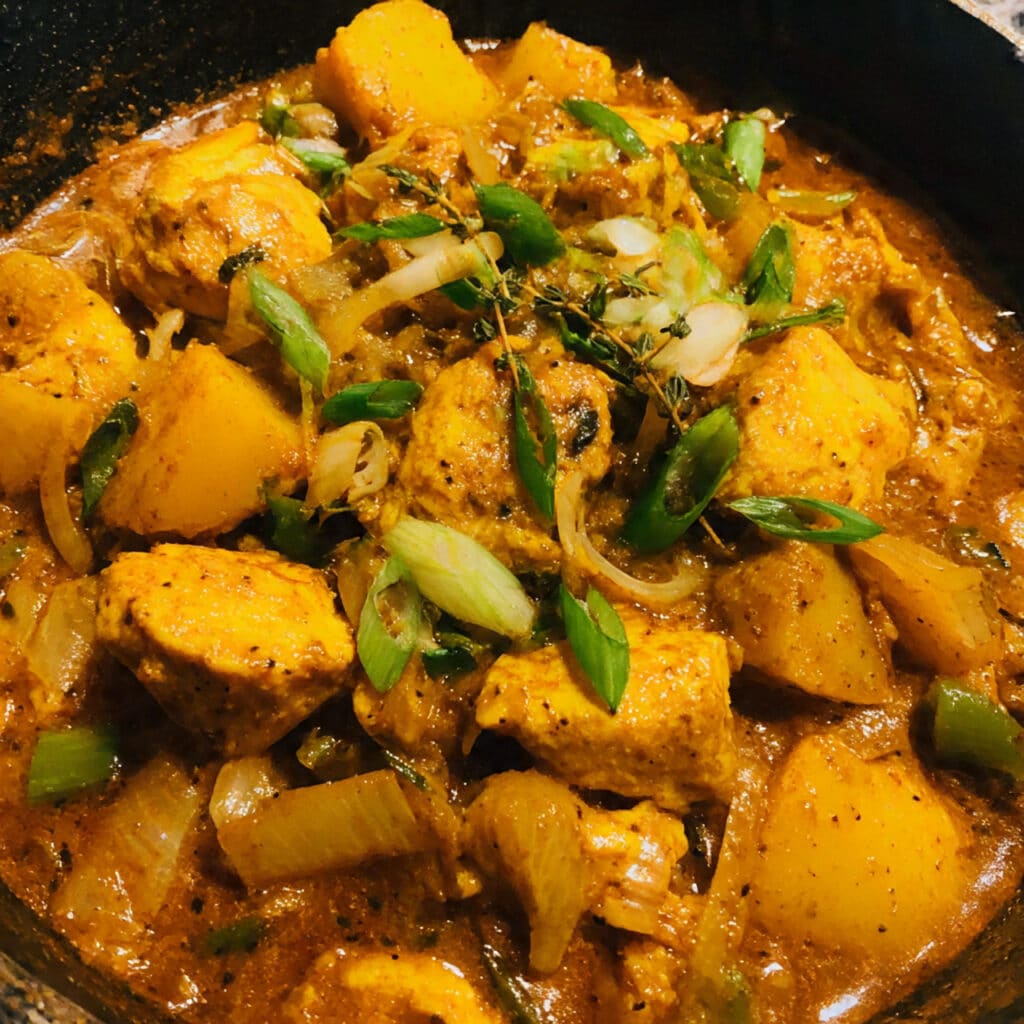
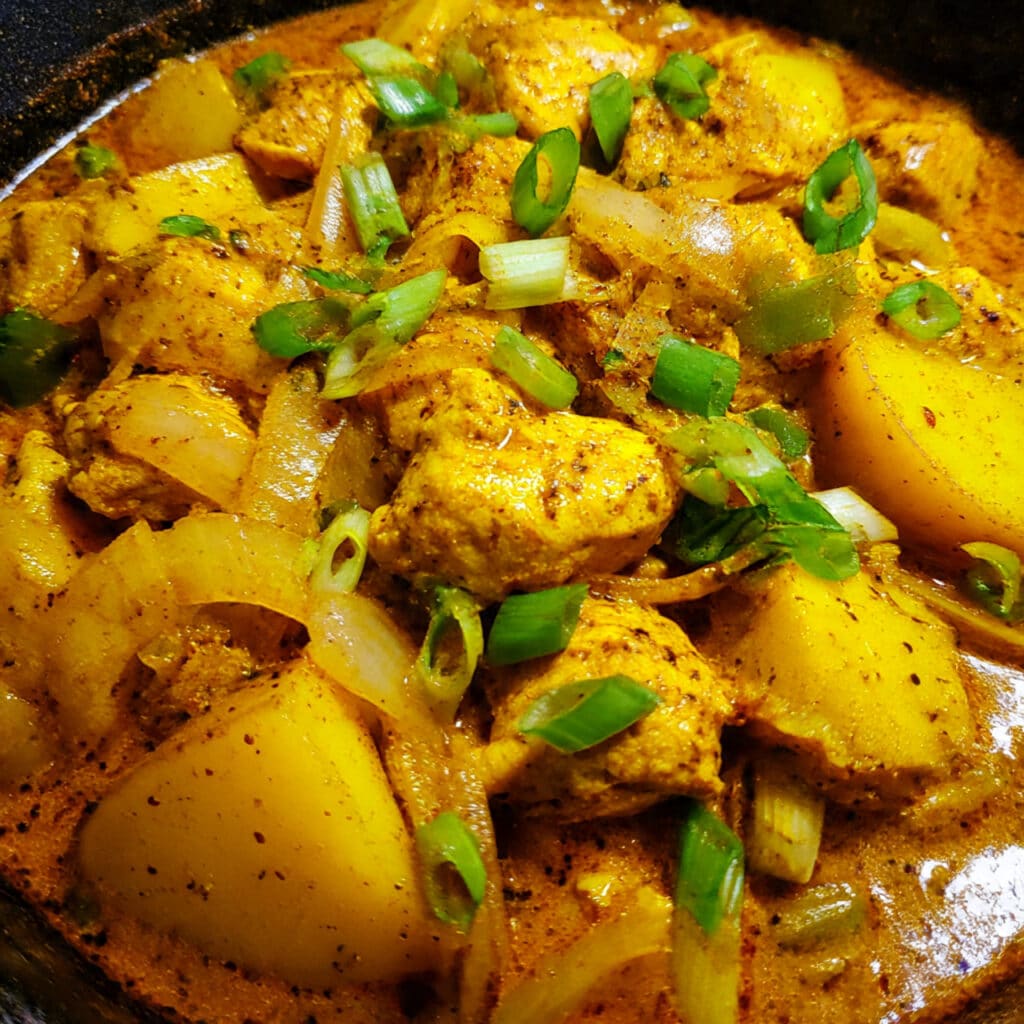
One Pot Jamaican Curry Chicken is aromatic, soul-warming, and bursting with Caribbean flavor! With tender chicken thighs, golden potatoes, and the perfect blend of curry spices, this dish brings authentic island taste right to your kitchen—all in just one pot.
Love More One Pot Recipes? Try My One Pot Chicken and Rice or this One Pot Gnocchi Chicken Pot Pie next.
Why You’ll Love This Recipe
Tender chicken simmered in a rich, aromatic curry sauce with vibrant Jamaican spices creates a flavorful and comforting one-pot meal. Each bite bursts with warmth, creaminess, and island-inspired goodness — perfect for an easy dinner that feels both hearty and exotic.
Print
One Pot Jamaican Curry Chicken
- Total Time: 2 hours
- Yield: 4 servings
Description
Make authentic One Pot Jamaican Curry Chicken with chicken thighs, potatoes, and the burning curry technique. Easy Caribbean recipe with restaurant flavor in 40 minutes. Perfect for weeknight dinners and meal prep!
Ingredients
Protein:
- 2 lbs boneless and skinless chicken thighs, chopped into 2-inch pieces
Spices and Seasonings:
- 2.5 tablespoons curry powder (separated: 1 tablespoon for marinating, 1.5 tablespoons for cooking)
- 1 teaspoon all-purpose seasoning
- Salt and pepper to taste
Vegetables:
- 1 yellow onion, chopped
- 3 green onions, chopped
- 1/2 green pepper, chopped
- 4 garlic cloves, chopped
- 1 large russet potato, chopped
Herbs and Heat:
- 3 sprigs fresh thyme (stems removed)
- 1 Scotch bonnet pepper, chopped with seeds removed (optional)
Cooking Fat and Liquid:
- 3 tablespoons olive oil
- 1/4 cup water
Substitution Notes:
- Chicken thighs only. I tried making this with breasts when I was on a health kick and it was genuinely terrible. Dry, chewy, nobody wanted seconds. Bone-in thighs work but take longer to cook.
- All-purpose seasoning is basically garlic powder, onion powder, and paprika mixed up. Just make it yourself if you don’t have it.
- Scotch bonnets are hot as fuck but they taste fruity and floral, not just spicy. Habaneros are close. Jalapeños work if you’re wimpy about heat.
- Russet potatoes get soft and help thicken the sauce. Yukon golds stay firmer. Your call.
- Fresh thyme is way better than dried. If you only have dried, use like a quarter of what the recipe says because dried herbs are stronger.
Instructions
First thing, rinse your chicken with water and a little vinegar. I know it sounds random but it’s a Caribbean thing and it works—the chicken tastes fresher somehow. Pat everything dry, then dump it in a big bowl with the all-purpose seasoning, 1 tablespoon of curry powder, all your chopped vegetables, garlic, Scotch bonnet if you’re using it, and thyme. Get your hands in there and really work the seasonings into every piece. Don’t be shy about it. Cover the bowl and stick it in the fridge for at least an hour. Overnight is way better though—I usually do this before bed.
When you’re ready to actually cook, pull out all the onions, peppers, garlic, thyme, and Scotch bonnet from the chicken bowl and put them in a different bowl. Leave the chicken where it is. This feels annoying but you need those vegetables separate for the next step.
This is the most important part so don’t screw it up. Heat your oil in the big pot over medium heat until it’s shimmering. Throw in the rest of your curry powder—that 1.5 tablespoons you saved. Stir it around constantly for 20-30 seconds. It’ll sizzle and smell amazing. Do not walk away to check your phone or anything. You want it toasted and fragrant, not actually black and burned. This step is what makes the curry taste like real curry instead of just chicken with yellow powder on it.
Right after you toast the curry powder, immediately throw in all your separated vegetables. Stir everything together and cook for 3-5 minutes until the onions get soft and see-through. If it starts sticking to the bottom, add a tablespoon of water. You’re just softening everything and coating it in that toasted curry oil.
Dump all your marinated chicken into the pot along with 1/4 cup of water. Stir it all together so every piece of chicken gets coated. Put the lid on, turn the heat down to medium-low, and let it do its thing for 30-35 minutes. Stir it every ten minutes or so to make sure nothing’s sticking. The chicken’s gonna release liquid and that becomes your gravy. Just trust the process.
About fifteen minutes before everything’s done, stir in your chopped potatoes. Push them down into the sauce so they’re actually submerged and cooking, not just sitting on top. Put the lid back on and keep cooking until the chicken’s done and the potatoes are soft. The potatoes will start breaking down a little and making your gravy thicker.
Take the pot off the heat and taste your curry. Add salt and pepper now. I usually need more salt than I think I will—it really makes all the other flavors pop. Your sauce should be thick enough to coat the chicken and stick to a spoon. If it’s too thin, cook it with the lid off for a few more minutes. Too thick? Add a tiny bit of water.
Notes
Buy decent curry powder. That bottle that’s been sitting in your cabinet since 2017 isn’t gonna cut it. I use Hot Blue Mountain Country Curry Powder mixed with Betapac Curry Powder. You can get them at Caribbean stores or order online. The flavor is completely different from cheap grocery store curry powder.
Do not add extra water thinking you’re helping. This is how people mess up curry. The chicken makes enough liquid on its own. If you add a bunch of water, you get bland watery soup instead of thick flavorful curry.
Cut your chicken roughly the same size so it all cooks at the same speed. I aim for 2-inch pieces but honestly as long as they’re similar you’re fine. Smaller pieces soak up more marinade though.
If Scotch bonnets scare you, taste a tiny piece first. Some are nuclear, some are pretty tame. You can leave it whole in the pot and fish it out at the end if you just want flavor. Or skip it—the curry’s still good without it.
Take your chicken out of the fridge twenty minutes before you cook it. Room temperature chicken cooks more evenly. Not the end of the world if you forget though.
After you add the potatoes, stir gently. You don’t want them falling apart into mush, just getting soft and releasing starch.
- Prep Time: 20 minutes
- Cook Time: 40 minutes + Marinating Time: 1 hour
- Category: Main Dish
- Method: One Pot
- Cuisine: Jamaican
Ingredient List
Protein:
- 2 lbs boneless and skinless chicken thighs, chopped into 2-inch pieces
Spices and Seasonings:
- 2.5 tablespoons curry powder (separated: 1 tablespoon for marinating, 1.5 tablespoons for cooking)
- 1 teaspoon all-purpose seasoning
- Salt and pepper to taste
Vegetables:
- 1 yellow onion, chopped
- 3 green onions, chopped
- 1/2 green pepper, chopped
- 4 garlic cloves, chopped
- 1 large russet potato, chopped
Herbs and Heat:
- 3 sprigs fresh thyme (stems removed)
- 1 Scotch bonnet pepper, chopped with seeds removed (optional)
Cooking Fat and Liquid:
- 3 tablespoons olive oil
- 1/4 cup water
Substitution Notes:
- Chicken thighs only. I tried making this with breasts when I was on a health kick and it was genuinely terrible. Dry, chewy, nobody wanted seconds. Bone-in thighs work but take longer to cook.
- All-purpose seasoning is basically garlic powder, onion powder, and paprika mixed up. Just make it yourself if you don’t have it.
- Scotch bonnets are hot as fuck but they taste fruity and floral, not just spicy. Habaneros are close. Jalapeños work if you’re wimpy about heat.
- Russet potatoes get soft and help thicken the sauce. Yukon golds stay firmer. Your call.
- Fresh thyme is way better than dried. If you only have dried, use like a quarter of what the recipe says because dried herbs are stronger.
Why These Ingredients Work
Chicken thighs have fat running through them, which keeps them from drying out when you cook them forever. I used to buy chicken breasts because I thought they were healthier, but then everything I made was dry and nobody wanted to eat it. Thighs are juicier and taste way better in anything that cooks longer than fifteen minutes.
You split up the curry powder for two reasons. First you rub some into the raw chicken so it gets deep into the meat. Then you toast the rest in hot oil right before you start cooking, which makes it taste nutty and complex instead of just like yellow dust.
The potato is sneaky genius. While it cooks, it releases starch that makes your sauce thick and silky without any extra ingredients. I didn’t even know this was happening until someone pointed it out. I just thought the sauce magically got thick on its own.
Scotch bonnet peppers are spicy but they also taste different than regular hot peppers. There’s this fruity thing going on that you can’t get from just dumping hot sauce in. You can leave it whole if you want flavor without melting your face off, or chop it up if you like suffering.
The water thing confused me at first. You only use a quarter cup, which seems like nothing. But the chicken releases a ton of juice while it cooks and that becomes your gravy. If you add more water thinking you’re helping, you just end up with watery sad curry instead of thick delicious curry. I learned this the hard way.
Essential Tools and Equipment
- Big heavy pot or Dutch oven—I use a 6-quart and it’s perfect. If your pot’s too small you’ll be cramming everything in and it won’t cook right.
- Large bowl for marinating the chicken
- Sharp knife and cutting board
- Wooden spoon for stirring
- Measuring spoons and cups
- Plastic wrap or a lid to cover the chicken while it sits in the fridge
How To Make One Pot Jamaican Curry Chicken
Step 1 – Marinate the Chicken
First thing, rinse your chicken with water and a little vinegar. I know it sounds random but it’s a Caribbean thing and it works—the chicken tastes fresher somehow. Pat everything dry, then dump it in a big bowl with the all-purpose seasoning, 1 tablespoon of curry powder, all your chopped vegetables, garlic, Scotch bonnet if you’re using it, and thyme. Get your hands in there and really work the seasonings into every piece. Don’t be shy about it. Cover the bowl and stick it in the fridge for at least an hour. Overnight is way better though—I usually do this before bed.
Step 2 – Separate the Vegetables
When you’re ready to actually cook, pull out all the onions, peppers, garlic, thyme, and Scotch bonnet from the chicken bowl and put them in a different bowl. Leave the chicken where it is. This feels annoying but you need those vegetables separate for the next step.
Step 3 – Burn the Curry
This is the most important part so don’t screw it up. Heat your oil in the big pot over medium heat until it’s shimmering. Throw in the rest of your curry powder—that 1.5 tablespoons you saved. Stir it around constantly for 20-30 seconds. It’ll sizzle and smell amazing. Do not walk away to check your phone or anything. You want it toasted and fragrant, not actually black and burned. This step is what makes the curry taste like real curry instead of just chicken with yellow powder on it.
Step 4 – Cook the Vegetables
Right after you toast the curry powder, immediately throw in all your separated vegetables. Stir everything together and cook for 3-5 minutes until the onions get soft and see-through. If it starts sticking to the bottom, add a tablespoon of water. You’re just softening everything and coating it in that toasted curry oil.
Step 5 – Add the Chicken
Dump all your marinated chicken into the pot along with 1/4 cup of water. Stir it all together so every piece of chicken gets coated. Put the lid on, turn the heat down to medium-low, and let it do its thing for 30-35 minutes. Stir it every ten minutes or so to make sure nothing’s sticking. The chicken’s gonna release liquid and that becomes your gravy. Just trust the process.
Step 6 – Add the Potato
About fifteen minutes before everything’s done, stir in your chopped potatoes. Push them down into the sauce so they’re actually submerged and cooking, not just sitting on top. Put the lid back on and keep cooking until the chicken’s done and the potatoes are soft. The potatoes will start breaking down a little and making your gravy thicker.
Step 7 – Finish and Season
Take the pot off the heat and taste your curry. Add salt and pepper now. I usually need more salt than I think I will—it really makes all the other flavors pop. Your sauce should be thick enough to coat the chicken and stick to a spoon. If it’s too thin, cook it with the lid off for a few more minutes. Too thick? Add a tiny bit of water.
You Must Know
Don’t skip the marinating. I know you want to eat right now, but the difference between marinated and not marinated is huge. The chicken needs time to soak up all those spices or it’ll taste boring.
Use chicken thighs or don’t bother making this. I’m dead serious. Breasts will be dry and terrible and you’ll wonder why everyone says this recipe is so good. Thighs stay juicy even after cooking for forty minutes.
Watch that curry powder when you’re toasting it. You have maybe five seconds between perfect and ruined. Stand right there with your spoon ready. When it smells nutty and toasted, throw the vegetables in immediately. Wait too long and it’ll taste bitter and gross.
Personal Secret: I throw in another sprig of fresh thyme right before serving. That little hit of fresh herb makes such a difference. Also I take a few pieces of the cooked potato and mash them into the sauce with my spoon. It makes the gravy silkier and richer. Try it.
Pro Tips & Cooking Hacks
Buy decent curry powder. That bottle that’s been sitting in your cabinet since 2017 isn’t gonna cut it. I use Hot Blue Mountain Country Curry Powder mixed with Betapac Curry Powder. You can get them at Caribbean stores or order online. The flavor is completely different from cheap grocery store curry powder.
Do not add extra water thinking you’re helping. This is how people mess up curry. The chicken makes enough liquid on its own. If you add a bunch of water, you get bland watery soup instead of thick flavorful curry.
Cut your chicken roughly the same size so it all cooks at the same speed. I aim for 2-inch pieces but honestly as long as they’re similar you’re fine. Smaller pieces soak up more marinade though.
If Scotch bonnets scare you, taste a tiny piece first. Some are nuclear, some are pretty tame. You can leave it whole in the pot and fish it out at the end if you just want flavor. Or skip it—the curry’s still good without it.
Take your chicken out of the fridge twenty minutes before you cook it. Room temperature chicken cooks more evenly. Not the end of the world if you forget though.
After you add the potatoes, stir gently. You don’t want them falling apart into mush, just getting soft and releasing starch.
Flavor Variations / Suggestions
Add half a cup of coconut milk in the last ten minutes if you want it creamier. Makes the sauce richer and a little sweet. Some people do this every time.
Throw in more vegetables if you want. I’ve added carrots, more bell peppers, cauliflower. Just add them with the potatoes so they don’t overcook.
This works with goat meat too, which is super traditional. Just cook it way longer—like ninety minutes. Shrimp cooks in ten minutes if you want it fast. I’ve done chickpeas for vegetarians and it was actually really good.
If you love spicy food, keep some Scotch bonnet seeds in or add cayenne. I like heat and even I’m careful with this—those peppers are no joke.
Some people add brown sugar for sweetness. Not traditional but it tastes good. Cilantro at the end is nice if you like it. Curry leaves are authentic if you can find them.
Make-Ahead Options
This is one of those rare things that tastes better the next day. The flavors get deeper overnight. I actually make it the day before if I’m having people over so I’m not stressed.
Marinate the chicken up to 24 hours ahead. Sometimes I do two days if I’m planning ahead. Longer equals more flavor.
The whole thing keeps in the fridge for four days or you can freeze it for three months. I put it in containers for lunches. Reheat it on the stove with a splash of water.
If you’re meal prepping, undercook the potatoes slightly because they’ll keep softening when you reheat. Not a huge deal but the texture’s better.
Chop all your vegetables the night before and keep them in a container. Makes cooking way faster.
Recipe Notes & Baker’s Tips
Toasting the curry powder isn’t optional. It’s literally the most important thing. Those twenty seconds take raw curry powder from boring to amazing. This is the difference between restaurant curry and bland home curry.
The sauce gets thick in the fridge, almost solid. That’s normal. It loosens up when you reheat it. Add a little water and stir.
If your curry tastes bland, you either used too much water or didn’t toast the curry powder long enough. Or you need more salt. Salt makes everything taste better.
Green onions and scallions are the same thing. I use the white and light green parts for cooking, save the dark green for garnish.
Bone-in thighs work, just add ten to fifteen minutes cooking time. Check that they hit 165°F inside. Messier to eat but more flavor.
Serving Suggestions
I make white rice every time. Jasmine rice is my favorite but basmati’s good too. Rice and peas is the traditional Jamaican way—coconut rice with kidney beans. The sweetness balances the curry perfectly.
Roti or naan bread for scooping up sauce.
Fried plantains on the side are incredible. The sweetness cuts the curry spice and they take like five minutes to make.
Cucumber and tomato salad with lime juice adds freshness. Garnish with green onions or cilantro if you want it pretty. Lime wedges on the side are important—that acid brightens everything.
Cold ginger beer or sorrel drink is perfect with this. So refreshing.
This is great for family dinners, meal prep, or when you want people to think you’re a good cook without actually working that hard. Everyone always asks how long it took and I’m like “forty minutes” and they don’t believe me.
How to Store Your One Pot Jamaican Curry Chicken
Leftovers go in an airtight container in the fridge for four days. Day two is genuinely the best—flavors keep getting better.
Freeze it for three months in portion containers. Let it cool first and leave room at the top because it expands. I use disposable aluminum containers so I can reheat right in the oven.
Reheat on the stove over medium-low heat, stirring and adding water if it’s too thick. Or microwave in one-minute bursts, stirring between. Get it to 165°F.
Allergy Information
No dairy, nuts, eggs, or soy in this recipe. Pretty safe for most allergies.
It’s gluten-free. Check your all-purpose seasoning label though—some brands hide wheat in there.
If you need changes:
- Low-sodium: Use low-sodium seasoning and go easy on salt.
- No nightshades: Skip peppers, add extra herbs like parsley.
- Coconut allergy: Base recipe is fine. Don’t add coconut milk variation.
Questions I Get Asked A Lot
My curry turned out watery and bland. What happened?
You added too much water. Everyone does this the first time because you panic thinking it’ll burn. But the chicken releases so much liquid as it cooks that you barely need water. Stick to 1/4 cup. Also did you toast the curry powder in oil first? That’s where most of the flavor comes from. If you skipped it, that’s your problem.
How spicy is this curry?
Without the Scotch bonnet it’s not spicy at all. The curry powder is warm and flavorful but there’s no heat. My six-year-old eats it. With the Scotch bonnet and seeds removed it’s medium spicy—you’ll notice it but it won’t hurt. Leave the pepper whole for flavor without much heat, or skip it completely.
Why do I need to separate the vegetables from the chicken?
Because you have to toast the curry powder and cook the aromatics first. If you throw everything in together you miss that step and your curry tastes flat. It seems annoying but it’s the difference between curry that tastes like it came from a restaurant and curry that tastes like yellow chicken.
💬 Made this? Tell me how it went! Did you use the Scotch bonnet? What did you serve with it? Drop a comment and let me know. I love seeing everyone’s versions!