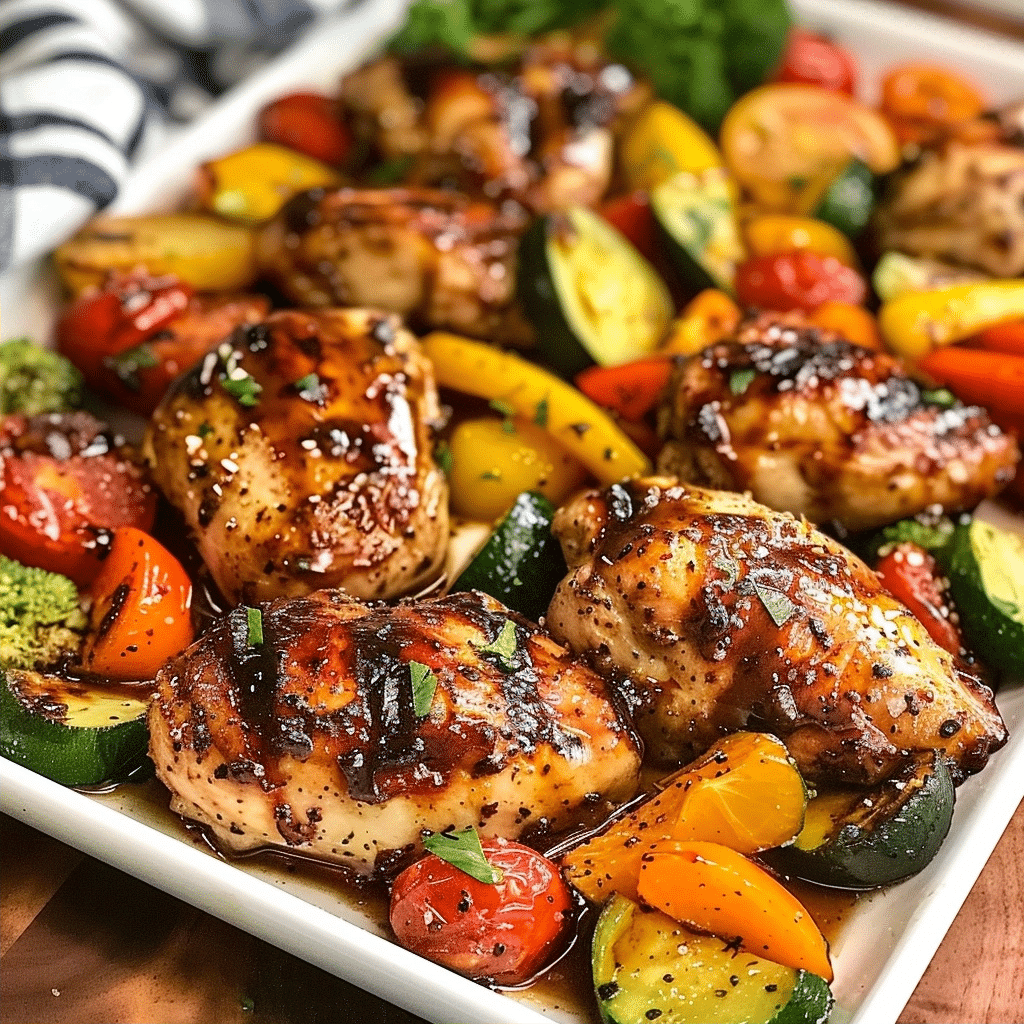
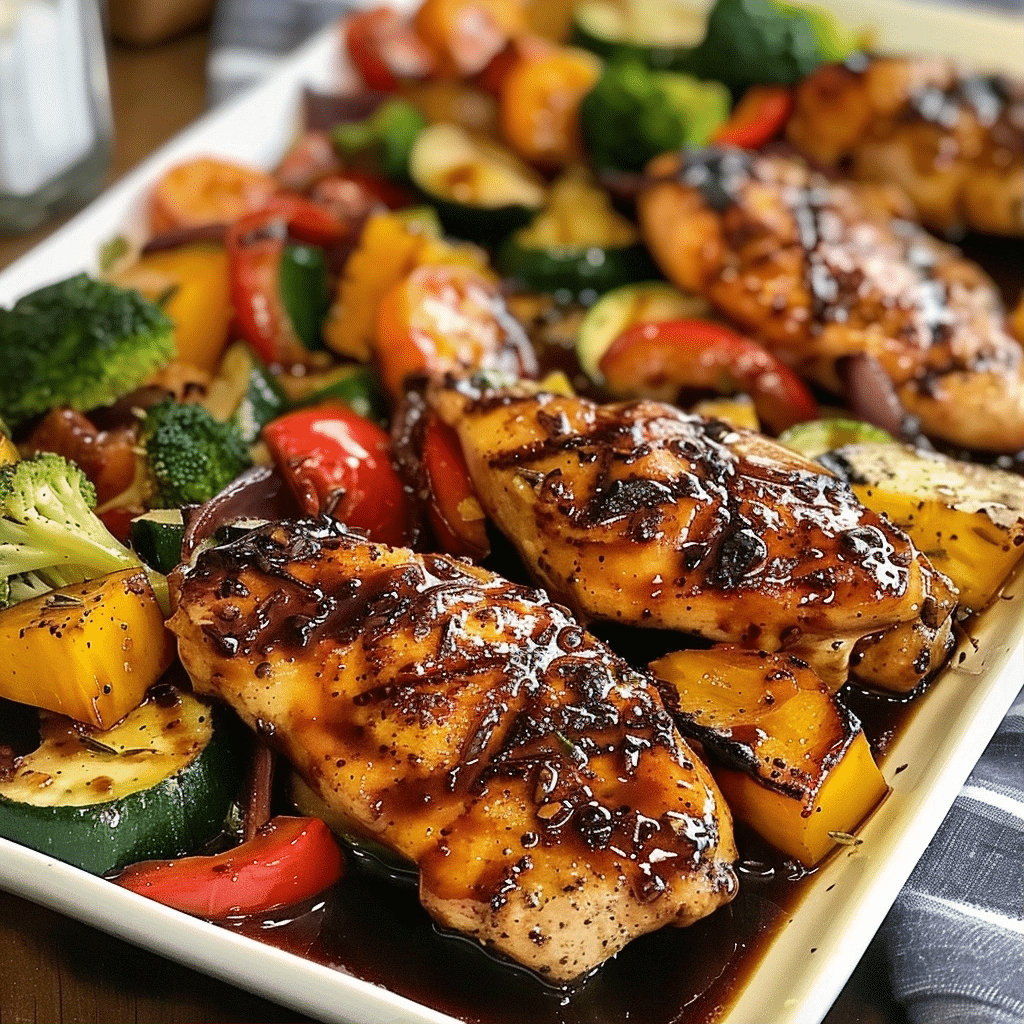
Balsamic Glazed Chicken and Veggies is a healthy sheet pan dinner featuring succulent chicken and crisp garden vegetables tossed in a savory, caramelized balsamic glaze. This recipe relies on a simple reduction of balsamic vinegar, honey, and Dijon mustard to create a restaurant-quality meal that is perfect for busy weeknights.
Why You’ll Love This Recipe
This dish delivers intense, savory notes through a reduction of balsamic, honey, and mustard. You will appreciate the complex depth of flavor achieved without needing hours in the kitchen.
The sheet pan method offers remarkable convenience by minimizing the number of dishes required for dinner. It simplifies cleanup while leaving you with more free time in the evenings.
Families enjoy this meal because the slightly sweet glaze appeals to both children and adults. It transforms standard chicken breasts and common vegetables into a restaurant-quality dining experience.
This recipe provides a reliable time-saving solution for professionals who need a healthy dinner quickly. You can have a complete meal ready to serve in under forty minutes.
Ingredient List
2 boneless, skinless chicken breasts or chicken thighs
2 cups mixed vegetables (bell peppers, zucchini, cherry tomatoes, and red onion)
1 tablespoon olive oil
½ teaspoon salt
½ teaspoon black pepper
½ teaspoon garlic powder
¼ cup balsamic vinegar
1 tablespoon honey or maple syrup
1 teaspoon Dijon mustard
2 cloves garlic, minced
½ teaspoon Italian seasoning
Fresh parsley or fresh basil for garnish
Why These Ingredients Work
Balsamic vinegar provides the essential acidic backbone for the glaze that balances the richness of the protein. The acetic acid acts as a tenderizer for the chicken during the roasting process.
Honey acts as the primary sweetener and allows the glaze to achieve a beautiful caramelized finish under the broiler. This natural sugar also helps to thicken the sauce into a syrupy consistency that coats the vegetables perfectly.
Dijon mustard adds a sharp, emulsifying quality to the balsamic mixture that keeps the oil and vinegar bonded. It contributes a subtle background heat that cuts through the sweetness of the honey for a balanced profile.
Garlic provides the aromatic base that elevates the entire dish by adding pungent, savory notes to the chicken and vegetables. Freshly minced cloves offer a more intense flavor profile than dried alternatives.
Essential Tools and Equipment
Large rimmed baking sheet
Parchment paper or heavy-duty aluminum foil
Small mixing bowl
Whisk or fork
Pastry brush
Tongs or heat-resistant spatula
Meat thermometer
How To Make Balsamic Glazed Chicken and Veggies
Step 1: Prepare the oven
Preheat your oven to 400°F (200°C) to ensure an even cooking environment for the chicken and produce. Line your large sheet pan with parchment paper or aluminum foil to simplify cleaning afterward.
Step 2: Create the glaze
Whisk together the balsamic vinegar, honey, Dijon mustard, minced garlic, and Italian seasoning inside a small bowl. Ensure the ingredients are well incorporated to form a smooth, uniform liquid consistency.
Step 3: Arrange ingredients
Place the chicken breasts on one side of your prepared pan and distribute the vegetables around it. This separation ensures the moisture from the vegetables does not prevent the chicken from browning.
Step 4: Season the pan
Drizzle the olive oil over both the chicken and vegetables, then sprinkle evenly with salt, black pepper, and garlic powder. Use your hands or tongs to toss the vegetables thoroughly so they are coated.
Step 5: Apply base glaze
Brush half of the balsamic mixture directly onto the chicken and drizzle a portion over the vegetable mix. Save the remaining half of your glaze for the final step to keep it fresh.
Step 6: Roast the meal
Bake the sheet pan for between 20 and 25 minutes until the chicken reaches 165°F (74°C) internally. Verify the vegetables are tender yet retain a slight crispness before moving to the final stage.
Step 7: Caramelize and serve
Brush the remaining glaze over the cooked chicken and switch your oven to the high broil setting. Broil for two to three minutes to create a sticky, caramelized top layer before resting the meat.
Chef Tips for Perfect Results
Use a digital meat thermometer inserted into the thickest part of the chicken to guarantee safety and prevent overcooking.
Cut your vegetables into uniform, bite-sized pieces so that every ingredient finishes roasting at the same time.
Pat the chicken dry with paper towels before seasoning to help the oil and spices adhere more effectively.
Watch the pan closely while broiling, as the sugars in the balsamic glaze can transition from caramelized to scorched very quickly.
Allow the chicken to rest for five minutes on the board before slicing to ensure the juices redistribute throughout the meat.
You Must Know
Never skip the resting period after removing the chicken from the oven. This brief wait time allows the internal fibers to relax and retain moisture, ensuring your breast pieces do not become dry or chewy upon cutting.
Maintain close proximity to your oven during the final broiling stage. Because the balsamic glaze contains sugars, the transformation from a beautiful glaze to a burnt mess happens in under sixty seconds.
Pro Tips & Cooking Hacks
Use parchment paper for effortless cleanup instead of cleaning off stuck-on glaze from the pan.
Swap out seasonal vegetables like broccoli florets or asparagus spears depending on what is currently in your pantry.
Double the glaze recipe if you enjoy extra sauce for drizzling over rice or quinoa serves alongside.
Avoid crowding the pan, as too many vegetables will cause them to steam rather than roast to a crisp golden brown.
If your chicken is significantly thicker on one end, pound it to an even thickness to ensure uniform roasting.
Flavor Variations & Suggestions
Add a pinch of red pepper flakes to the glaze if you prefer a subtle heat that lingers on the palate. This small adjustment balances the sweet balsamic with an earthy, spicy finish.
Incorporate dried rosemary or thyme if you desire a more herbal profile for your chicken and vegetables. These aromatics pair exceptionally well with the sweetness of the balsamic vinegar during the roasting process.
Make-Ahead Options
You can whisk the balsamic glaze up to three days in advance and keep it in a sealed jar in the refrigerator. This saves a step on busy weeknights when every minute counts.
Do not assemble the raw vegetables and chicken on the pan ahead of time, as the salt will draw out water and make the dish soggy. Store pre-chopped vegetables in airtight bags so you can dump them straight onto the pan.
Recipe Notes & Baker’s Tips
This recipe is naturally dairy-free and gluten-free when using high-quality balsamic vinegar.
Substitute maple syrup if you prefer a cleaner, woodier sweetness level in your glaze compared to honey.
Consider using chicken thighs if you prefer darker meat with more fat content for increased moisture levels.
Serving Suggestions
Pair this dish with a fluffy bed of jasmine rice or quinoa to soak up the leftover balsamic glaze. The grains act as a neutral base that lets the tangy vegetables shine.
A crisp green salad dressed with lemon vinaigrette provides a refreshing contrast to the warm, roasted flavors of the sheet pan. This light addition rounds out the dinner with extra fiber and texture.
Serve this with a side of crusty bread or garlic focaccia to ensure not a single drop of the balsamic reduction is wasted. The bread is perfect for cleaning the pan while satisfying those craving a heavier carb element.
Storage & Reheating
Store leftovers in an airtight container in the refrigerator for up to three days to maintain freshness. Reheat in a toaster oven or medium-hot skillet to restore the texture of the vegetables, avoiding the microwave if possible to prevent the chicken from turning rubbery.
Allergy Information
This meal is naturally gluten-free provided you ensure your balsamic vinegar is not a grain-based imitation product. Always verify your labels for potential cross-contamination.
The dish is dairy-free, avoiding any need for butter or cream substitutes during the cooking process. You may safely serve this to guests with lactose sensitivities without any modifications.
If you have an allergy to honey, substitute equal parts maple syrup or agave nectar for an identical result. These liquid sweeteners offer the same viscosity as honey to keep the balsamic glaze consistent.
Questions I Get Asked A Lot
Can I use frozen vegetables for this recipe?
You can use frozen vegetables, but they must be thawed and patted completely dry before roasting to avoid excess moisture. Fresh vegetables are preferred for better, more defined texture after roasting.
How do I know when the balsamic chicken is done?
The balsamic chicken is perfectly cooked when a meat thermometer registers 165°F (74°C) at the thickest point. You should see clear juices running from the meat rather than any pink or cloudy fluids.
What is the best way to prevent the veggies from getting soggy?
Spread your vegetables in a single layer with enough space between them to allow for proper airflow and moisture evaporation during roasting. Overcrowding the sheet pan causes vegetables to steam in their own released liquids instead of caramelizing.
Can I double this recipe for a crowd?
You can easily double the recipe by using two separate baking sheets to ensure the chicken and vegetables have sufficient room to roast evenly. Do not try to jam everything onto one pan, as this will lead to uneven cooking and poor texture.
💬 Tried this recipe? Leave a comment and rating below!
Print
Balsamic Glazed Chicken and Veggies Sheet Pan Meal
- Total Time: 40
- Yield: 2 servings
- Diet: Halal
Description
A vibrant and healthy sheet pan dinner featuring succulent chicken and crisp garden vegetables tossed in a savory, caramelized balsamic glaze. This recipe relies on a simple reduction of balsamic vinegar, honey, and Dijon mustard to create a restaurant-quality meal that is perfect for busy weeknights. It is a nutritious, balanced meal that delivers complex flavors with minimal cleanup, making it a favorite for families and professionals alike.
Ingredients
2 boneless, skinless chicken breasts or chicken thighs
2 cups mixed vegetables (bell peppers, zucchini, cherry tomatoes, and red onion)
1 tablespoon olive oil
1/2 teaspoon salt
1/2 teaspoon black pepper
1/2 teaspoon garlic powder
1/4 cup balsamic vinegar
1 tablespoon honey or maple syrup
1 teaspoon Dijon mustard
2 cloves garlic, minced
1/2 teaspoon Italian seasoning
Fresh parsley or fresh basil for garnish
Instructions
Preheat your oven to 400°F (200°C) and line a large rimmed baking sheet with parchment paper or foil.
In a small bowl, whisk together the balsamic vinegar, honey, Dijon mustard, minced garlic, and Italian seasoning.
On the baking sheet, arrange the chicken pieces and chopped vegetables in a single layer.
Drizzle the olive oil over the chicken and vegetables, then sprinkle with salt, pepper, and garlic powder; toss to coat evenly.
Brush half of the balsamic glaze mixture over the chicken and vegetables.
Roast in the preheated oven for 20-25 minutes, or until the chicken reaches an internal temperature of 165°F (74°C).
Brush the remaining glaze over the food and roast for an additional 3-5 minutes until caramelized.
Garnish with fresh herbs before serving.
Notes
Ensure chicken pieces are cut to uniform sizes for even cooking. If you prefer a darker char on the glaze, you can broil the pan for 1-2 minutes at the very end of cooking. Store leftovers in an airtight container for up to 3 days.
- Prep Time: 15
- Cook Time: 25
- Category: Recipes
- Method: Roasting
- Cuisine: Mediterranean-inspired