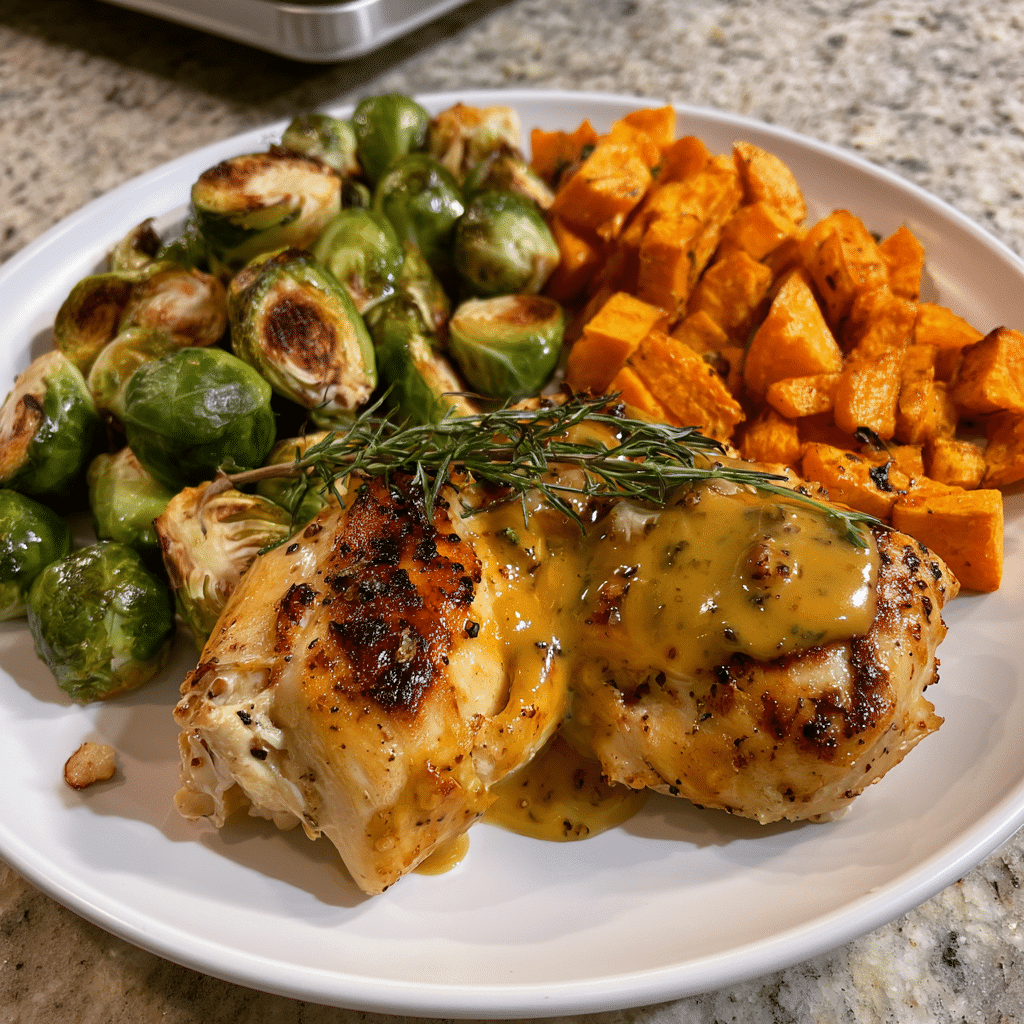
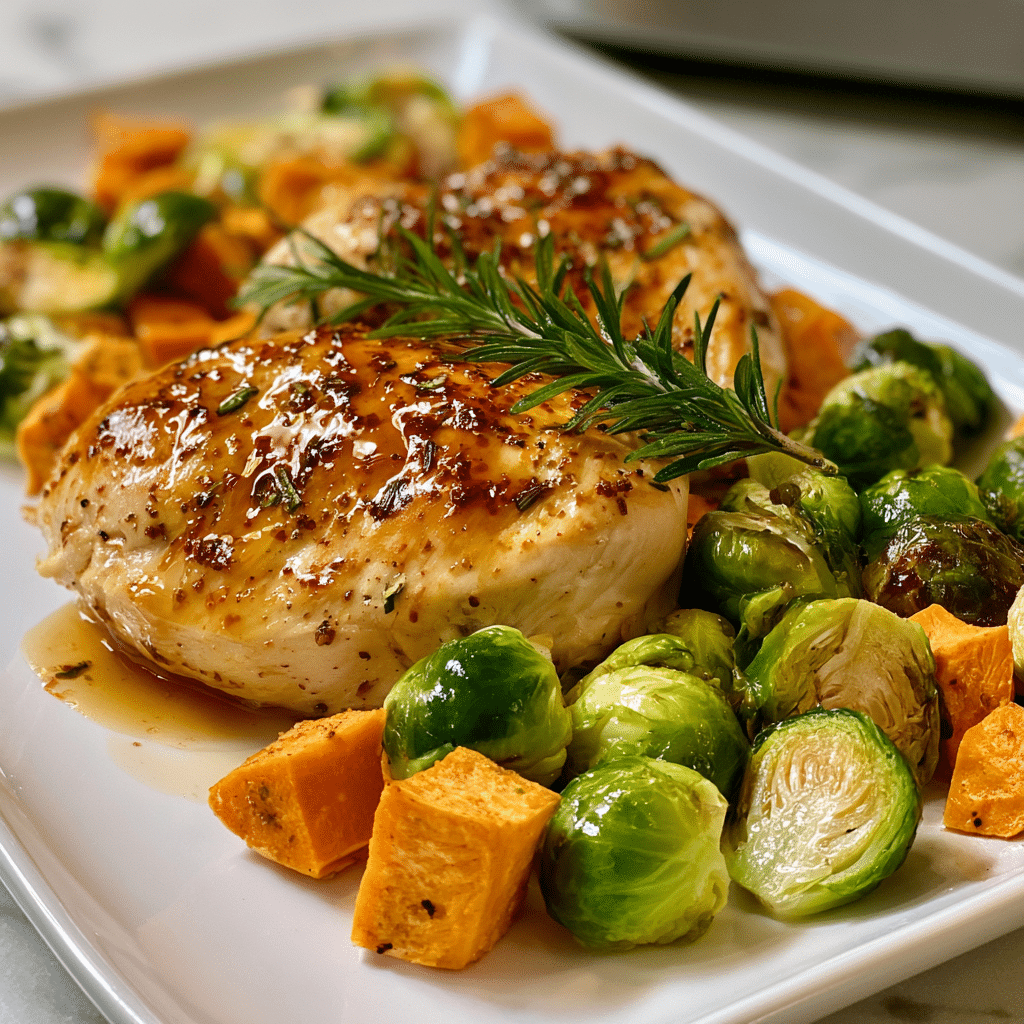
Sheet Pan Honey Dijon Chicken is a complete oven-baked meal of juicy chicken breasts coated in a bold honey mustard glaze, roasted alongside caramelized Brussels sprouts and sweet potatoes on a single pan. It comes together in under 35 minutes with minimal prep, delivers deep, layered flavor in every bite, and leaves almost no dishes behind.
Why You’ll Love This Recipe
The honey Dijon glaze caramelizes directly onto the chicken as it roasts, building a sticky, golden crust with a perfectly balanced sweet, tangy, and savory flavor in every bite. No dry chicken, no bland vegetables — just bold, glossy glaze all the way through.
This recipe delivers the kind of comforting satisfaction you’d expect from a slow Sunday roast, achieved on a regular Tuesday night. The smell of roasting garlic, honey, and fresh herbs filling the kitchen is reason enough to make it weekly.
Everything bakes on a single pan, which means no juggling multiple burners, no sautéing, and no pile of dishes after dinner. Prep takes under 10 minutes, and the oven handles the rest.
This is the dish that converts even the pickiest eaters — the Brussels sprouts and sweet potatoes absorb the honey Dijon glaze as they roast, turning caramelized, slightly crispy, and completely irresistible. It earns a permanent spot in the family dinner rotation.
From prep to table in just 35 minutes, this recipe is built for real weeknights when time is short but you still want something wholesome, flavorful, and satisfying on the table.
Ingredient List
For the Chicken:
- 1½ pounds boneless, skinless chicken breasts (about 3–4 pieces)
Honey Dijon Glaze:
- 2 tablespoons olive oil, divided
- 3 tablespoons honey
- 2 tablespoons Dijon mustard
- 2 garlic cloves, minced
- ½ teaspoon salt
- ¼ teaspoon black pepper
- ½ teaspoon smoked paprika (optional)
- 1 teaspoon chopped fresh rosemary or thyme (optional)
Vegetables:
- 1 pound Brussels sprouts, trimmed and halved
- 2 medium sweet potatoes, peeled and cut into 1-inch cubes
For Garnish:
- 1 tablespoon fresh parsley, chopped
Why These Ingredients Work
Boneless, Skinless Chicken Breasts are a lean, quick-cooking protein that absorbs glazes and marinades deeply when properly coated before roasting. Their mild flavor acts as a neutral canvas for the bold honey Dijon glaze, allowing the sauce to take center stage without any competing flavors getting in the way.
Honey is the essential sweet component of this glaze, and it does far more than simply sweeten. At 400°F, honey undergoes caramelization, transforming into a rich, sticky lacquer that clings to both the chicken and the vegetables. It also balances the sharpness of the Dijon mustard, creating a glaze that is bold but never overwhelming.
Dijon Mustard is the flavor engine of the entire recipe. Its sharp, complex tang cuts through the richness of the olive oil and the sweetness of the honey, creating a layered glaze rather than a one-note sauce. It also acts as a natural emulsifier, binding oil and honey into a thick, cohesive coating that stays on the chicken throughout the full roasting time.
Sweet Potatoes bring hearty structure, natural sweetness, and beautiful color to the vegetable base. Their dense texture holds up through the full roasting time without going mushy, and their natural sugars caramelize in the high oven heat, creating crispy edges that mirror the glaze on the chicken and soak up all of those rich pan drippings.
Essential Tools and Equipment
- Large rimmed sheet pan (18×13 inches recommended)
- Parchment paper or aluminum foil
- Small mixing bowl for the glaze
- Large mixing bowl for the vegetables
- Whisk
- Sharp chef’s knife and cutting board
- Pastry brush or spoon for glazing the chicken
- Instant-read meat thermometer
- Tongs for tossing and serving
How To Make Sheet Pan Honey Dijon Chicken and Veggies
Phase 1: Prep the Oven and Pan
- Preheat the oven to 400°F (200°C).
- Line a large sheet pan with parchment paper or aluminum foil for easy cleanup.
Phase 2: Make the Honey Dijon Glaze
- Combine 1 tablespoon olive oil, honey, Dijon mustard, minced garlic, salt, black pepper, and the optional smoked paprika and fresh rosemary or thyme in a small bowl.
- Whisk until the glaze is fully emulsified and smooth.
Phase 3: Season the Vegetables
- Place the halved Brussels sprouts and cubed sweet potatoes into a large bowl.
- Drizzle with the remaining 1 tablespoon olive oil and pour in half of the honey Dijon glaze.
- Toss until every piece is evenly and thoroughly coated.
- Spread the vegetables in a single, even layer across the prepared sheet pan.
Phase 4: Glaze and Arrange the Chicken
- Arrange the chicken breasts on the sheet pan beside the vegetables, leaving space between each piece.
- Brush the remaining honey Dijon glaze generously over the top of each chicken breast.
Phase 5: Roast and Finish
- Roast in the preheated oven for 25–30 minutes, until the chicken reaches an internal temperature of 165°F (74°C) and the vegetables are tender and caramelized.
- Switch the oven to broil and cook for 1–2 minutes for extra browning, watching closely to prevent burning.
- Remove the pan from the oven and rest the chicken for 5 minutes.
- Sprinkle with fresh chopped parsley and serve immediately.
Chef Tips for Perfect Results
- Place Brussels sprouts cut-side down on the pan — this maximizes the flat surface area touching the hot pan and creates the crispiest, most caramelized result possible.
- Cut sweet potato cubes uniformly at 1 inch — uneven pieces cook at different rates, leaving some mushy while others are still underdone.
- Never crowd the pan — use the largest sheet pan you own and spread everything in a single layer so the vegetables roast rather than steam.
- Reserve half the glaze for the chicken only — toss the vegetables with one half, then brush the remaining half exclusively on the chicken to maximize flavor on the protein.
- Use an instant-read thermometer — pull the chicken at exactly 165°F (74°C) to ensure it is safe and still juicy; guessing leads to dry, overcooked breasts.
- Watch the broil step closely — honey burns in under 2 minutes under a broiler; do not leave the oven unattended during this final step.
You Must Know
Never skip resting the chicken for 5 minutes after roasting. Cutting into chicken breasts the moment they leave the oven forces all the internal juices to run out onto the cutting board, leaving the meat dry and tough. Those 5 resting minutes allow the juices to redistribute throughout the breast for a moist, tender result every single time.
The broil step is optional but makes a real difference in the final dish. It adds a caramelized, slightly charred finish to the glaze that deepens the flavor and gives both the chicken and vegetables a restaurant-quality appearance. If your oven’s broiler runs hot, check at 60 seconds to prevent the honey coating from burning.
Pro Tips & Cooking Hacks
- Marinate the chicken overnight — coat the breasts in the full glaze, cover, and refrigerate for up to 24 hours; the mustard tenderizes the meat and the flavor penetrates deeply.
- Use pre-trimmed Brussels sprouts to cut prep time to under 5 minutes with no effort.
- Double the glaze batch — serve the extra warmed as a dipping sauce on the side, especially good for dipping the roasted Brussels sprouts.
- Swap sweet potatoes for baby potatoes — halved baby potatoes roast in the same time frame and add a heartier, starchier base to the sheet pan.
- Let the chicken come to room temperature for 10 minutes before roasting — starting with cold chicken straight from the fridge leads to uneven cooking and a dry exterior.
- Parchment paper over foil — honey lifts cleanly off parchment but bonds to foil; use parchment whenever possible for the easiest cleanup.
Flavor Variations & Suggestions
Spicy Honey Dijon: Stir 1 teaspoon of sriracha or ½ teaspoon of red pepper flakes directly into the glaze for a sweet-heat version that builds intensity on the finish. The spice balances beautifully against the natural sweetness of the caramelized sweet potatoes.
Maple Dijon: Replace the honey with an equal amount of pure maple syrup for a slightly earthier, more autumnal sweetness in the glaze. This variation pairs especially well with the Brussels sprouts and transforms the dish into the perfect fall weeknight dinner.
Lemon Herb Dijon: Add the zest of one full lemon and 1 extra teaspoon of fresh thyme to the base glaze for a lighter, brighter take on the recipe. The citrus cuts through the richness of the roasted vegetables and lifts the entire dish.
Balsamic Honey Dijon: Stir 1 tablespoon of balsamic vinegar into the glaze for a deeper, more complex tang and a rich, glossy caramelized finish across both the chicken and vegetables.
Make-Ahead Options
Honey Dijon Glaze: Prepare the full glaze up to 5 days in advance and store it in a sealed jar in the refrigerator. The flavors actually deepen as it sits, making a pre-made glaze an upgrade rather than a shortcut — stir well before using.
Marinated Chicken: Coat the raw chicken breasts in the glaze, cover tightly with plastic wrap, and refrigerate for up to 24 hours before roasting. Longer marinating produces noticeably more flavorful, tender meat with the mustard working all the way through.
Prepped Vegetables: Trim the Brussels sprouts and cube the sweet potatoes up to 2 days ahead, storing them separately in airtight containers in the refrigerator. Do not toss with oil or glaze until you are ready to roast.
Freezing Cooked Leftovers: Store fully cooked chicken and vegetables in a freezer-safe airtight container for up to 2 months. Thaw overnight in the refrigerator and reheat in a 375°F oven for 12–15 minutes to restore the texture and caramelized finish.
Recipe Notes & Baker’s Tips
- Boneless, skinless chicken thighs are an excellent substitute for breasts — they are more forgiving with timing and stay juicy even with an extra few minutes in the oven.
- Always use smooth Dijon mustard rather than yellow mustard; yellow mustard produces a thinner, far less complex glaze with a noticeably different flavor.
- The smoked paprika is listed as optional but is highly recommended — it adds a subtle smokiness that enhances the caramelized, roasted depth of the entire dish.
- Fresh rosemary or thyme makes a genuine difference in the glaze; if substituting dried, use ⅓ of the quantity called for as dried herbs are significantly more concentrated.
- Parchment paper prevents the honey in the glaze from sticking and scorching onto the pan, which also leads to better caramelization on the undersides of the vegetables.
Serving Suggestions
Steamed White or Brown Rice: A bowl of fluffy rice alongside this dish soaks up the caramelized honey Dijon pan drippings and turns the meal into a more substantial, filling plate — especially good for feeding a hungry family.
Crusty Artisan Bread: Serve with a thick slice of warm crusty bread for mopping up every last drop of the caramelized glaze left on the pan. Those flavor-packed drippings are too good to leave behind.
Simple Arugula Salad: A lightly dressed arugula salad with lemon vinaigrette provides a peppery, refreshing contrast to the richness of the roasted chicken and sweet vegetables, balancing the plate without competing with the main flavors.
Chilled Sauvignon Blanc or Sparkling Apple Cider: A glass of crisp Sauvignon Blanc cuts cleanly through the sweetness of the honey glaze, while a sparkling apple cider is a non-alcoholic pairing that echoes the dish’s warm, slightly caramelized character.
Storage & Reheating
- Refrigerator: Store leftovers in an airtight container for up to 4 days.
- Oven Reheating (recommended): Warm at 375°F for 10–12 minutes; this restores the caramelized texture of both the chicken and vegetables far better than a microwave.
- Microwave: Use only if needed — reheat in 60-second intervals on medium power to avoid drying the chicken out completely.
Allergy Information
Gluten: This recipe is naturally gluten-free as written, but always verify your Dijon mustard label before using — some commercial brands contain wheat-based additives or vinegar. Certified gluten-free Dijon mustards are widely available in most grocery stores.
Mustard Allergy: Dijon mustard is a recognized top allergen in many countries. For a mustard-free version, substitute with a blend of 1 tablespoon mayonnaise and 1 teaspoon apple cider vinegar to achieve a similar creamy, tangy base for the glaze.
Honey (Vegan and Infant Safety): Honey is not safe for children under 12 months and is not suitable for a vegan diet. Substitute with pure maple syrup in a 1:1 ratio — it caramelizes the same way in the oven and produces an equally delicious, glossy glaze.
Nightshade Sensitivity: Sweet potatoes are not nightshades and are safe for nightshade-free diets. If you need to omit the optional smoked paprika, substitute with a pinch of ground cumin or turmeric for comparable warmth and depth of color in the glaze.
Questions I Get Asked A Lot
Can I use chicken thighs instead of chicken breasts?
Yes, boneless skinless chicken thighs work perfectly and are even more forgiving — they stay juicy and tender even with a few extra minutes of roast time, so check for 165°F (74°C) with a thermometer the same way.
How do I know when the chicken is fully cooked?
Insert an instant-read thermometer into the thickest part of the breast — it is done at exactly 165°F (74°C); if you don’t have a thermometer, pierce the center with a knife and check that the juices run completely clear with no pink.
Why are my Brussels sprouts soggy instead of crispy?
Soggy Brussels sprouts are almost always caused by overcrowding the pan, which traps steam and prevents caramelization. Spread them cut-side down in a single layer with space between each piece, and make sure they are dry before tossing with oil.
Can I assemble this the night before and roast it fresh?
You can marinate the chicken and prep the vegetables the night before, but do not assemble them on the pan until just before roasting — vegetables release moisture overnight and will steam rather than roast properly in the oven.
What can I substitute for sweet potatoes?
Butternut squash, halved baby potatoes, or thick-cut carrots all roast in the same time frame and pair equally well with the honey Dijon glaze — choose whichever is on hand or currently in season.
💬 Tried this recipe? Leave a comment and rating below!
Print
Sheet Pan Honey Dijon Chicken with Roasted Veggies
- Total Time: 40 minutes
- Yield: 4 servings
- Diet: Gluten Free
Description
Sheet Pan Honey Dijon Chicken is a complete oven-baked meal of juicy chicken breasts coated in a bold honey mustard glaze, roasted alongside caramelized Brussels sprouts and sweet potatoes on a single pan. It comes together in under 40 minutes with minimal prep, delivers deep layered flavor in every bite, and leaves almost no dishes behind.
Ingredients
1½ pounds boneless, skinless chicken breasts (about 3–4 pieces)
2 tablespoons olive oil, divided
3 tablespoons honey
2 tablespoons Dijon mustard
2 garlic cloves, minced
½ teaspoon salt
¼ teaspoon black pepper
½ teaspoon smoked paprika (optional)
1 teaspoon fresh rosemary or thyme, chopped (optional)
1 pound Brussels sprouts, trimmed and halved
2 medium sweet potatoes, peeled and cut into 1-inch cubes
1 tablespoon fresh parsley, chopped (for garnish)
Instructions
1. Preheat the oven to 400°F (200°C). Line a large sheet pan with parchment paper or aluminum foil for easy cleanup.
2. Whisk together 1 tablespoon olive oil, honey, Dijon mustard, minced garlic, salt, black pepper, and optional smoked paprika and fresh herbs in a small bowl until smooth and fully combined.
3. Place the Brussels sprouts and sweet potatoes in a large bowl. Add the remaining 1 tablespoon olive oil and half of the honey Dijon glaze. Toss until every piece is evenly coated.
4. Spread the vegetables in a single layer on the prepared sheet pan.
5. Arrange the chicken breasts on the pan beside the vegetables, leaving space between each piece.
6. Brush the remaining honey Dijon glaze generously over the top of each chicken breast.
7. Roast for 25–30 minutes, or until the chicken reaches an internal temperature of 165°F (74°C) and the vegetables are tender and caramelized.
8. Switch the oven to broil and cook for 1–2 minutes for extra browning, watching carefully to prevent burning.
9. Rest the chicken for 5 minutes, sprinkle with chopped fresh parsley, and serve immediately.
Notes
Substitute bone-in chicken thighs for a juicier result — they stay tender even with a few extra minutes in the oven. Check for 165°F (74°C) with a meat thermometer.
Use smooth Dijon mustard only — yellow mustard produces a thinner, far less complex glaze with a noticeably different flavor.
Spread everything in a single layer and leave space between pieces — overcrowding traps steam and produces soggy vegetables instead of caramelized ones.
Marinate the chicken in the full glaze for up to 24 hours in advance to build deeper, more complex flavor throughout the meat.
Pat the Brussels sprouts dry before tossing and place them cut-side down on the pan for the crispiest caramelized edges.
| Storage method | Duration | Reheating instructions |
|---|---|---|
| Refrigerator | Up to 4 days | Reheat in a 375°F oven for 12–15 minutes until warmed through and the glaze re-caramelizes |
| Freezer | Up to 2 months | Thaw overnight in the refrigerator, then reheat in a 375°F oven for 15 minutes |
| Microwave | Use within 4 days | Reheat in 60-second intervals on medium power — oven reheating produces far better texture |
- Prep Time: 10 minutes
- Cook Time: 30 minutes
- Category: Dinner
- Method: Roasting
- Cuisine: American