Description
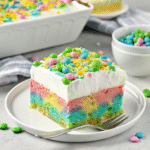
Easter Poke Cake is a stunning spring dessert featuring moist white cake soaked with fruity gelatin and topped with rich cream cheese frosting and festive pastel decorations. This easy, make-ahead cake is perfect for Easter celebrations, spring potlucks, and family gatherings. With just a box cake mix and simple ingredients
Ingredients
For the Cake
- 1 box white cake mix (or yellow cake mix—both work beautifully)
- Ingredients called for on the cake mix box (usually eggs, oil, and water—check your specific mix)
Note: I prefer white cake mix for that clean, bright look, but yellow cake adds a buttery richness that’s just lovely too.
For the Poke Filling
- 1 (3 oz) package flavored gelatin (strawberry or raspberry gives that perfect pastel pink)
- 1 cup boiling water
- Optional: ½–1 cup fruit juice (try white grape or apple juice for extra sweetness and deeper color)
For the Frosting
- 8 oz cream cheese, softened to room temperature
- ½ cup unsalted butter, softened
- 3–4 cups powdered sugar (start with 3, add more to taste)
- 1 teaspoon vanilla extract
- 2–3 tablespoons milk or cream
For the Easter Toppings
- Pastel sprinkles
- Mini chocolate eggs or candy coated chocolates
- Shredded sweetened coconut (this becomes the cutest “grass”)
- Peeps or pastel marshmallows
- Optional: pastel sanding sugar for extra sparkle
Instructions
Preheat your oven according to the cake mix box directions—that’s usually 350°F (175°C). While it’s heating, prepare your cake batter exactly as the package instructs. I know it seems too simple, but trust me, those cake mix engineers know what they’re doing! Grease your 9×13-inch pan really well (I use butter and a light dusting of flour, but nonstick spray works beautifully too), then pour in that batter.
Bake until a toothpick inserted in the center comes out clean—typically 25 to 35 minutes depending on your oven. You’ll know it’s ready when the top springs back lightly when touched and the edges just start pulling away from the pan. Let it cool in the pan for about 10 to 15 minutes.
Here comes the fun part! Using the handle end of a wooden spoon or a thick straw, poke holes all over your warm cake, spacing them about an inch apart. Don’t be shy—really get in there! These holes are what make a poke cake a poke cake.
In a heatproof bowl, dissolve your flavored gelatin in 1 cup of boiling water, stirring continuously until every single crystal disappears. This takes about 2 minutes of good stirring—be patient here. If you want even more flavor and a slightly deeper color, stir in up to ½ cup of fruit juice (I love using white grape juice with strawberry gelatin).
Now, slowly and evenly pour this beautiful liquid all over your cake, making sure it flows into those holes you worked so hard to create. Take your time—if you pour too fast, it might pool on top instead of soaking in.
Pop that cake into the refrigerator and let it chill for at least 2 hours, but ideally 3 to 4 hours or even overnight. This gives the gelatin time to fully set and those flavors time to really marry together. I know it’s hard to wait, but this patience pays off in those stunning, jewel-like pockets of color you’ll see when you slice into it.
In a large bowl, beat your softened cream cheese and butter together until they’re smooth, fluffy, and completely combined—about 2 to 3 minutes. This step is crucial for avoiding lumps! Add your vanilla extract and give it another quick mix.
Now gradually add your powdered sugar, about one cup at a time, beating well after each addition. Start with 3 cups and taste it—if you like things a bit sweeter, add that fourth cup. Finally, add your milk one tablespoon at a time, mixing between additions, until you reach that perfect spreadable consistency.
Once your cake is completely chilled and that gelatin is set, it’s frosting time! Using an offset spatula or butter knife, spread that gorgeous cream cheese frosting evenly over the top of the cake.
This is where you get to play! Scatter those pastel sprinkles all over the frosting—I like to be generous here because they catch the light so prettily. Arrange your mini chocolate eggs, candy coated chocolates, or Peeps in a fun pattern or just scatter them randomly (there’s no wrong way!).
If you’re using shredded coconut for that “Easter grass” look, sprinkle it generously around the candies. And if you want extra sparkle, a light dusting of pastel sanding sugar makes everything look absolutely magical.
Notes
- Easy hole-poking: Use a chopstick or the handle of a wooden spoon—the thicker the tool, the more gelatin can seep through.
- Color coordination: Match your gelatin flavor to your sprinkles and candies for a beautifully coordinated look (raspberry gelatin + pink and purple decorations = perfection).
- Prevent soggy cake: Don’t add more than 1 cup of total liquid for the gelatin—any more and your cake can become waterlogged.
- Frosting too thick? Add milk a teaspoon at a time. Too thin? Add more powdered sugar, ¼ cup at a time.
- No cream cheese? You can use a store-bought vanilla frosting in a pinch, though the homemade cream cheese version really takes this to the next level.
- Prep Time: 20 minutes
- Cook Time: 30 minutes + Chill Time: 2-3 hours
- Category: Dessert
- Method: Baking
- Cuisine: American